
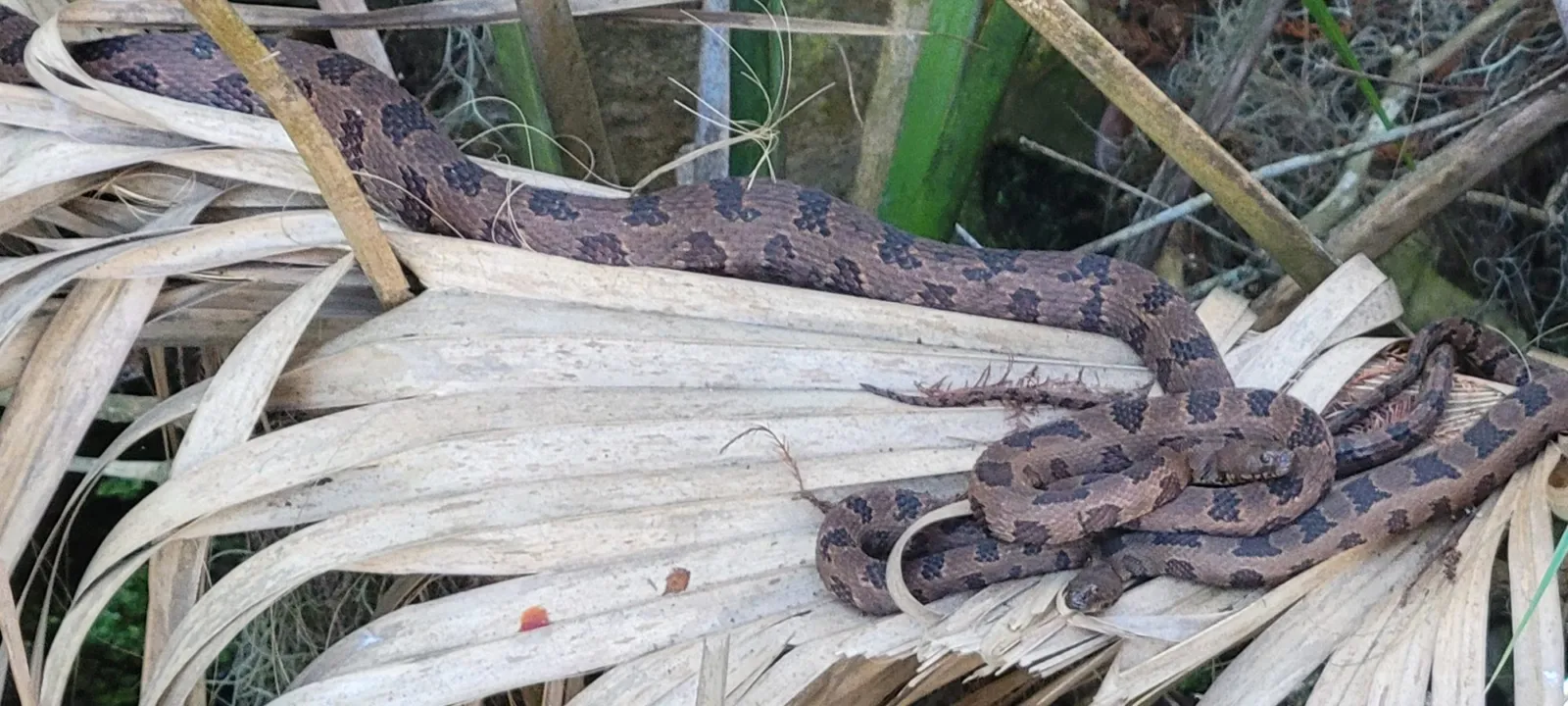
Most visitors never meet most of this. Florida is a big state and its wildlife changes a lot from region to region - a cane toad is a South Florida backyard problem, a black bear is a central and north Florida one, and a crocodile only matters in the far south. These guides are here for the encounter you do have, not because one is likely.
Florida has many snakes, but only six native species are venomous.
They are:
- Eastern coral snake
- Southern copperhead
- Cottonmouth
- Eastern diamondback rattlesnake
- Timber rattlesnake
- Dusky pygmy rattlesnake
Most Florida snakes are harmless and beneficial.
For pet owners, the safest rule is:
Do not let your dog investigate any snake you cannot confidently identify.
Florida’s Six Venomous Snakes
The Florida Fish and Wildlife Conservation Commission identifies six native venomous snake species.
Eastern Coral Snake
A small, brightly banded elapid.
Coral snake venom primarily affects the nervous system.
Southern Copperhead
Found mainly in a limited part of the Florida Panhandle.
Cottonmouth
Also called the water moccasin.
Common around:
- Swamps
- Streams
- Lakes
- Marshes
- Retention ponds
- Roadside ditches
Eastern Diamondback Rattlesnake
Florida’s largest native venomous snake.
It occurs across much of the state.
Timber Rattlesnake
Found mainly in northern Florida.
Dusky Pygmy Rattlesnake
A small rattlesnake found across much of Florida.
Most Snakes Are Not Venomous
FWC emphasizes that most snakes encountered in Florida are harmless.
Do not kill snakes simply because they are present.
Give them space.
Dogs Are at Higher Risk Because They Investigate
Dogs may:
- Sniff
- Paw
- Bark
- Lunge
- Push into brush
That can turn a harmless wildlife encounter into a defensive bite.
Keep Dogs on Short Leashes
FWC specifically recommends short leashes around eastern diamondback habitat.
A short leash is also smart around:
- Brush
- Logs
- Stumps
- Burrows
- Wetlands
- Retention ponds
Common Bite Locations
Dogs are often bitten on:
- Face
- Muzzle
- Legs
- Paws
because they investigate snakes nose-first.
Signs of a Pit Viper Bite
University of Florida veterinary guidance says pit-viper bites may cause:
- Local swelling
- Bleeding at fang wounds
- Quiet or lethargic behavior
Pit vipers include:
- Rattlesnakes
- Cottonmouths
- Copperheads
Coral Snake Bites Can Look Different
UF veterinary guidance says coral-snake symptoms may be delayed for several hours.
Possible signs include:
- Weakness
- Vomiting
- Excessive salivation
- Difficulty breathing
Do not wait for these signs if you witnessed a suspected bite.
What to Do After a Suspected Venomous Bite
Do
- Keep dog as calm as possible
- Limit activity
- Call veterinarian immediately
- Head to emergency veterinary care
- Tell veterinarian when bite occurred
- Describe snake from memory if possible
Do Not
- Wait for symptoms
- Try to catch snake
- Try to kill snake
- Apply ice
- Cut the wound
- Suck venom
- Use folk remedies
Antivenom
UF veterinary guidance identifies antivenom as the primary treatment for venomous snakebite in pets.
Treatment may also include:
- Hospitalization
- Pain management
- Monitoring
- Supportive care
Prompt Treatment Matters
UF/IFAS guidance says pets with venomous snakebites have a much better prognosis when they receive prompt medical care.
Do not spend valuable time trying to identify the snake perfectly.
Snake-Proofing a Florida Yard
You cannot make a yard completely snake-free.
You can reduce attractive habitat by:
- Removing brush piles
- Moving lumber and debris
- Controlling rodents
- Cleaning spilled bird seed
- Removing pet-food scraps
- Trimming heavy vegetation near walkways
Night Walks
Use a flashlight.
Watch:
- Path edges
- Driveways
- Mulch
- Shrubs
Hiking
Keep dogs:
- On maintained trails
- On a short leash
- Away from burrows and fallen trees
Water Edges
Cottonmouths occur around wet habitats.
Dogs should also stay away from Florida water edges because of:
- Alligators
- Otters
- Other wildlife
Do Not Rely on Snake Color Alone
Florida snakes vary considerably in:
- Age
- Pattern
- Lighting
- Habitat
Do not delay veterinary care because the snake did not look exactly like a field-guide photo.
Emergency Preparation
Before a Florida trip:
- Know nearest emergency vet
- Save clinic number
- Know travel time
- Carry veterinary records
- Keep dog on leash
Related Guides
- Cottonmouths and Dogs in Florida
- Eastern Diamondback Rattlesnakes and Dogs
- Coral Snakes and Pets
- Pygmy Rattlesnakes and Dogs
- What to Do if Your Dog Is Bitten by a Snake
- Florida Wildlife With Pets: Complete Guide
Florida’s snakes are an important part of the ecosystem.
The goal is not to fear them.
The goal is to prevent your pet from forcing a close encounter.
Sources
- Florida Fish and Wildlife Conservation Commission — Living with Snakes: myfwc.com
- University of Florida Small Animal Hospital — Preparing for Venomous Snake Bites: smallanimal.vethospital.ufl.edu
- UF/IFAS — Dealing with Snakes in Florida’s Residential Areas: edis.ifas.ufl.edu
Wear this page
Pet Friendly Florida shirts, drawn to match what you just read. This is our own store, not an affiliate link.


