Most visitors never meet most of this. Florida is a big state and its wildlife changes a lot from region to region - a cane toad is a South Florida backyard problem, a black bear is a central and north Florida one, and a crocodile only matters in the far south. These guides are here for the encounter you do have, not because one is likely.
Florida dogs can encounter jellyfish and Portuguese man o’ war both in the water and washed onto the beach.
The biggest mistake is assuming a stranded animal is harmless.
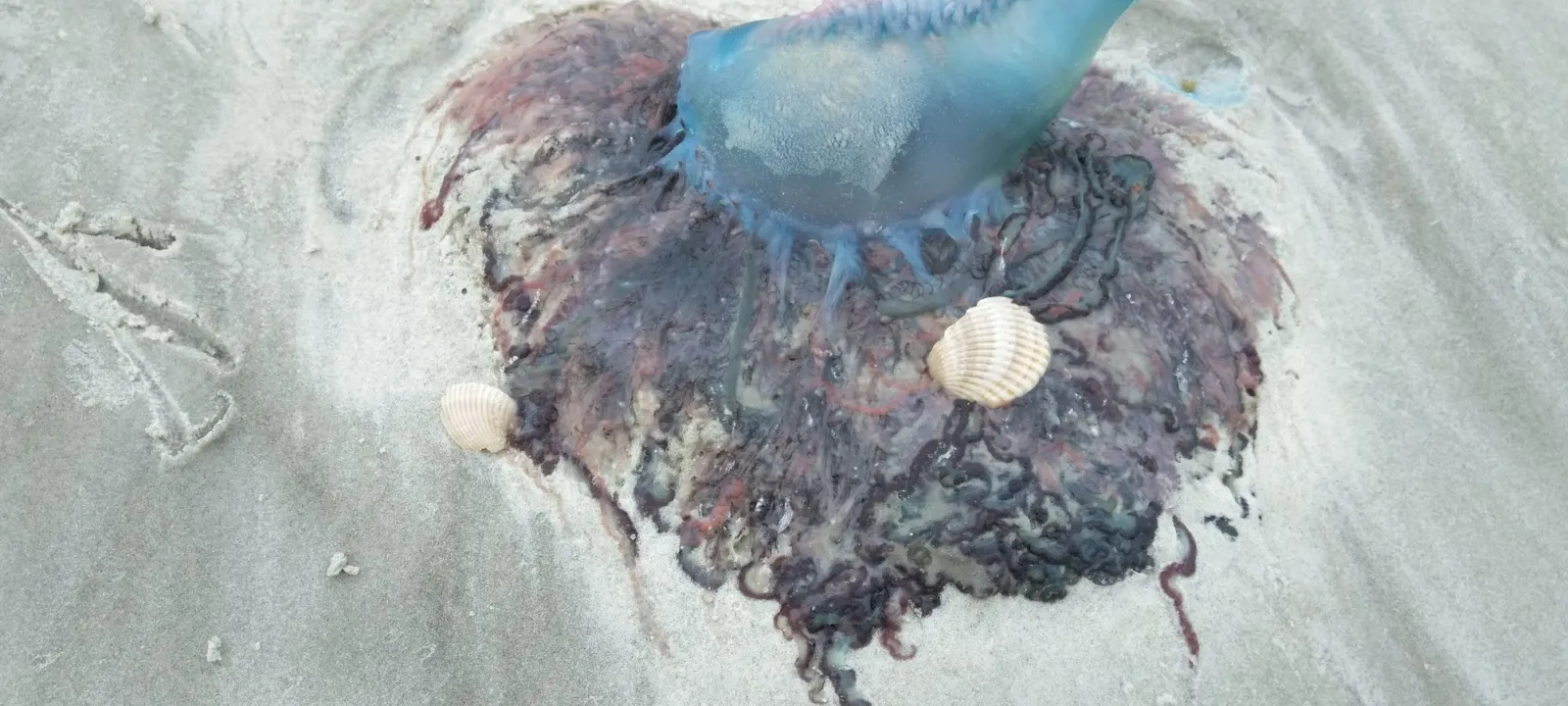
Tentacles can still sting after the animal washes ashore.
For dog owners:
Do not let your dog sniff, lick, bite or roll on jellyfish or Portuguese man o’ war.
Portuguese Man o’ War Are Not True Jellyfish
Portuguese man o’ war look like blue or purple floating jellyfish, but they are actually colonies of specialized organisms.
They have:
- Blue-purple floating bladder
- Long tentacles
- Powerful stinging cells
UF/IFAS describes their sting as particularly painful.
Washed-Up Tentacles Can Still Sting
A man o’ war lying on dry-looking sand can still sting.
Do not let dogs investigate:
- Blue blobs
- Purple tentacles
- Stranded jellyfish
- Pieces of tentacle mixed with seaweed
Watch the Beach Flags
Florida beaches commonly use a purple flag to warn about dangerous marine life.
UF/IFAS specifically notes that a purple flag may indicate jellyfish or Portuguese man o’ war.
If many are washing ashore, keep the dog away from the waterline.
Dogs Are Nose-First Explorers
A dog may be stung on:
- Nose
- Lips
- Tongue
- Paw pads
- Belly
Long-haired dogs can also pick up tentacles in their coat.
If Your Dog Is Stung
Move the dog away from the area and contact a veterinarian.
Do not let the dog:
- Lick the affected area
- Rub its face
- Roll on the sand
Visible Tentacles
Avoid touching tentacles with bare hands.
For people, current UF/IFAS beach guidance recommends carefully removing tentacles with tweezers and rinsing with salt water.
For a dog, call your veterinarian for species-appropriate instructions, especially if tentacles are:
- In the mouth
- Around the eyes
- Embedded in thick fur
Do Not Automatically Use Human Home Remedies
Jellyfish first-aid advice varies by species.
Do not automatically apply:
- Vinegar
- Ammonia
- Baking soda
- Fresh water
- Medication
to a dog without veterinary guidance.
Emergency Signs
Seek urgent veterinary help if your dog develops:
- Trouble breathing
- Severe swelling
- Collapse
- Extreme pain
- Repeated vomiting
- Weakness
- Facial or mouth swelling
Dogs That Eat Everything
Dogs that:
- Eat seaweed
- Pick up dead fish
- Mouth shells
- Roll on beach debris
need extra supervision during jellyfish events.
Beach Cleanup Doesn’t Catch Everything
Tentacle fragments can be difficult to see.
Use a short leash when the strand line contains:
- Seaweed
- Jellyfish
- Fish carcasses
- Fishing debris
Best Prevention
Before a Florida beach outing:
- Check beach flags
- Scan shoreline
- Keep dog away from stranded marine life
- Use leash
- Avoid swimming during heavy jellyfish activity
Related Guides
- Sharks and Dogs at Florida Beaches
- Stingrays and Dogs
- Best Pet-Friendly Beaches in Florida
- Saltwater Poisoning in Dogs
- Florida Wildlife Emergency Checklist for Pet Travelers
Florida’s jellyfish are part of the beach ecosystem.
The safest rule for dogs is simple:
If it washed out of the ocean, don’t let the dog put it in its mouth.
Sources
- UF/IFAS Extension Flagler County — Florida 101: Beach Safety: blogs.ifas.ufl.edu
- UF/IFAS Extension Escambia County — Portuguese Man-of-War: blogs.ifas.ufl.edu
- UF/IFAS Extension Escambia County — Marine Creatures of the Northern Gulf: Jellyfish: blogs.ifas.ufl.edu
Wear this page
Pet Friendly Florida shirts, drawn to match what you just read. This is our own store, not an affiliate link.


