Most visitors never meet most of this. Florida is a big state and its wildlife changes a lot from region to region - a cane toad is a South Florida backyard problem, a black bear is a central and north Florida one, and a crocodile only matters in the far south. These guides are here for the encounter you do have, not because one is likely.
Florida is one of the most important sea turtle nesting areas in the world.
Five sea turtle species occur in Florida waters, and three regularly nest on Florida beaches:
- Loggerhead
- Green turtle
- Leatherback
For dog owners:
Keep dogs leashed, away from marked nests, away from hatchlings and far from nesting turtles.
Sea Turtle Nesting Season Varies by Coast
FWC says nesting can begin as early as:
March
along parts of southeast Florida from Brevard County south through Broward County.
On much of the Gulf Coast and in North Florida, nesting commonly begins in:
April or May
Nesting and hatching activity continues through the warmer months.
Florida Hosts Enormous Numbers of Nests
Florida supports globally important sea turtle nesting.
FWC says Florida hosts approximately:
90% of the Northwest Atlantic loggerhead nesting aggregation
The state is also a major green-turtle nesting area, and Florida is the only continental U.S. state where leatherbacks nest regularly.
Dogs Can Disturb Nesting Turtles
A dog may:
- Bark
- Approach
- Chase
- Dig
- Investigate tracks
A nesting turtle may abandon its nesting attempt if disturbed.
Stay Far Away From Nesting Turtles
FWC has warned that getting within approximately:
50 feet
of a nesting turtle can cause the turtle to leave before completing nesting.
More distance is better.
Keep dogs well behind you and under control.
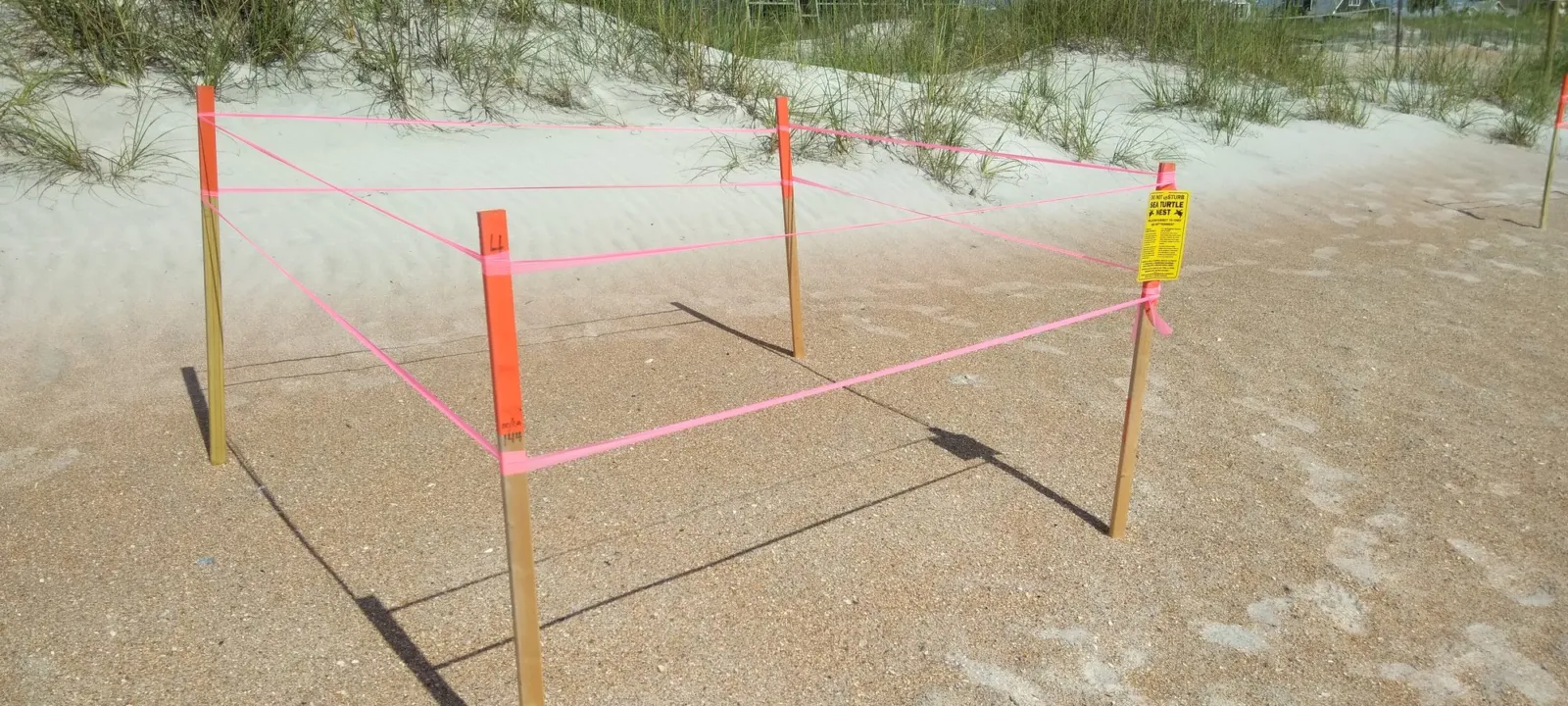
Never Enter Marked Nest Areas
Sea turtle nests are commonly marked with:
- Stakes
- Tape
- Signs
Keep pets completely outside those areas.
Do not allow a dog to:
- Dig
- Urinate
- Walk through
- Sniff inside
a marked nest.
Hatchlings
If hatchlings are moving toward the ocean:
- Keep dog far away
- Do not touch them
- Do not block their route
- Do not shine lights toward them
Allow trained responders or authorized volunteers to handle problems.
Beach Lights Matter
Artificial light can disorient:
- Nesting females
- Hatchlings
FWC recommends keeping nesting beaches:
Clean, dark and flat
At night:
- Avoid unnecessary flashlights
- Avoid phone lights toward the beach
- Do not use flash photography
Fill Holes Before Leaving
Dogs often dig on beaches.
Large holes can trap:
- Nesting turtles
- Hatchlings
Fill in dog-dug holes before leaving.
Remove Gear
Do not leave:
- Chairs
- Umbrellas
- Leashes
- Toys
- Coolers
on the beach overnight.
These can become obstacles for nesting turtles.
Keep Dogs Away From Tracks
Fresh turtle tracks may mean:
- A turtle recently nested
- A turtle attempted to nest
- Monitoring staff still need to inspect the area
Do not let dogs dig in or destroy the tracks.
Dead or Injured Sea Turtles
Keep dogs away from:
- Dead turtles
- Injured turtles
- Entangled turtles
Do not let your dog:
- Sniff closely
- Lick
- Bite
Report distressed or dead sea turtles to the FWC Wildlife Alert Hotline:
888-404-FWCC 888-404-3922
Sea Turtle Nests Are Protected
All sea turtles found in Florida are protected under state law, and nesting species are also protected under federal law.
Do not disturb:
- Turtles
- Nests
- Eggs
- Hatchlings
Dog-Friendly Beach Does Not Mean Wildlife-Free Beach
A beach can legally allow dogs and still contain:
- Sea turtle nests
- Shorebird nests
- Protected dunes
Follow both pet rules and wildlife restrictions.
Best Sea-Turtle-Safety Checklist for Dog Owners
- Use short leash
- Stay away from nesting turtles
- Stay outside marked nests
- Keep dog away from hatchlings
- Fill dog-dug holes
- Remove beach gear
- Reduce lights at night
- Report injured or dead turtles
Related Guides
- Shorebirds, Nesting Season and Dogs
- Florida Birds Dogs Should Never Chase
- Best Pet-Friendly Beaches in Florida
- Florida Wildlife With Pets: Complete Guide
A dog-friendly Florida beach trip and successful sea turtle nesting can coexist.
It depends on giving wildlife the space it needs.
Sources
Wear this page
Pet Friendly Florida shirts, drawn to match what you just read. This is our own store, not an affiliate link.

