
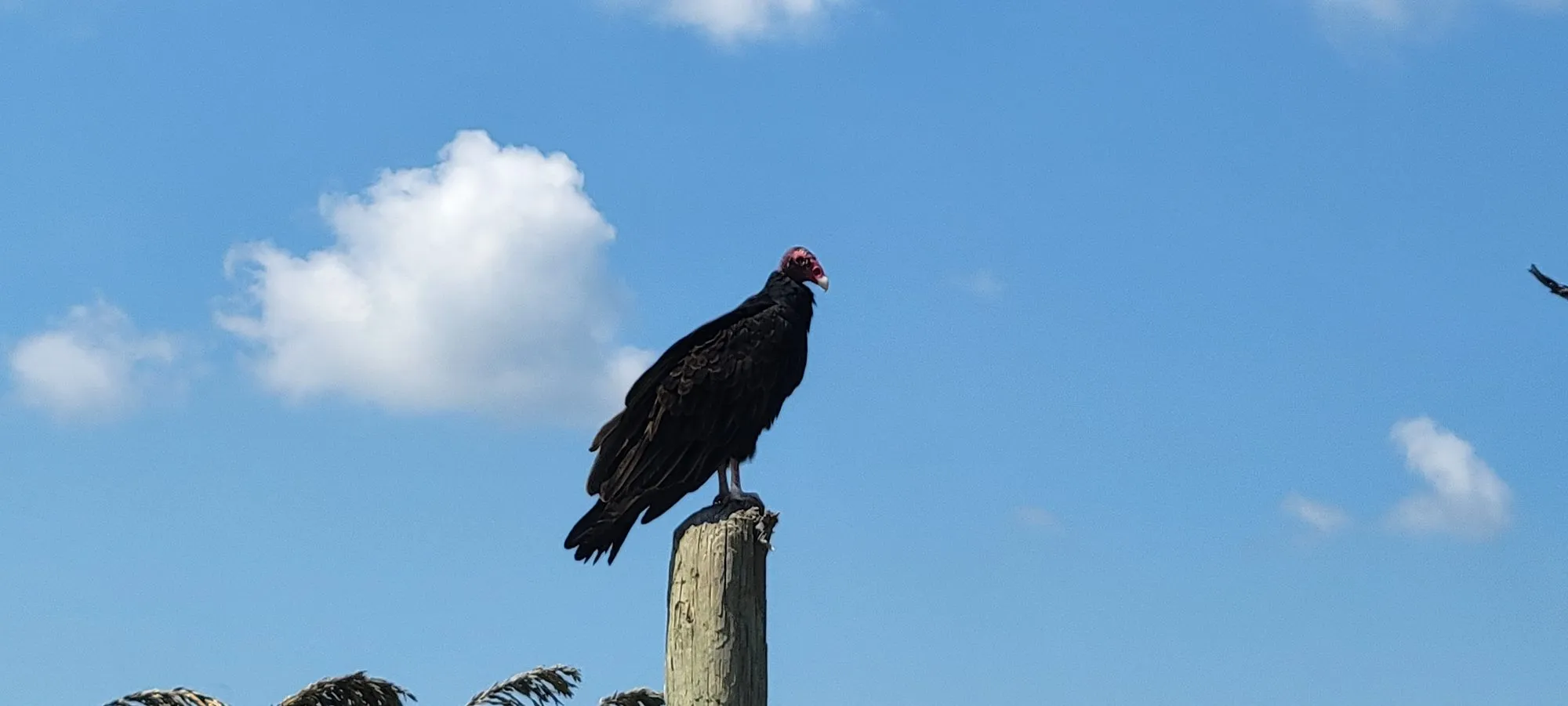
Most visitors never meet most of this. Florida is a big state and its wildlife changes a lot from region to region - a cane toad is a South Florida backyard problem, a black bear is a central and north Florida one, and a crocodile only matters in the far south. These guides are here for the encounter you do have, not because one is likely.
You can go birding in Florida with a dog, and plenty of people do, but only with a calm dog on a short leash and only in places where pets are actually allowed. Many of the best birding spots, including most state park beaches and boardwalks, are off-limits to dogs, and beach-nesting birds are protected for a good part of the year. The rule we go by: your dog should never become part of the birdwatching event.
Where dogs are and are not allowed at Florida birding spots
Florida is one of the best birding states in the country, with birds on beaches, marshes, mangroves, lakes, scrub, wetlands, city parks and neighborhood ponds. FWC’s Great Florida Birding and Wildlife Trail is a statewide network of several hundred viewing sites, and its “Find a Site” map is the easiest way to pick a stop. Check each site’s own pet rules before you go, because they vary a lot.
State parks are a good example. According to the Florida State Parks pet policy, well-behaved pets on a hand-held leash of no more than 6 feet are welcome in most parks on trails, in picnic areas and in campgrounds. Pets are not permitted on beaches, boardwalks or playgrounds, or in bathing areas, cabins and park buildings, and individual parks can close other areas. The main exception on the beach side is a pet-friendly section at Honeymoon Island State Park. Many county parks and national wildlife refuges set their own rules, so a boardwalk that looks perfect on a map may be a no-dog zone at the trailhead.
Dog-compatible birding usually means wide paved or shell trails, leashed park paths, open waterfront walks, boardwalk approaches where pets are allowed, and quiet neighborhood ponds viewed from a distance.
Shorebird nesting season and why it matters for dogs
Beach birding is excellent for terns, plovers, skimmers, pelicans and gulls, and it is also where dogs cause the most harm. FWC says shorebird and seabird nesting season in Florida runs from February through August, with timing varying by species and coast. These birds nest directly on open sand, their eggs and chicks are camouflaged, and FWC notes that even well-behaved dogs frighten shorebirds and can cause them to abandon eggs and chicks.
During nesting season, look for posted signs, string-and-post enclosures and temporary closures. Some coastal islands and sandbars are designated Critical Wildlife Areas, which FWC closes to public access while birds nest. Never enter any of these with a dog. If you bring your dog to the coast, FWC’s advice is to use a beach where dogs are allowed, keep it leashed, and stay well away from nesting or resting birds. Our Shorebirds, Nesting Season and Dogs guide covers the details, and Pelicans and Pets covers the birds most likely to walk up to you.
Reading the birds: how to know your dog is too close
Birds usually show stress before people notice it. Repeated alarm calls, birds walking steadily away from you, a flock lifting off, a bird leaving a nest, or adults gathering chicks all mean the same thing: you are too close. If birds change their behavior because of your dog, back off and give them more room. If a bird is too far away to see well, use binoculars rather than walking the dog closer until it reacts.
Ground-nesting species need the most care. Plovers and terns nest on beaches, and burrowing owls nest in burrows in open, grassy areas such as pastures, golf courses, airports and vacant lots. FWC lists the Florida burrowing owl as state-threatened, and taking, possessing or selling the owls, their eggs or their burrows is prohibited without a permit. Never let a dog sniff around a burrow or scrape. Raptors deserve the same respect: keep dogs away from injured or grounded hawks, eagles and ospreys and from nest trees. Our Great Blue Herons and Dogs guide covers the tall waders that stand their ground surprisingly close to paths.
Wetlands, fishing piers and other places with extra hazards
Wetlands are some of Florida’s best birding and also home to alligators and cottonmouths. Keep the dog away from water edges, stay on the trail, and do not let it wade in for a drink. Bring its water instead.
Birds around piers and fishing areas may already be in trouble from hooks, fishing line and bait. Keep dogs from chasing injured or entangled birds – a panicking pelican trailing line is dangerous for everyone involved. Report injured birds to FWC or a local wildlife rehabilitator rather than trying to catch them.
Is your dog a birding dog?
A dog does well on a birding trip if it can walk calmly on a loose leash, ignore wildlife, stay on the trail and settle quietly while you stand still for ten minutes looking at a warbler. Dogs with a high prey drive, dogs that bark at movement and dogs bred to flush or retrieve birds may be better left at the rental for sensitive birding areas and brought along for the easier, busier paths instead. A long retractable leash makes it much harder to stop a sudden chase, so leave it at home.
Timing helps. Early mornings are excellent for bird activity and are also the coolest part of a Florida day. Heat is a genuine hazard here, even in spring and fall, and birding often means long stretches in full sun on open dikes and beaches. Bring fresh water and a bowl, plan shade breaks, and turn back early if your dog is panting hard, lagging or looking for shade.
What to pack for a birding walk with your dog
- A short, non-retractable leash of 6 feet or less, which also satisfies state park rules.
- Binoculars, so you get closer to the bird without bringing the dog closer.
- More water than you think, a collapsible bowl, and waste bags.
- A check of the site’s pet rules and, from February through August, any beach-nesting closures.
- A plan to stay on marked trails and away from water edges, nesting zones and flocks.
For more ideas on where to go, see Best Pet-Friendly Places to Watch Wildlife in Florida and Florida Birds Dogs Should Never Chase. Birding with a dog works best when the birds barely notice the dog is there.
Wear this page
Pet Friendly Florida shirts, drawn to match what you just read. This is our own store, not an affiliate link.