
Most visitors never meet most of this. Florida is a big state and its wildlife changes a lot from region to region - a cane toad is a South Florida backyard problem, a black bear is a central and north Florida one, and a crocodile only matters in the far south. These guides are here for the encounter you do have, not because one is likely.
Florida has several populations of animals that look wildly out of place to first-time visitors.
You can genuinely encounter:
- Free-flying parrots
- Neighborhood peacocks
- Wild monkeys
These animals do not all have the same origin or legal status.
For dog owners, the safest rule is universal:
Keep your dog leashed and do not chase, feed or approach them.
Wild Parrots
Florida has several introduced parrot and parakeet populations.
One of the best-established examples is the:
Monk parakeet
FWC identifies monk parakeets as nonnative Florida wildlife.
They live in social groups and build large communal stick nests.
Why They Are Here
Florida’s urban parrots generally descend from:
- Escaped captive birds
- Released pets
Where Dogs Run Into Them
Parrot flocks may gather around:
- Power lines
- Palm trees
- Fruit trees
- Parks
- Neighborhood lawns
Keep dogs from charging at birds feeding on the ground.
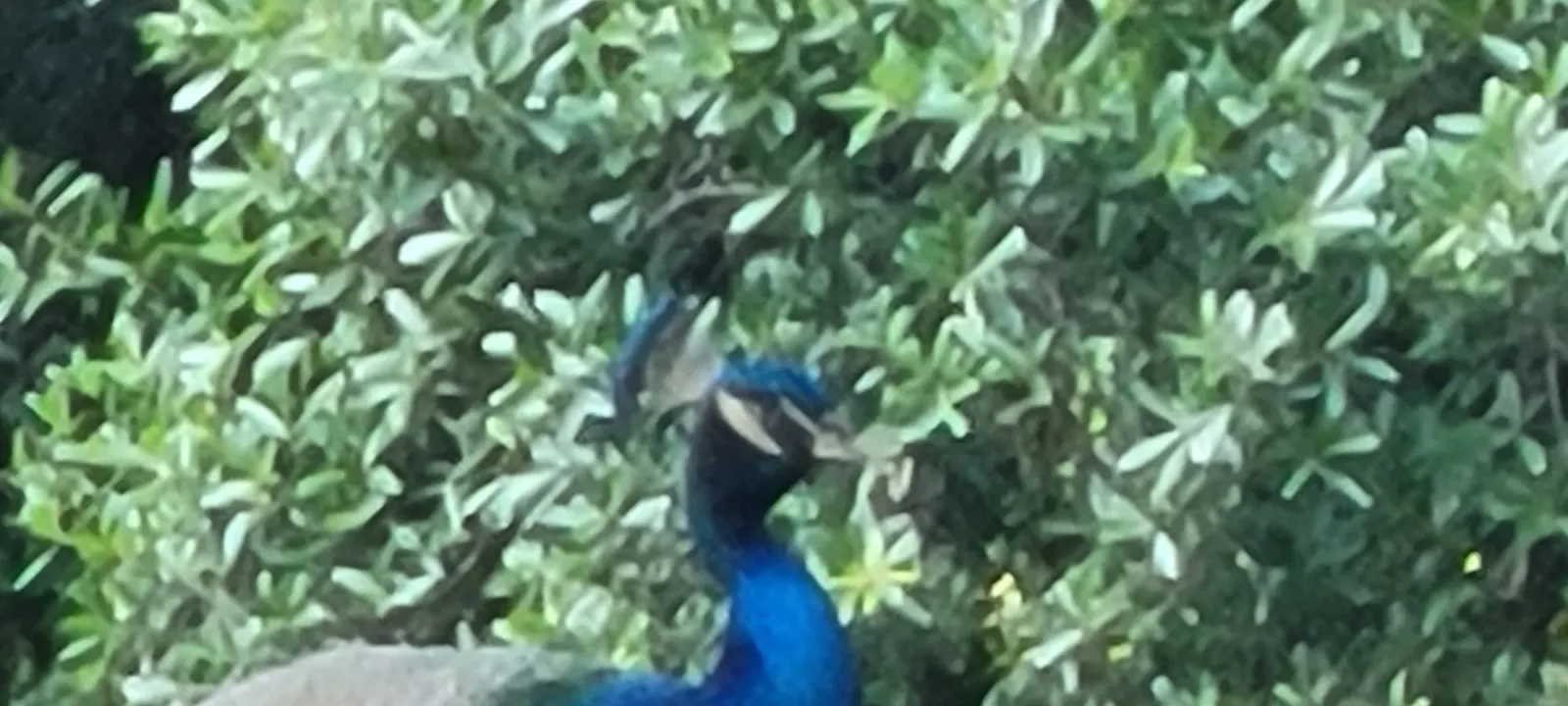
Peacocks and Peafowl
Peafowl are established in municipalities around Florida.
FWC says nonnative domestic fowl such as:
- Chickens
- Peafowl
- Guinea fowl
have become established after escaping or being released.
Local Populations
Peafowl may live for generations in the same neighborhood.
They are especially noticeable because males:
- Display huge trains
- Call loudly
- Walk through roads and yards
Dogs and Peafowl
Do not let a dog corner a peacock.
Adult birds have:
- Strong legs
- Spurs
- Beaks
and can defend themselves.
Wild Monkeys
Florida has multiple wild monkey stories, but two populations are especially notable.
Rhesus Macaques at Silver Springs
Rhesus macaques were intentionally released near Silver Springs in the 1930s as part of a tourism attraction.
They became established in the Silver River region.
These are genuinely free-ranging monkeys.
Vervet Monkeys in South Florida
A vervet population lives around the Dania Beach / Fort Lauderdale airport area.
The population traces back to animals that escaped a primate facility in the 1940s.
Never Feed Wild Monkeys
Feeding encourages monkeys to:
- Approach people
- Lose natural fear
- Become aggressive around food
Keep dogs away.
Disease Concerns
Rhesus macaques can carry B virus.
Human infection is rare but potentially serious.
Do not touch:
- Monkeys
- Saliva
- Feces
- Objects contaminated by monkey bodily fluids
Dogs and Monkeys
Never let a dog chase or corner a monkey.
A macaque can:
- Bite
- Scratch
- Defend itself forcefully
Which of These Animals Are Native?
Parrots
Most modern feral parrot populations are introduced.
Peafowl
Introduced / nonnative.
Rhesus macaques
Introduced.
Vervet monkeys
Introduced.
Nonnative Does Not Mean “Fair Game”
Do not assume you may:
- Capture
- Relocate
- Harm
an animal simply because it is nonnative.
Rules vary by:
- Species
- Property
- City
- County
Do Not Release Animals Elsewhere
FWC prohibits releasing nonnative wildlife into the state.
That includes moving a nuisance animal to another location and turning it loose when regulations prohibit it.
Best Pet-Safety Checklist
- Short leash
- No chasing
- No feeding
- Keep away from monkey groups
- Avoid peafowl with chicks
- Keep dog away from grounded parrots
- Do not capture unfamiliar exotics
Related Guides
- Wild Parrots in Florida
- Peacocks in Florida Neighborhoods
- Wild Monkeys in Florida
- Rhesus Macaques at Silver Springs
- Vervet Monkeys in South Florida
- Why Florida Has So Many Exotic Animals
Florida’s feral parrots, peacocks and monkeys are all real.
But they came from very different histories — and none should become a close-contact attraction for your dog.
Sources
Wear this page
Pet Friendly Florida shirts, drawn to match what you just read. This is our own store, not an affiliate link.


