Most visitors never meet most of this. Florida is a big state and its wildlife changes a lot from region to region - a cane toad is a South Florida backyard problem, a black bear is a central and north Florida one, and a crocodile only matters in the far south. These guides are here for the encounter you do have, not because one is likely.
Dogs can swallow surprising amounts of sand during a beach day.
Most do not intentionally eat handfuls.
They ingest it while:
- Digging
- Fetching sandy balls
- Licking toys
- Eating food dropped in sand
- Drinking sandy water
- Grooming sandy fur
In some dogs, swallowed sand can accumulate in the gastrointestinal tract and create a sand impaction or obstruction.
What Is Sand Impaction?
Sand impaction happens when enough sand collects in the:
- Stomach
- Intestines
to interfere with normal movement of food and waste.
A significant obstruction can become a veterinary emergency.
How Dogs Swallow Sand
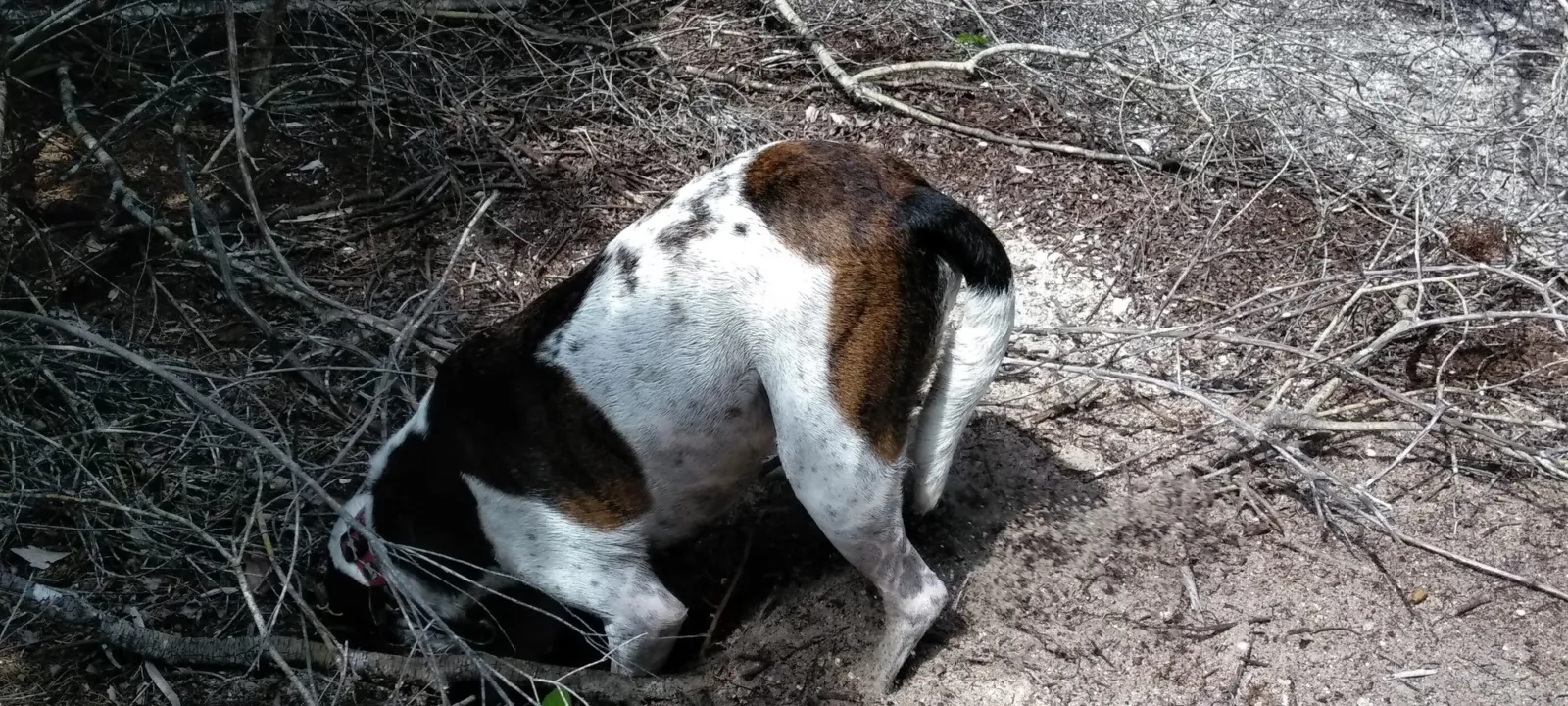
Digging
Dogs may bite at sand while excavating.
Fetching
A wet tennis ball rolled in sand becomes coated.
Every retrieve can add more sand.
Eating Treats on the Beach
Food dropped directly onto sand can pick up a surprising amount.
Licking
Dogs may lick:
- Paws
- Legs
- Fur
after leaving the beach.
Symptoms to Watch For
Possible signs of sand impaction include:
- Vomiting
- Loss of appetite
- Lethargy
- Abdominal pain
- Straining to defecate
- Reduced stool
- Restlessness
A dog with obstruction signs needs veterinary evaluation.
When to Seek Emergency Care
Contact a veterinarian urgently if your dog develops:
- Repeated vomiting
- Severe abdominal pain
- Distended abdomen
- Inability to keep water down
- Extreme lethargy
- Inability to pass stool
Do Not Give Random Home Treatments
Do not automatically give:
- Oil
- Laxatives
- Large meals
- Human medications
without veterinary guidance.
If there is a true obstruction, home remedies may delay needed treatment.
Prevention: Use Cleaner Toys
Instead of a fuzzy tennis ball that holds sand, consider a toy that can be:
- Rinsed
- Wiped
- Kept off the ground between throws
Rinse Toys Often
Keep a container of fresh water for rinsing:
- Ball
- Frisbee
- Tug toy
Do Not Feed Directly on Sand
Use:
- Bowl
- Mat
- Towel
for treats and meals.
Limit Digging
If your dog digs with its mouth open and repeatedly bites sand:
Stop the activity.
Fresh Water Helps Reduce Other Beach Risks
Bring plenty of fresh water so the dog is less likely to:
- Drink seawater
- Drink sandy puddles
Rinse the Dog Afterward
Rinse:
- Paws
- Face
- Coat
to reduce the amount of sand the dog later licks off.
Small Dogs
Smaller dogs may ingest a more significant amount of sand relative to body size.
Watch beach play carefully.
Beach Day Checklist
- Fresh water
- Bowl
- Cleanable toy
- Mat or towel
- Limit digging
- Rinse toys
- Rinse dog
- Watch for vomiting or constipation afterward
Related Guides
- Saltwater Poisoning in Dogs
- Best Pet-Friendly Beaches in Florida
- Best Portable Water Bowls
- What to Do if Your Dog Eats a Dead Fish
- Florida Wildlife Emergency Checklist for Pet Travelers
Sand is easy to dismiss because it is part of the beach.
Inside a dog’s intestines, enough of it can become a serious problem.
Sources
- Gulf Coast Veterinary Center — Understanding Sand Impaction in Dogs: gulfcoastvetspringhill.com