Most visitors never meet most of this. Florida is a big state and its wildlife changes a lot from region to region - a cane toad is a South Florida backyard problem, a black bear is a central and north Florida one, and a crocodile only matters in the far south. These guides are here for the encounter you do have, not because one is likely.
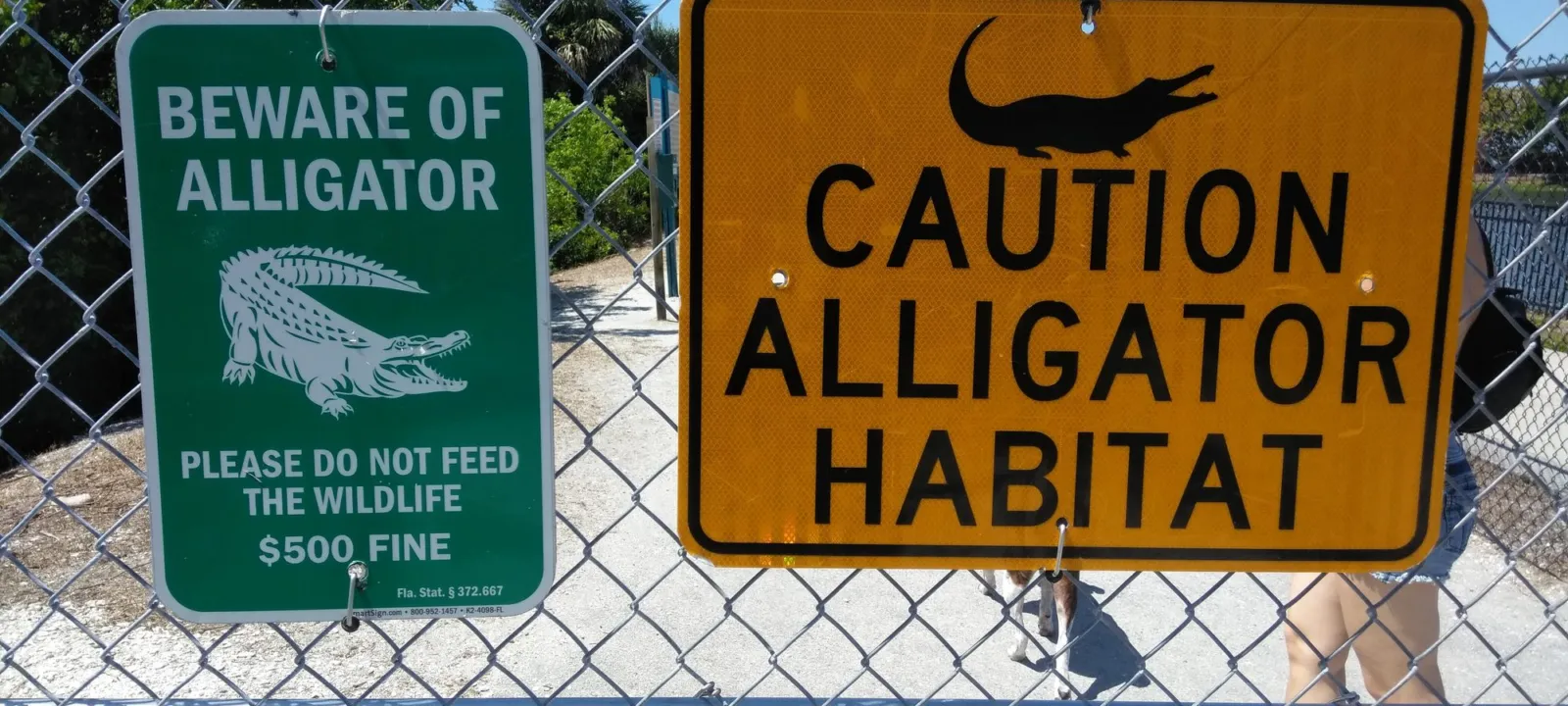
Alligators are one of the most important wildlife hazards for dogs in Florida.
They are found in all 67 counties.
The Florida Fish and Wildlife Conservation Commission estimates the state has roughly 1.3 million alligators of all sizes.
The most important pet rule is:
Keep dogs leashed and away from the water’s edge.
Where Alligators Live
Alligators can occur in:
- Lakes
- Ponds
- Swamps
- Slow-moving rivers
- Wetlands
- Canals
- Retention ponds
- Golf-course ponds
Do not assume an urban pond is safe.
Alligators Are Not Always Visible
A dog can approach the edge of a pond without you seeing an alligator.
FWC specifically advises keeping pets away from freshwater and brackish-water edges.
Never Let Dogs Swim in Fresh or Brackish Water
FWC advises against allowing pets to swim in open freshwater and brackish water.
Even a short swim can be dangerous.
Use:
- Pool
- Controlled dog-swim area
- Ocean beach where dogs are legally allowed
instead.
Pets Can Resemble Natural Prey
FWC warns that pets may resemble an alligator’s natural prey.
Small dogs are an obvious concern, but larger dogs should also be kept away from alligator habitat.
Keep Dogs on a Leash
Use a short leash near:
- Ponds
- Lakes
- Wetlands
- Canals
- Riverbanks
Do not let a dog wander ahead into reeds or shoreline vegetation.
Avoid Dusk and Dawn Near Water
Alligators are most active between dusk and dawn.
That is a bad time for:
- Pond-edge walks
- Waterfront potty breaks
- Off-leash activity
Florida Golf Courses and Retention Ponds
Many Florida neighborhoods contain:
- Golf-course lakes
- Stormwater ponds
- Decorative ponds
Treat all of them as potential alligator habitat.
Do Not Assume a Fence Solves It
Alligators can travel over land.
A fenced yard beside a pond should still be supervised.
FWC recommends accompanying pets even in fenced yards.
Never Feed Alligators
Feeding an alligator is illegal and dangerous.
Fed alligators can lose their natural fear of people and associate humans with food.
Never Throw Food Near Water
Do not toss:
- Fish scraps
- Bait
- Leftovers
into areas where alligators may live.
If You See an Alligator
Keep your distance.
Do not:
- Approach
- Photograph from close range
- Let dog bark at it from the shoreline
- Try to move it
Leave the area.
Nuisance Alligator Hotline
If an alligator poses a concern to people, pets or property, call:
866-FWC-GATOR 866-392-4286
The FWC Statewide Nuisance Alligator Program handles qualifying complaints.
What Is a Nuisance Alligator?
FWC generally considers an alligator a nuisance when:
- It is at least 4 feet long
- The caller believes it poses a threat to people, pets or property
There are exceptions for smaller alligators in inappropriate locations such as:
- Pools
- Garages
If an Alligator Attacks a Dog
This is an emergency.
Call:
- Emergency veterinarian
- Local emergency services if a person is also in danger
Do not put yourself into the water to attempt a rescue if doing so puts you at extreme risk.
Best Walking Rule
If there is freshwater beside the trail:
Walk on the side farthest from the water.
Keep the dog close.
Beach Travelers Still Need to Think About Alligators
A Gulf or Atlantic beach trip can still include alligator habitat nearby.
Common examples:
- State park lagoons
- Freshwater ponds
- Marshes
- Campgrounds
- Inland trails
Campgrounds
At Florida campgrounds:
- Keep food secured
- Use leash
- Do not walk dog at pond edge at night
- Use a flashlight
- Check surroundings before potty breaks
Puppies and Small Dogs
Small dogs should receive extra supervision around water.
Carry the dog if necessary when a narrow trail passes very close to alligator habitat.
Large Dogs
Do not assume size makes a dog safe.
Large dogs may:
- Chase
- Bark
- Enter water
- Approach wildlife
and create a conflict.
Alligator Safety Checklist
Before walking near freshwater:
- Dog on short leash
- Stay away from shoreline
- No swimming
- Avoid dusk and dawn
- Watch vegetation
- Keep dog from chasing wildlife
- Carry flashlight at night
- Know the nuisance hotline
Related Guides
- Florida Wildlife With Pets: Complete Guide
- What to Do if Your Dog Encounters an Alligator
- Crocodiles and Dogs in South Florida
- Fishing With Your Dog in Florida
- Florida Wildlife Emergency Checklist for Pet Travelers
Florida’s alligators are not something pet travelers need to panic about.
They are something pet travelers need to plan around.
Sources
Wear this page
Pet Friendly Florida shirts, drawn to match what you just read. This is our own store, not an affiliate link.


