Most visitors never meet most of this. Florida is a big state and its wildlife changes a lot from region to region - a cane toad is a South Florida backyard problem, a black bear is a central and north Florida one, and a crocodile only matters in the far south. These guides are here for the encounter you do have, not because one is likely.
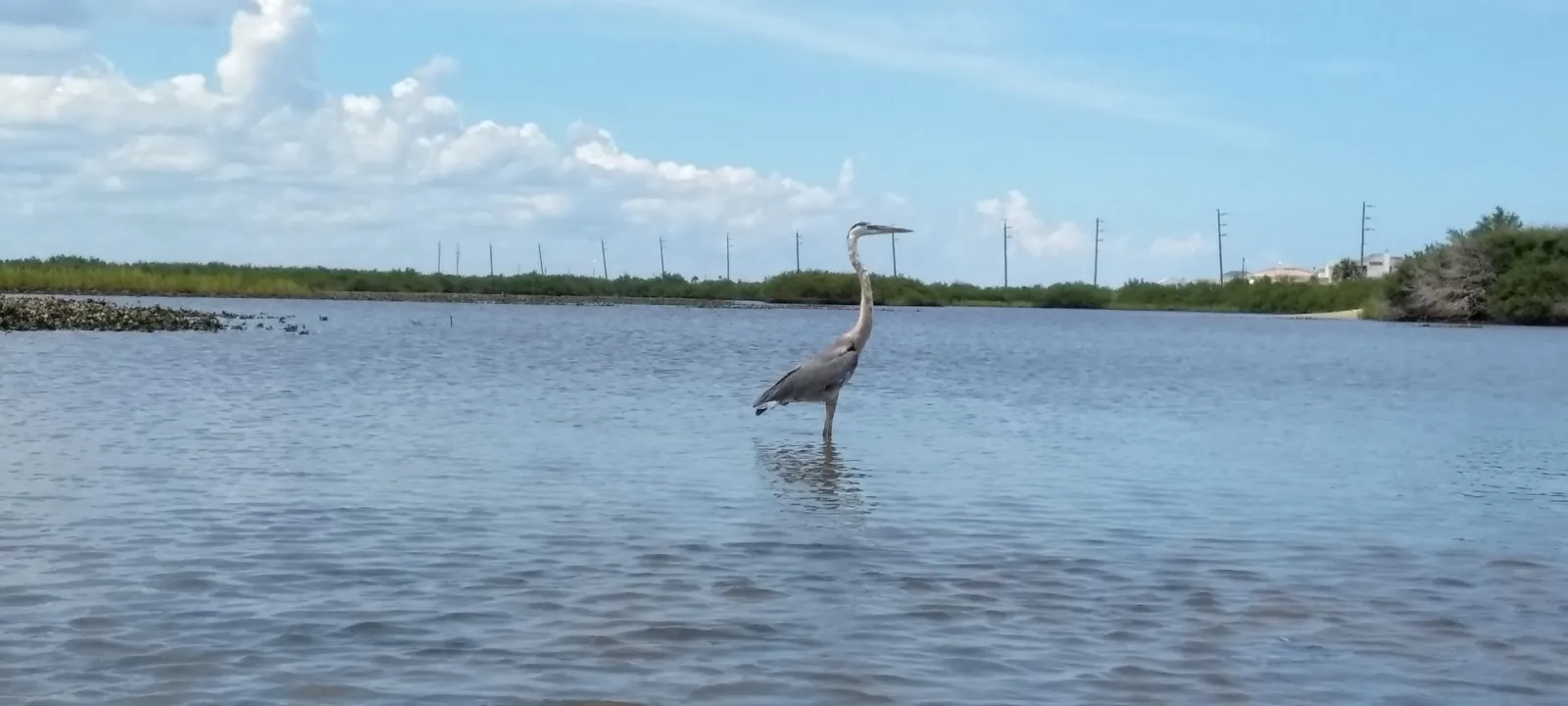
Great blue herons are among Florida’s most recognizable wading birds.
They can be found around:
- Ponds
- Lakes
- Canals
- Marshes
- Beaches
- Golf courses
- Neighborhood retention ponds
They often stand still while people and dogs pass nearby.
Do not mistake that calm appearance for permission to approach.
Great Blue Herons Are Large Birds
A great blue heron can stand around four feet tall.
Its long bill is designed for striking prey.
That makes a close encounter with a dog a bad idea.
Do Not Let Dogs Chase Herons
A chasing dog can:
- Stress the bird
- Disrupt feeding
- Trigger defensive behavior
Use a short leash around wetlands.
Herons Can Injure Dogs
A cornered heron can strike with its bill.
Keep dogs from approaching:
- Injured herons
- Grounded herons
- Birds trapped near fences
Retention Ponds
Florida neighborhoods often have herons around retention ponds.
Those same ponds may contain:
- Alligators
- Snakes
Do not let the dog chase a heron toward the water.
Golf Courses and Parks
Herons frequently feed in open grass around ponds.
Give them a wide path.
Fishing Areas
Herons often gather around:
- Piers
- Fish-cleaning areas
- Boat ramps
Keep dogs away from birds investigating anglers.
Injured Herons
If a heron is injured:
- Keep dog away
- Do not attempt to grab it
- Contact a licensed wildlife rehabilitator
Large wading birds can defend themselves forcefully.
Nesting Areas
Great blue herons may nest in colonies with other wading birds.
Avoid nesting trees and rookery areas with a dog.
Feeding
Do not feed wild herons.
Feeding can cause birds to:
- Lose natural wariness
- Approach people
- Gather in unsafe areas
Best Heron-Safety Checklist
- Short leash
- No chasing
- Stay away from water edges
- Avoid injured birds
- Avoid nesting colonies
- Do not feed
Related Guides
- Florida Birdwatching With a Dog
- Florida Birds Dogs Should Never Chase
- Sandhill Cranes and Pets
- Pelicans and Pets
- Alligators and Dogs in Florida
Great blue herons are easy to admire from a distance.
That distance protects both the bird and your dog.
Sources
- Florida Fish and Wildlife Conservation Commission — Great Blue Heron: myfwc.com
Wear this page
Pet Friendly Florida shirts, drawn to match what you just read. This is our own store, not an affiliate link.


