
Most visitors never meet most of this. Florida is a big state and its wildlife changes a lot from region to region - a cane toad is a South Florida backyard problem, a black bear is a central and north Florida one, and a crocodile only matters in the far south. These guides are here for the encounter you do have, not because one is likely.
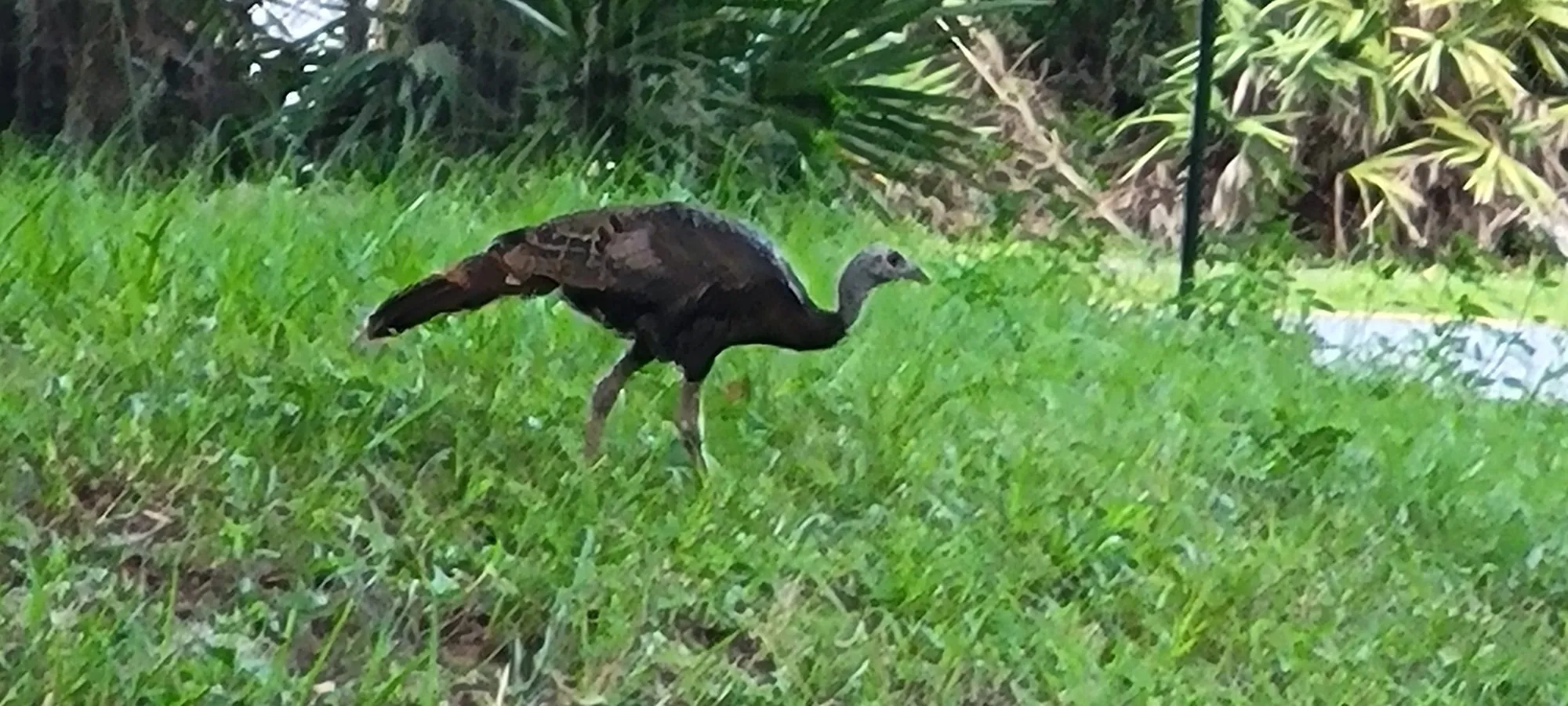
Wild turkeys live across most of Florida, from Panhandle pine woods to the edges of new subdivisions in the middle of the state, and your dog will spot one before you do. They are not dangerous to a leashed dog, but a dog that chases a flock can scatter a hen’s chicks, pull you into a road, or run off into woods during hunting season. Keep the leash short and let the birds walk away.
Florida’s two kinds of wild turkey, and where they live
According to FWC, Florida has two subspecies. The eastern wild turkey is the same bird found across much of the eastern United States. The Osceola, or Florida wild turkey, is found only in peninsular Florida. North of the peninsula and across the Panhandle the two interbreed; for its turkey registry, FWC counts any bird taken within or south of Dixie, Gilchrist, Alachua, Union, Bradford, Clay and Duval counties as an Osceola. The Osceola looks darker in the wing, with narrower, broken white bars on the flight feathers.
Both live in open forests, forest edges and clearings. In practice that means you will see them along rural roads, on the edges of pastures and fields, in state parks and wildlife management areas, and increasingly in suburban neighborhoods that back onto woods. They spend the day walking and scratching for acorns, seeds, fruit, insects and small animals, covering a lot of ground, and at night they roost in trees in thicker stands of forest.
Why dogs go after turkeys
A turkey is almost designed to set off a dog’s prey drive. Flocks can be a handful of birds or 20 and more, and FWC describes them as extremely cautious animals that bolt on foot or burst into flight when something threatens them. They mostly walk to save energy, but FWC notes they can fly at up to 55 miles per hour. A big bird running, then suddenly flapping off, is exactly the kind of movement that makes a dog forget you exist.
The dog is unlikely to catch an adult turkey. The problems come from the chase itself: a dog yanking free of a leash, running into traffic on a rural road, or disappearing into palmetto and swamp where it can meet an alligator, a rattlesnake or a hunter.
Spring is the sensitive season
Spring is when turkeys are most worth giving extra room. Males – gobblers or toms – strut, fan their tails and gobble to attract hens during courtship, and adult males are big birds that may become more assertive during breeding season. Do not let a dog corner or confront one.
FWC says Florida hens typically begin nesting in late March or early April. The nest is a shallow scrape on the ground, usually with 9 to 12 eggs, and the hen sits on them for 26 to 28 days. After hatching, the chicks (poults) walk and feed themselves right away but cannot fly for about two weeks, and they roost on the ground under the hen until they are around four weeks old. That means from spring into early summer there can be flightless young birds scattered in the grass near trails and field edges. A loose dog can separate poults from the hen or find a ground nest without you ever seeing it. If you see a hen with young, stop, shorten the leash and go around or back the way you came.
Turkeys in the yard or by the road
If you are staying at a rental near woods and turkeys wander into the yard, bring the dog inside and let the birds move on. Do not open the door and send the dog out to chase them off. That trains the dog to chase and teaches nothing to the turkeys.
Turkeys often cross roads in groups and do not hurry. On rural drives, keep dogs secured in the car and leash them before you open the door at a pull-off, a trailhead or a gas station on the edge of the woods. The same applies to any Florida roadside – see our notes on Key deer and Florida’s wild horses for other animals that stand in roads.
Do not feed wild turkeys. Feeding concentrates birds in one place, changes how they behave around people and pets, and is how an interesting visitor turns into a nuisance flock.
Walking a dog on public land during turkey season
Wild turkeys are a game species in Florida, and FWC runs a spring turkey hunting season on private land and on many public wildlife management areas. Dates, rules and which areas allow hunting change by year and by property, so check the FWC wild turkey hunting pages or the specific WMA’s brochure before you go.
During a hunt, turkey hunters sit still and call birds in. A dog crashing through the woods is a problem for them and a real safety risk for the dog. On land where hunting is open:
- Keep the dog leashed and close, and stay on designated trails and roads.
- Put a bright orange vest or collar on the dog, and wear something bright yourself, so nobody mistakes movement in the brush for game.
- Consider walking in the middle of the day or choosing a park where hunting is not allowed.
Many Florida state parks and urban nature preserves do not allow hunting at all and still have turkeys, which makes them the easier option with a dog.
Turkey-safe habits for every walk
- Short leash in turkey country. Forest edges, pastures and wooded neighborhoods are where you will meet them.
- No chasing, ever. Interrupt the stare before it becomes a lunge, and reward the dog for looking back at you.
- Extra space from spring into early summer. Strutting males and hens with poults both deserve a wide berth.
- Secure the dog before opening the car door on rural roads and at trailheads.
- Do not feed turkeys, and keep pet food indoors at rentals near the woods.
- Check hunting seasons before walking on public land, and dress the dog in orange when they are open.
If the dog does get loose and tangles with a turkey or anything else, check for cuts and scratches, and call a vet for any puncture wound or limping. Turkeys are one of the best birds to see from a trail in Florida – our guides to birdwatching with a dog and Florida birds dogs should never chase cover the rest.