
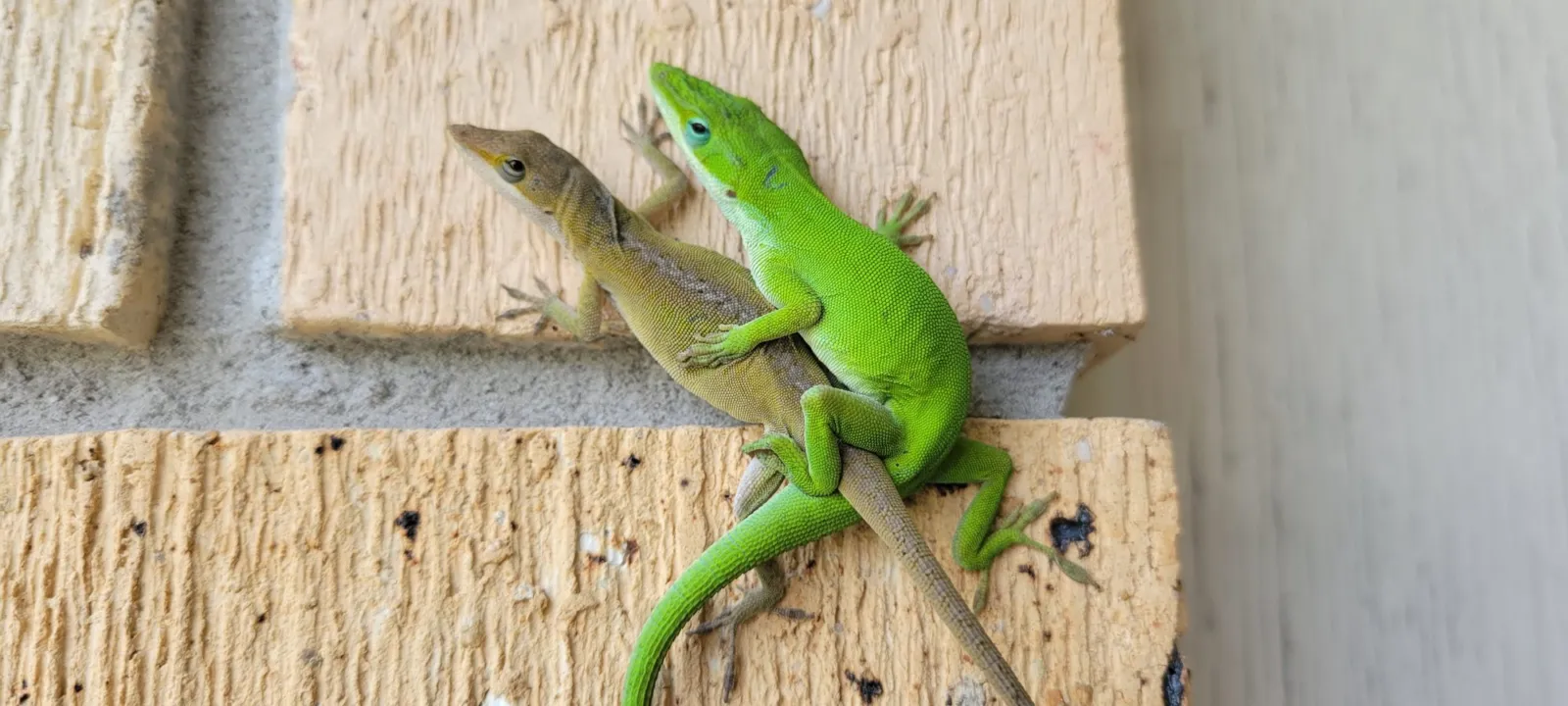
Most visitors never meet most of this. Florida is a big state and its wildlife changes a lot from region to region - a cane toad is a South Florida backyard problem, a black bear is a central and north Florida one, and a crocodile only matters in the far south. These guides are here for the encounter you do have, not because one is likely.
Green iguanas are now a common sight in parts of South Florida.
They are:
- Nonnative
- Invasive
- Large
- Fast
- Capable of biting, scratching and tail-whipping
For pet owners, the main rule is simple:
Do not let dogs or cats chase or corner iguanas.
Green Iguanas Are Invasive in Florida
The Florida Fish and Wildlife Conservation Commission classifies green iguanas as a Prohibited species because of their impacts on Florida’s environment and economy.
They are not native to Florida.
Current FWC rules allow removal under specific conditions, but pet travelers should not attempt to capture one casually.
Where Are Iguanas Common?
Green iguanas are most associated with South Florida.
They may be seen around:
- Canals
- Seawalls
- Golf courses
- Parks
- Yards
- Mangroves
- Landscaped neighborhoods
Why Dogs Chase Iguanas
Iguanas:
- Run quickly
- Climb
- Jump
- Swim
That movement can trigger prey drive.
A dog may chase an iguana straight toward:
- Water
- Traffic
- Dense brush
The chase itself can be the biggest danger.
Iguanas Can Defend Themselves
A cornered iguana can use:
- Teeth
- Claws
- Powerful tail
Large adults can cause painful injuries.
Keep Dogs on a Short Leash
In areas with lots of iguanas:
- Use a six-foot or shorter leash
- Avoid retractable leashes
- Keep dog close around canals and seawalls
Cats
Outdoor cats can also chase young iguanas.
Keep cats indoors or securely contained while traveling.
Do Not Let Pets Eat Iguanas
Do not allow a dog to:
- Bite
- Chew
- Eat
an iguana carcass.
Any wildlife carcass can expose a pet to:
- Bacteria
- Parasites
- Bones
- Unknown contaminants
Call a veterinarian if your pet eats a significant amount or becomes ill.
Canal Risk
This is especially important in South Florida.
A dog chasing an iguana may end up at the edge of a canal.
That creates secondary risks including:
- Alligators
- Crocodiles
- Deep water
- Steep seawalls
Cold Weather and Falling Iguanas
During unusually cold South Florida weather, iguanas can become temporarily immobilized and fall from trees.
Do not let a dog investigate or mouth one.
A stunned iguana may recover quickly.
Do Not Relocate Captured Iguanas
FWC states that captured green iguanas cannot simply be relocated and released elsewhere in Florida.
If you have a nuisance problem at a Florida home or rental property, use current FWC guidance or a professional nuisance wildlife trapper.
Current Florida Regulatory Status
Green iguanas were added to Florida’s Prohibited species list effective April 29, 2021.
FWC adopted additional collection and transport rule changes in 2025 and 2026.
That means removal rules are more complicated than simply catching one and moving it.
If an Iguana Bites or Scratches Your Dog
Contact your veterinarian.
Watch for:
- Puncture wounds
- Bleeding
- Swelling
- Limping
- Eye injury
Iguana Safety Checklist
In South Florida:
- Use short leash
- Stay away from canal edge
- Do not allow chasing
- Do not let pet bite carcasses
- Supervise fenced yards
- Keep cats contained
- Call vet after a significant bite or scratch
Related Guides
- Florida Wildlife With Pets: Complete Guide
- Crocodiles and Dogs in South Florida
- Alligators and Dogs in Florida
- Nile Monitors and Pets
- Argentine Black and White Tegus and Pets
Iguanas are part of modern South Florida life.
They are interesting to watch.
They are not animals your dog needs to meet.
Sources
Wear this page
Pet Friendly Florida shirts, drawn to match what you just read. This is our own store, not an affiliate link.


