Most visitors never meet most of this. Florida is a big state and its wildlife changes a lot from region to region - a cane toad is a South Florida backyard problem, a black bear is a central and north Florida one, and a crocodile only matters in the far south. These guides are here for the encounter you do have, not because one is likely.
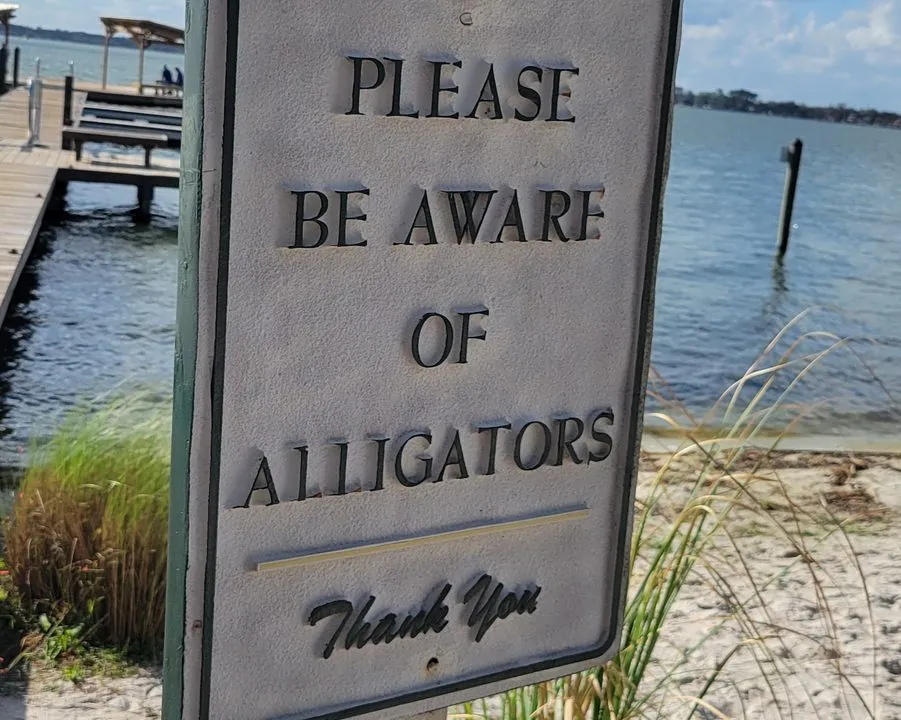
Alligators live in all 67 Florida counties.
They can occur in:
- Lakes
- Ponds
- Canals
- Rivers
- Marshes
- Brackish water
Dogs are especially vulnerable because their size and movement can resemble natural prey.
If you see an alligator while walking your dog:
Get the dog away from the water and create distance immediately.
Step 1: Shorten the Leash
Bring the dog directly beside you.
Do not let it:
- Bark toward the alligator
- Approach
- Enter water
- Run along shoreline
Step 2: Back Away
Move away from:
- Alligator
- Water edge
Do not stand around for photos.
Step 3: Leave the Area
Choose a route that increases distance.
Do not try to pass closely between:
- Alligator
- Water
Never Let the Dog Investigate
Dogs may want to sniff:
- Small alligator
- Large alligator
- Nest
- Hatchlings
Do not allow it.
A nearby adult may be defensive.
If the Alligator Is on a Trail
Do not try to squeeze past.
Turn around.
Give the animal an escape route.
Do Not Feed Alligators
Feeding alligators is illegal and dangerous.
It can cause them to associate people with food.
Freshwater Swimming
FWC advises keeping pets:
- Away from water edges
- Out of open freshwater and brackish water
Do not treat a lake or canal as a dog swimming hole.
Dawn and Dusk
Use extra caution around:
- Dawn
- Dusk
- Night
when alligators may be more active.
If an Alligator Approaches
Increase distance.
Do not allow the dog to bark or lunge.
Move to a secure area.
If an Alligator Grabs Your Dog
This is an extreme emergency.
Call emergency services and wildlife authorities as appropriate.
Do not put yourself into the water after the dog.
Alligator attacks can be fatal to humans too.
There is no guaranteed safe physical technique for separating a dog from an alligator.
After Any Bite or Contact
Seek emergency veterinary care immediately.
Even if the dog escapes, injuries may include:
- Deep punctures
- Crushing trauma
- Internal injuries
- Infection
Nuisance Alligators
Florida’s Statewide Nuisance Alligator Program accepts reports about alligators believed to pose a threat to:
- People
- Pets
- Property
The current hotline is:
866-FWC-GATOR 866-392-4286
FWC generally classifies an alligator as a potential nuisance when it is at least four feet long and believed to pose a threat.
Do Not Report Every Alligator
Seeing an alligator in normal habitat does not automatically make it a nuisance.
Florida’s goal is coexistence where possible.
Report animals that meet nuisance criteria or are creating a clear threat.
Yard and Neighborhood Safety
If you live or stay near water:
- Fence pet area where practical
- Keep dog on leash
- Use outdoor lights at night
- Check yard before letting dog out
- Never leave small pets unattended
Retention Ponds
Treat every Florida retention pond as potential alligator habitat.
It does not matter if it is:
- Small
- Suburban
- Beside hotel
- Beside apartment complex
Best Alligator-Encounter Checklist
- Shorten leash
- Move away from water
- Back away
- Never approach
- Never feed
- Never let dog swim
- Call FWC for genuine nuisance animals
- Seek emergency vet care after contact
Related Guides
- Alligators and Dogs in Florida
- Freshwater Fishing With a Dog
- Florida Wildlife With Pets: Complete Guide
- What to Do if Your Dog Is Bitten by a Snake
- Florida Wildlife Emergency Checklist for Pet Travelers
The most important alligator safety habit for dog owners in Florida is simple:
Keep the dog farther from the water than you think is necessary.
Sources
Wear this page
Pet Friendly Florida shirts, drawn to match what you just read. This is our own store, not an affiliate link.


