Most visitors never meet most of this. Florida is a big state and its wildlife changes a lot from region to region - a cane toad is a South Florida backyard problem, a black bear is a central and north Florida one, and a crocodile only matters in the far south. These guides are here for the encounter you do have, not because one is likely.
Florida is the only place in the United States where American crocodiles live in the wild.
They occur primarily in coastal South Florida and the Keys.
For dog owners, the safety rule is nearly identical to alligator country:
Keep pets leashed and away from the water’s edge.
Where American Crocodiles Live in Florida
The Florida Fish and Wildlife Conservation Commission says American crocodiles occur primarily in:
- Coastal South Florida
- Florida Keys
- Mangrove swamps
- Brackish ponds
- Coves
- Tidal creeks
- Saltwater areas
They are also occasionally found inland in freshwater areas of southeast Florida because of the canal system.
Florida’s Crocodile Population Has Recovered
American crocodiles were federally listed as endangered in 1975.
At that time, Florida had fewer than 300 crocodiles.
Current FWC estimates place the population at roughly:
1,500 to 2,000 crocodiles, not including hatchlings
The species is now federally classified as threatened.
Florida Is Unique
Florida is the only place in the world where:
- American alligators
- American crocodiles
naturally coexist.
Dogs Can Resemble Natural Prey
FWC specifically warns that pets can resemble crocodiles’ natural prey.
Keep dogs away from:
- Canal edges
- Mangrove creeks
- Brackish ponds
- Shorelines
Use a Short Leash
FWC pet-safety guidance recommends:
- Non-retractable leash
- Six feet or shorter
around wildlife.
Do not let a dog wander ahead near water.
Do Not Let Dogs Swim
FWC recommends swimming only in designated swimming areas during daylight hours and without your pet in crocodile habitat.
Do not let dogs swim in:
- Canals
- Brackish ponds
- Mangrove creeks
- Uncontrolled coastal water near known crocodile habitat
Dusk and Dawn
Crocodiles are most active between dusk and dawn.
Avoid shoreline dog walks at those times.
Nighttime Potty Breaks
If your hotel, rental or campsite borders:
- Canal
- Lagoon
- Pond
- Mangrove area
use extra caution after dark.
Bring:
- Short leash
- Flashlight
Stay well away from the water.
What If You See a Crocodile?
Keep your distance.
Do not:
- Approach
- Let dog bark at it
- Try to photograph from close range
- Block its movement
- Feed it
Leave the area.
A Crocodile With Its Mouth Open Is Not Necessarily Aggressive
FWC explains that crocodiles often bask with their mouths open.
This is called:
Gaping
It helps regulate body temperature.
It does not automatically mean the animal is threatening you.
Still keep your distance.
Crocodiles Can Travel on Land
Crocodiles sometimes move over land between water bodies.
FWC says this does not mean the animal is actively hunting.
Give it space and keep your dog away.
Never Feed Crocodiles
Feeding crocodiles is:
- Illegal
- Dangerous
Feeding can cause animals to associate people with food.
Fish Scraps Matter
Do not throw fish scraps into crocodile habitat.
FWC warns that improperly discarded fish remains can attract crocodiles.
This is especially relevant in:
- Florida Keys
- Marina areas
- Canal neighborhoods
- Fishing spots
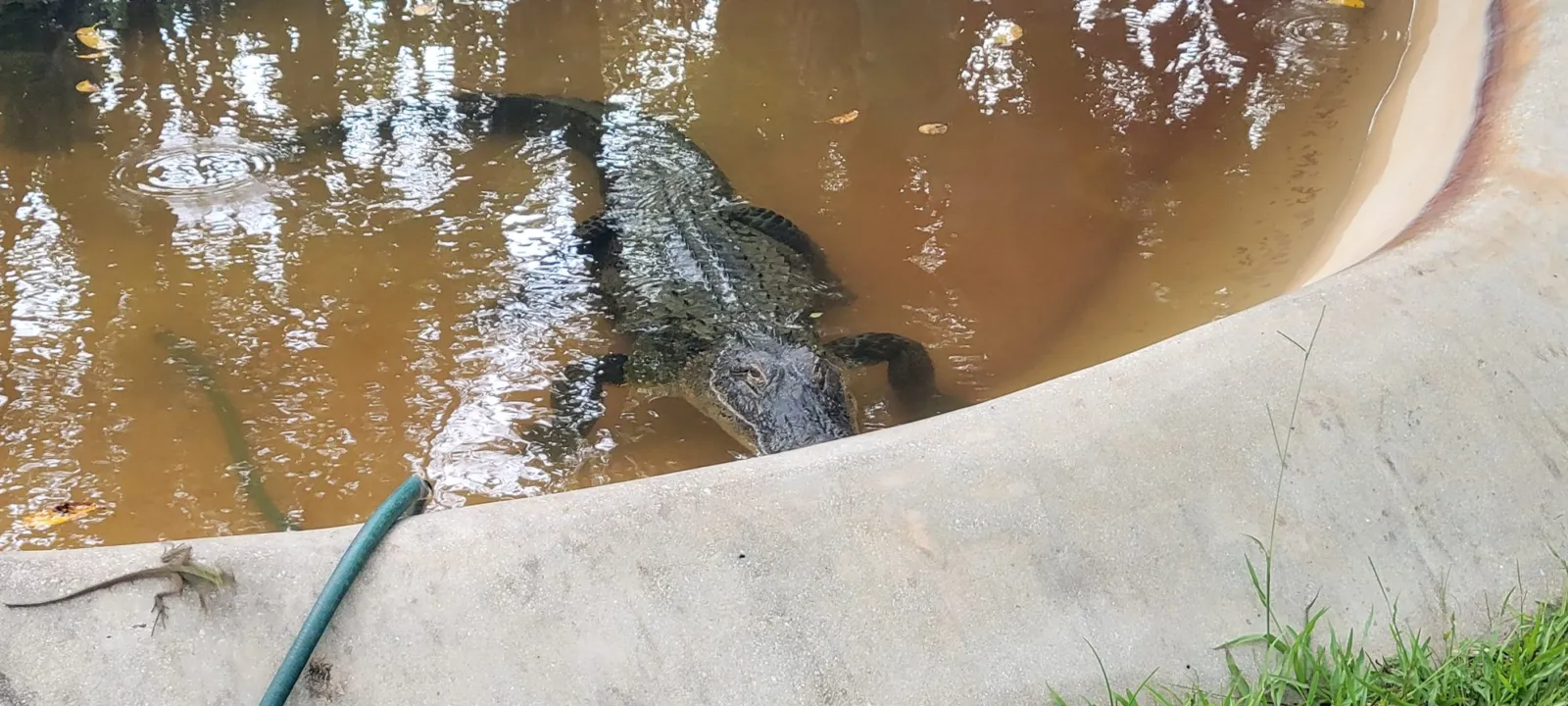
Crocodile or Alligator?
General field differences:
American Crocodile
- Narrower, more tapered snout
- Grayish-green appearance
- Upper and lower teeth often visible when mouth closed
American Alligator
- Broader rounded snout
- Darker appearance
- Mostly upper teeth visible when mouth closed
You do not need to identify the species before protecting your dog.
Treat either animal with distance.
Crocodile Hotline
If you are concerned about a crocodile, call:
866-FWC-GATOR 866-392-4286
FWC crocodile-response staff can assess the situation.
If a Crocodile Attacks a Dog
This is an emergency.
Contact an emergency veterinarian immediately.
Do not put yourself in extreme danger by entering the water.
South Florida Places Where Awareness Matters
Crocodile awareness is especially relevant around:
- Florida Keys
- Everglades
- Biscayne Bay region
- Southeast Florida canals
- Mangrove coastlines
Best Safety Rule
If you cannot tell whether water may hold an alligator or crocodile:
Assume it can.
Keep the dog away from the edge.
Related Guides
- Alligators and Dogs in Florida
- Florida Wildlife With Pets: Complete Guide
- Fishing With Your Dog in Florida
- Florida Wildlife Emergency Checklist for Pet Travelers
American crocodiles are a conservation success story.
They are also powerful wild predators.
Respecting distance protects both your dog and the crocodile.
Sources
Wear this page
Pet Friendly Florida shirts, drawn to match what you just read. This is our own store, not an affiliate link.
