
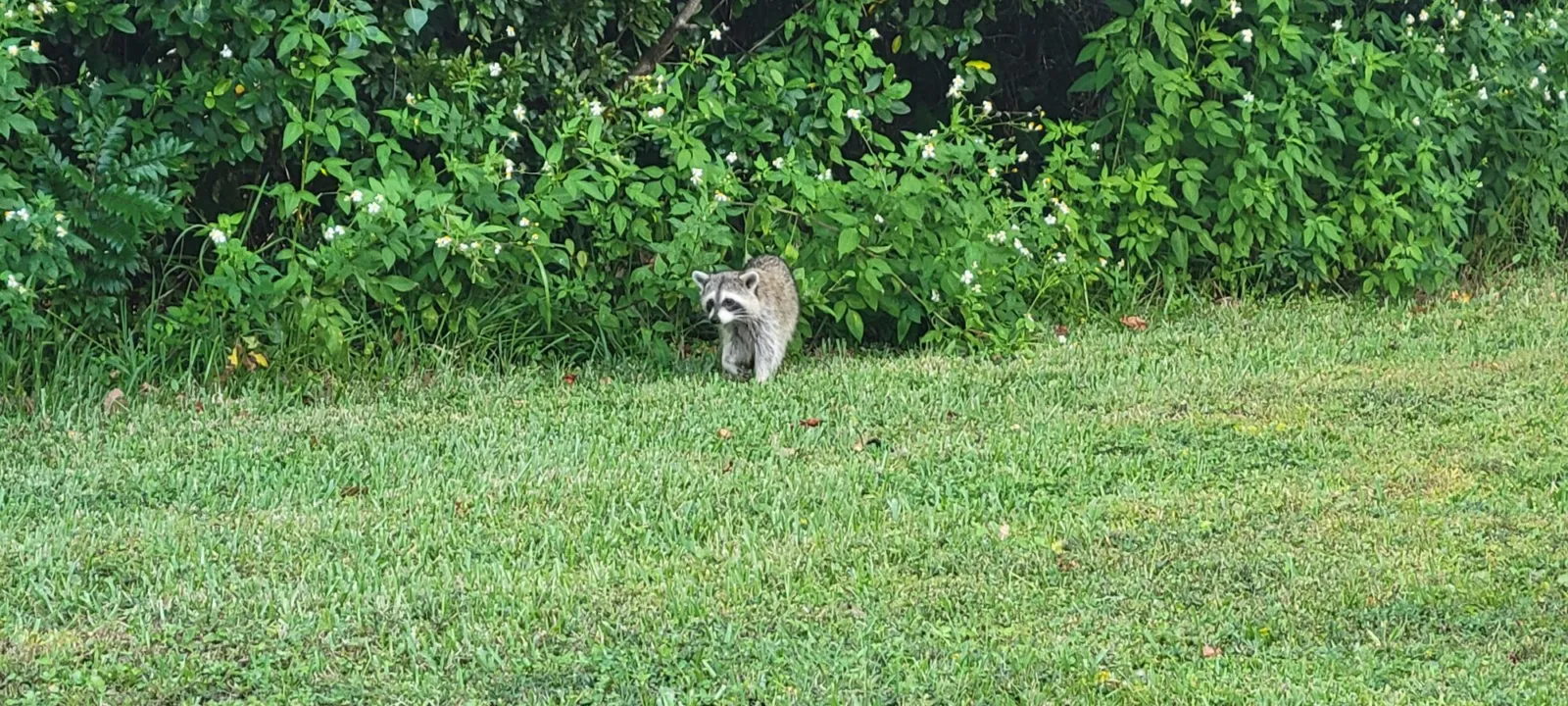
Most visitors never meet most of this. Florida is a big state and its wildlife changes a lot from region to region - a cane toad is a South Florida backyard problem, a black bear is a central and north Florida one, and a crocodile only matters in the far south. These guides are here for the encounter you do have, not because one is likely.
Raccoons are common across Florida.
They live in:
- Cities
- Suburbs
- Parks
- Campgrounds
- Wetlands
- Coastal neighborhoods
- Rural properties
Most raccoons want nothing to do with your pet.
The biggest concerns are:
- Bites
- Scratches
- Rabies exposure
- Food attraction
- Nighttime conflicts
Raccoons Are Common Around Homes
Raccoons are highly adaptable.
They are attracted to:
- Garbage
- Pet food
- Bird seed
- Outdoor feeding areas
- Compost
The easiest way to reduce conflict is to remove food rewards.
Rabies
Raccoons are one of the wildlife species associated with rabies in Florida.
A raccoon that bites or scratches a pet should be taken seriously.
Keep Rabies Vaccination Current
Make sure dogs and cats are current on rabies vaccination.
This is especially important in a state where wildlife encounters are common.
If a Raccoon Bites Your Pet
Contact your veterinarian immediately.
FWC also advises reporting mammal bites to the local county health department.
Do not assume a small puncture wound is unimportant.
Do Not Handle the Raccoon
Do not try to:
- Catch
- Kill
- Transport
the animal yourself.
Local public health and animal-control authorities may need to determine next steps.
Nighttime Is the Biggest Risk
Raccoons are primarily nocturnal.
Supervise pets during:
- Dusk
- Night
- Dawn
Use a flashlight.
Keep Cats Indoors
Free-roaming cats are much more likely to encounter raccoons.
Indoor housing protects against:
- Wildlife
- Vehicles
- Disease
Short-Leash Dogs
Do not allow a dog to chase a raccoon into:
- Fence corner
- Tree base
- Shed
- Deck
A cornered raccoon can defend itself aggressively.
Remove Pet Food
FWC recommends:
- Stay with pets while eating outside
- Bring bowls inside immediately afterward
Do not leave food overnight.
Secure Garbage
Use:
- Latching lids
- Garage storage where practical
- Wildlife-resistant containers
Raccoons in Trash Areas
At condos and vacation rentals, be careful around:
- Dumpsters
- Trash enclosures
- Parking-lot garbage areas
especially at night.
A Raccoon Out in Daylight Is Not Automatically Rabid
Raccoons can sometimes be active during the day.
Daytime activity alone is not proof of rabies.
More concerning behavior includes:
- Staggering
- Severe disorientation
- Paralysis
- Unprovoked aggression
Still keep pets away.
Do Not Feed Raccoons
Feeding encourages:
- Close approaches
- Property visits
- Conflict
Campgrounds
At Florida campgrounds:
- Secure food
- Store pet food properly
- Do not leave bowls outside
- Keep dog leashed
- Supervise nighttime potty breaks
If You Find a Baby Raccoon
Do not allow your pet to investigate.
Contact a licensed wildlife rehabilitator or appropriate local authority if assistance appears necessary.
Best Raccoon-Safety Checklist
- Rabies vaccine current
- Cats indoors
- Dogs supervised
- Short leash at night
- No outdoor pet food
- Secure garbage
- Call vet after bite or scratch
- Report mammal bites appropriately
Related Guides
- Bobcats and Small Pets
- Coyotes in Florida Neighborhoods
- Armadillos and Dogs
- Florida Wildlife With Pets: Complete Guide
- Florida Wildlife Emergency Checklist for Pet Travelers
Raccoons are part of everyday Florida wildlife.
Most problems happen when food or pets bring them into close contact.
Sources
- Florida Fish and Wildlife Conservation Commission — Raccoon: myfwc.com
- FWC — Cats and Dogs: myfwc.com
- Florida Department of Health — Rabies: floridahealth.gov
Wear this page
Pet Friendly Florida shirts, drawn to match what you just read. This is our own store, not an affiliate link.


