
Most visitors never meet most of this. Florida is a big state and its wildlife changes a lot from region to region - a cane toad is a South Florida backyard problem, a black bear is a central and north Florida one, and a crocodile only matters in the far south. These guides are here for the encounter you do have, not because one is likely.
Muscovy ducks are common in many Florida neighborhoods, parks and retention ponds.
They are large, distinctive ducks with:
- Red facial caruncles
- Heavy bodies
- Strong claws
- A willingness to live close to people
They are also nonnative in Florida.
For dog owners:
Do not let dogs chase, corner or attack Muscovy ducks.
Why Muscovy Ducks Are So Common
Muscovy ducks were introduced to Florida and now live in many developed areas.
They are often seen around:
- Retention ponds
- Apartment complexes
- Canal banks
- Golf courses
- Parks
- Parking lots
Keep Dogs on a Short Leash
A dog may react strongly when ducks:
- Run
- Flap
- Fly low
- Gather in groups
Keep the dog close and prevent chasing.
Ducks Can Defend Themselves
Adult Muscovy ducks are larger and stronger than many people expect.
A cornered duck may:
- Peck
- Scratch
- Flap forcefully
Do not allow close face-to-face encounters.
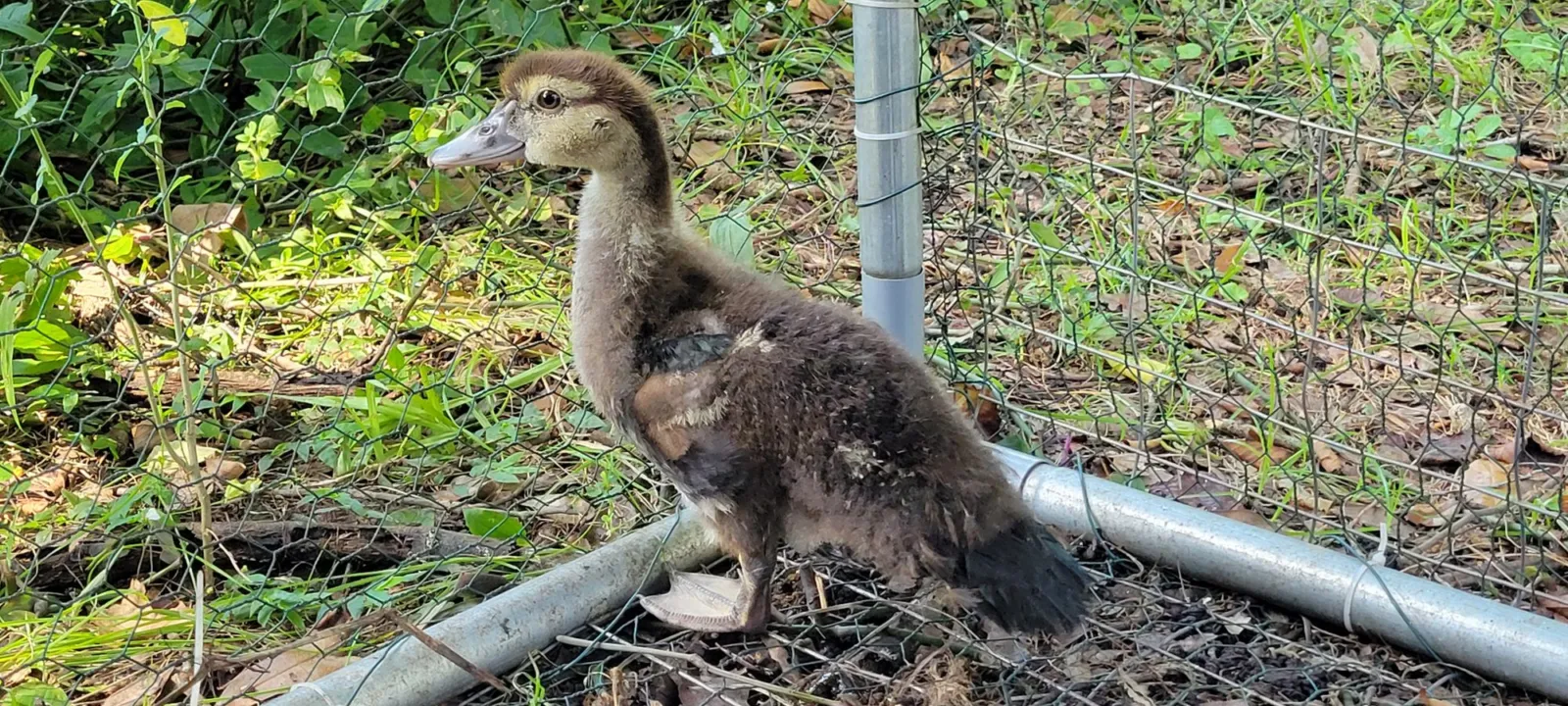
Ducklings
Be especially cautious around:
- Hens with ducklings
- Nesting areas
Keep dogs well away.
Do Not Feed Them
Feeding Muscovy ducks can increase:
- Crowding
- Waste
- Aggressive begging
- Neighborhood conflict
It also encourages birds to stay close to roads and people.
Pet Food Can Attract Ducks
Do not leave dog or cat food outside near ponds.
Florida Rules Are Different Because Muscovies Are Nonnative
FWC says no permit is required to possess Muscovy ducks, but Florida law and federal regulations prohibit releasing them.
FWC also says nuisance Muscovy ducks are not removed by the agency; property owners may use lawful humane removal methods or hire a nuisance wildlife trapper.
For dog owners, the important point is:
Do not try to use your dog to chase or remove them.
Do Not Relocate Captured Ducks
FWC says captured Muscovy ducks cannot simply be released elsewhere.
If you have a nuisance issue on private property, use legal wildlife-management guidance instead of improvised relocation.
Retention Pond Safety
The pond itself can be more dangerous to the dog than the ducks.
Florida retention ponds can contain:
- Alligators
- Snakes
Do not let a dog chase ducks into the water.
Injured Ducks
If a dog finds an injured duck:
- Keep pet away
- Do not allow biting or carrying
- Contact an appropriate local animal or wildlife resource
Because Muscovy ducks are nonnative, response options may differ from protected native waterfowl.
Best Muscovy-Duck Safety Checklist
- Short leash
- No chasing
- Avoid hens with ducklings
- Do not feed
- Keep pet food indoors
- Stay away from pond edges
- Do not relocate captured ducks
Related Guides
- Florida Birdwatching With a Dog
- Florida Birds Dogs Should Never Chase
- Peacocks in Florida Neighborhoods
- Florida’s Feral Parrots, Peacocks and Monkeys
- Alligators and Dogs in Florida
Muscovy ducks may be ordinary neighborhood birds in Florida, but that is no reason to turn them into a dog-chasing game.
Sources
- Florida Fish and Wildlife Conservation Commission — Muscovy Ducks: myfwc.com
Wear this page
Pet Friendly Florida shirts, drawn to match what you just read. This is our own store, not an affiliate link.


