Most visitors never meet most of this. Florida is a big state and its wildlife changes a lot from region to region - a cane toad is a South Florida backyard problem, a black bear is a central and north Florida one, and a crocodile only matters in the far south. These guides are here for the encounter you do have, not because one is likely.
Cottonmouths are one of Florida’s six native venomous snake species.
They are also called:
Water moccasins
For dog owners, the most important rule is:
Keep dogs away from snakes around water and never let them investigate a cottonmouth.
Where Cottonmouths Live
FWC says cottonmouths occur throughout Florida in wet areas including:
- Streams
- Lakes
- Marshes
- Swamps
- Retention ponds
- Roadside ditches
They can also wander far from water.
What Do They Look Like?
Adult cottonmouths are typically:
- Heavy-bodied
- Dark-colored
- About 2 to 4 feet long on average
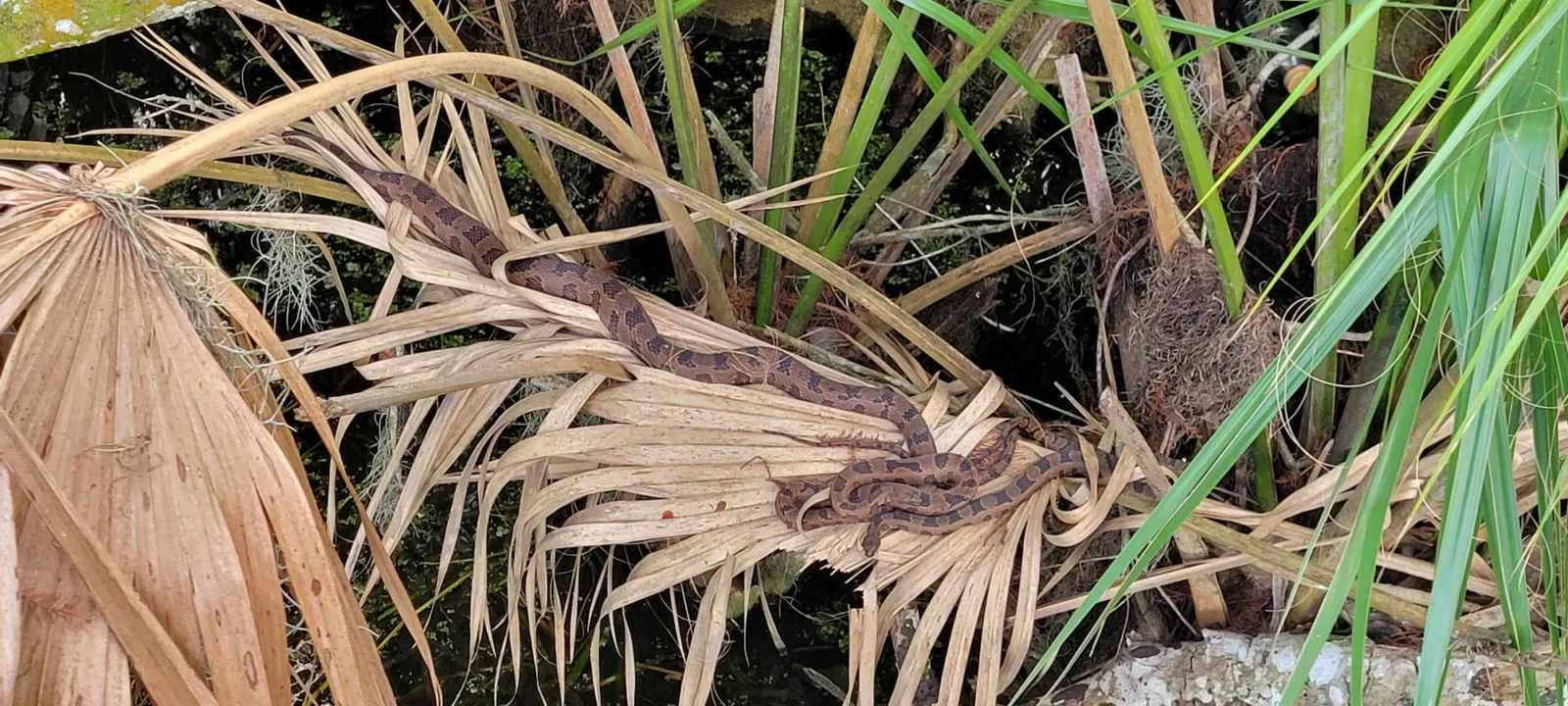
Juveniles are often:
- Brown or tan
- More strongly patterned
- Yellow-tipped on the tail
Cottonmouths Are Often Misidentified
Many harmless water snakes are mistaken for cottonmouths.
Do not approach a snake to inspect:
- Pupils
- Facial pits
- Head shape
Those details are useful for identification from a safe photo or expert review, not a reason to get closer.
Are Cottonmouths Aggressive?
FWC says cottonmouths are not necessarily aggressive.
Like most snakes, they prefer to avoid conflict.
A dog that:
- Rushes
- Sniffs
- Bites
- Corners
a snake can trigger a defensive bite.
Keep Dogs Away From Water Edges
Cottonmouth habitat overlaps with several other Florida pet hazards.
Around freshwater and brackish water, dogs can encounter:
- Cottonmouths
- Alligators
- River otters
Use a short leash and stay back from the edge.
Where Dogs Are Likely to Encounter Them
Common scenarios include:
- Retention ponds
- Wet hiking trails
- Swamp boardwalk approaches
- Canal banks
- Campgrounds
- Lakefront yards
Signs of a Venomous Snakebite
University of Florida veterinary guidance says pit-viper bites may cause:
- Local swelling
- Bleeding from fang wounds
- Quiet or lethargic behavior
Cottonmouths are pit vipers.
Do Not Wait for Swelling
If you saw the bite or strongly suspect a cottonmouth bite:
Go to a veterinarian immediately.
Do not wait to see whether the dog gets worse.
What Not to Do
Do not:
- Try to catch snake
- Try to kill snake
- Cut bite area
- Suck venom
- Apply ice
- Use a tourniquet
- Use home remedies
Antivenom
Antivenom may be used for serious cottonmouth bites.
Your veterinarian determines treatment based on:
- Symptoms
- Bite location
- Dog’s condition
- Progression
Prognosis
UF/IFAS guidance says most dogs can survive cottonmouth bites with prompt and adequate treatment, including antivenom when appropriate.
Delay is the enemy.
Reduce Cottonmouth Encounters
Around a Florida home or rental:
- Remove brush piles
- Control rodents
- Pick up pet food
- Keep yard trimmed
- Use flashlight at night
Walking Near Ponds
Walk on the side of the path farthest from water when possible.
Keep your dog beside you.
Do Not Let Dogs Swim in Retention Ponds
Even if no cottonmouth is visible, other hazards such as alligators make open freshwater a poor place for a pet swim.
If You Find a Cottonmouth in a Yard
Give it space.
Do not attempt to handle it.
If immediate removal is necessary, contact a qualified wildlife professional.
Related Guides
- Venomous Snakes of Florida: Pet Owner Guide
- Eastern Diamondback Rattlesnakes and Dogs
- Alligators and Dogs in Florida
- River Otters and Pets
- What to Do if Your Dog Is Bitten by a Snake
Cottonmouths are part of Florida’s wetland ecosystem.
Keeping your dog away from the shoreline protects the dog from more than just one species.
Sources
- Florida Fish and Wildlife Conservation Commission — Cottonmouth / Water Moccasin: myfwc.com
- FWC — Living with Snakes: myfwc.com
- University of Florida Small Animal Hospital — Venomous Snake Bites in Pets: smallanimal.vethospital.ufl.edu
- UF/IFAS — Dealing with Snakes in Florida’s Residential Areas: edis.ifas.ufl.edu
Wear this page
Pet Friendly Florida shirts, drawn to match what you just read. This is our own store, not an affiliate link.
