Most visitors never meet most of this. Florida is a big state and its wildlife changes a lot from region to region - a cane toad is a South Florida backyard problem, a black bear is a central and north Florida one, and a crocodile only matters in the far south. These guides are here for the encounter you do have, not because one is likely.
Key deer are federally endangered, they live only in the Lower Florida Keys, and on Big Pine Key they walk through yards like they pay taxes there. Dogs are welcome on leash at the National Key Deer Refuge, but your dog must never chase, corner or harass a deer, and nobody in your party may feed one. Do that and a trip to deer country is one of the best wildlife experiences in the state.
Where Key deer live and when you will see them
Key deer are the smallest subspecies of white-tailed deer in North America. According to the U.S. Fish and Wildlife Service, adults stand about 25 to 30 inches at the shoulder, with bucks averaging 55 to 75 pounds and does 45 to 65 pounds. A big Labrador can outweigh one.
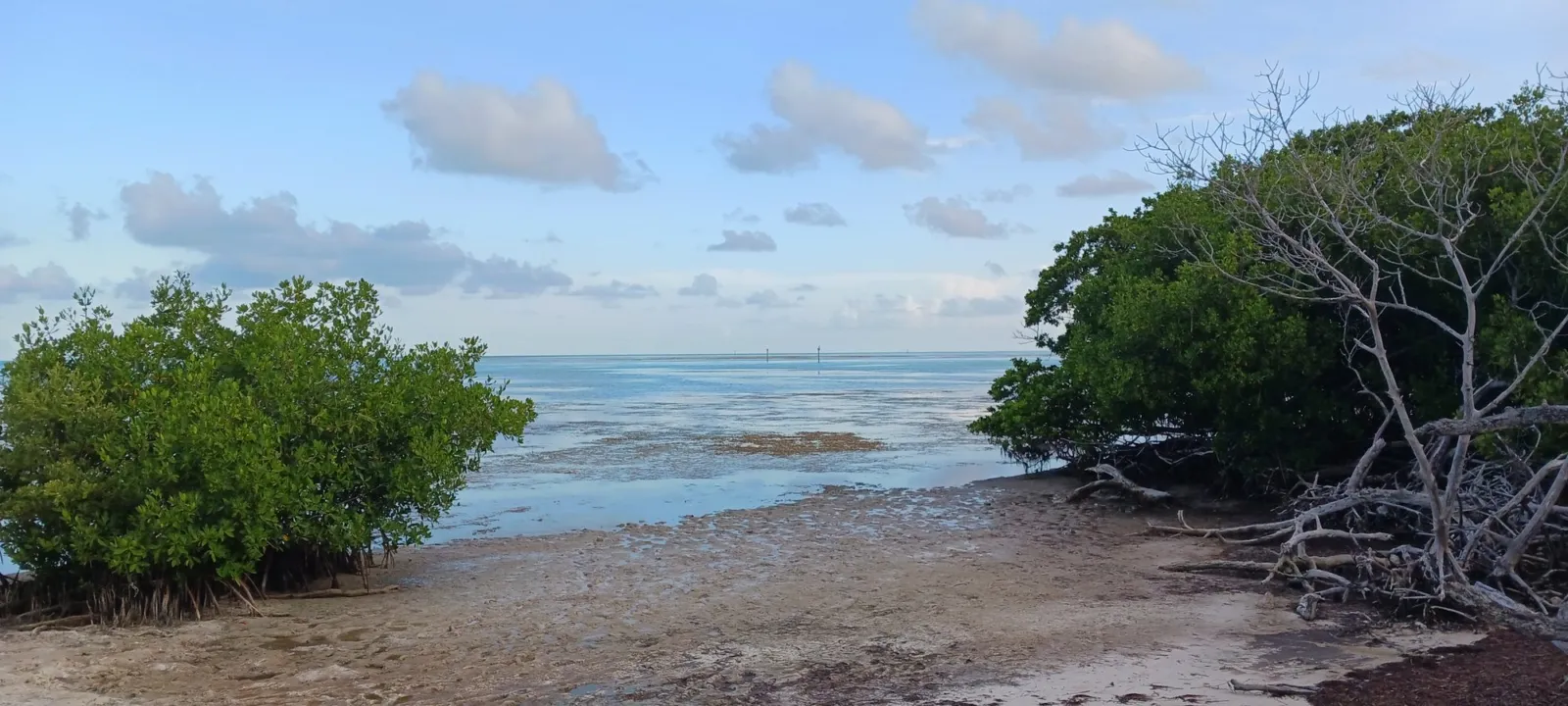
They occupy roughly 25 islands from Big Pine Key to Sugarloaf Key, with occasional sightings on Boca Chica Key. FWC notes the population is concentrated on Big Pine Key and No Name Key. That is also where most visitors see them – along road shoulders, in residential yards and neighborhoods, and in the refuge’s pine rocklands and hardwood hammocks. They also use wetlands, mangrove edges and developed areas, so “natural area” and “someone’s driveway” are the same habitat to a Key deer.
Dawn and dusk are the best times to see them, which is also when most people walk their dogs. Plan for that overlap.
Why a dog is a real problem for a Key deer
This is a small population with no room for losses. FWC estimates roughly 700 to 800 Key deer today, up from fewer than 50 in the 1940s. The deer were listed as endangered in 1967, and the National Key Deer Refuge was established in 1957 to protect them. FWC lists vehicle collisions as the primary cause of death, and names domestic animals among the ongoing threats.
A chasing dog does damage in several ways:
- A panicked deer runs, and on Big Pine Key the nearest open ground is often US 1 or a residential street. A chase can end in a collision the dog never touches.
- A dog can catch and injure a deer outright. These animals are not much bigger than the dog.
- A chase can separate a fawn from its mother at the time of year it most needs her.
- Even a small, yappy dog that never makes contact adds stress to animals already living next to traffic.
Legally, it is simple. The refuge’s rules state that feeding, touching, capturing or harassing Key deer is strictly prohibited, and the deer are protected under the federal Endangered Species Act. If your dog chases a deer, you are the one who answers for it. The refuge allows pets, on leash.
Walking a dog in Key deer country
Use a short, fixed leash – not a retractable one – on refuge trails, neighborhood streets and anywhere deer are feeding. Keep the dog on the side of you away from the deer, and do not let it lunge or fixate. If a deer is standing in the road or a yard ahead, stop or turn around and give it time to move off. Walking past a deer at close range with a dog is how you find out whether your leash clip was a good one.
Some Key deer will walk right up to people. That is not friendliness. FWS says illegal feeding has conditioned many deer to approach humans, which leads to unhealthy conditions. If a deer approaches you, do not encourage it. Move away calmly and keep the dog behind you.
Fawns: April through June
Fawns are born April through June, with the peak in April and May, and each doe usually has one. A fawn lying alone in the grass is usually not abandoned – adult deer may be nearby. Do not approach it, and keep your dog well away. If you see a fawn, turn your walk around.
Driving the Lower Keys with a dog in the car
Vehicle strikes kill more Key deer than anything else, so how you drive matters as much as how you walk. FWS asks visitors to drive carefully through Key deer country from Big Pine Key to Lower Sugarloaf Key. Observe the posted speed limits and watch the shoulders, especially at dawn and dusk.
A dog that barks or scrambles at a deer through an open window is a distraction you do not need at the wheel. Keep windows partly up and the dog secured in a crate or harness through deer areas, so a sudden lunge does not become a swerve.
Vacation rentals, yards and injured deer
Many Lower Keys rentals sit in neighborhoods the deer use as part of their range. Do not let dogs run unsupervised in yards if deer are common nearby. A fence helps, but a leash and direct supervision are the reliable combination. Take the dog out on leash even for a quick bathroom break at night.
Do not leave dog food or water bowls outside. Food of any kind draws deer in, and the refuge notes that feeding spreads disease and parasites in the areas where deer forage.
If you find an injured or dead Key deer, keep your dog well away and do not try to help the animal yourself. Call the FWC Wildlife Alert Hotline at 888-404-3922 or contact the National Key Deer Refuge, whose visitor center is at 30587 Overseas Highway on Big Pine Key.
Before you head down US 1
- Pack a short, sturdy leash and leave the retractable at home.
- Bring a crate or car harness so the dog stays put when deer are on the shoulder.
- Plan dog walks knowing dawn and dusk are prime deer time, and carry a flashlight after dark.
- Keep all food, treats and pet bowls indoors at your rental.
- Save 888-404-3922 in your phone for injured deer.
- Explain the rules to kids and guests. “Just one cracker” is still illegal feeding.
For the rest of the trip, see our Florida Keys pet-friendly guide, the complete guide to Florida wildlife with pets, our list of the best pet-friendly places to watch wildlife in Florida, and, for the mainland version of this problem, wild turkeys and dogs.
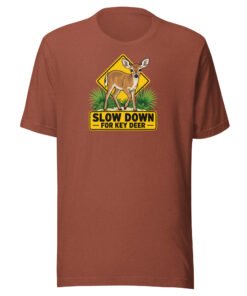
Wear this page
Pet Friendly Florida shirts, drawn to match what you just read. This is our own store, not an affiliate link.