
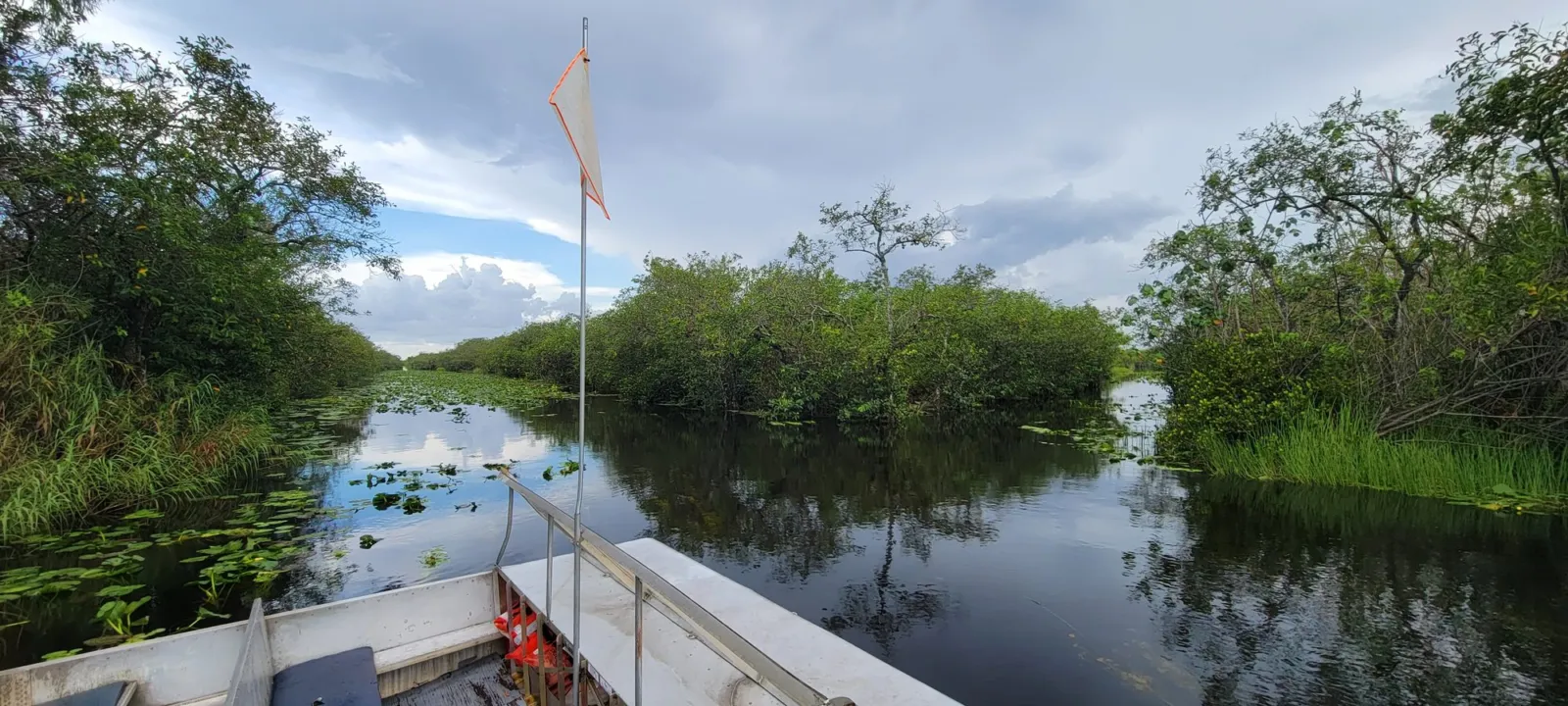
Most visitors never meet most of this. Florida is a big state and its wildlife changes a lot from region to region - a cane toad is a South Florida backyard problem, a black bear is a central and north Florida one, and a crocodile only matters in the far south. These guides are here for the encounter you do have, not because one is likely.
Florida is famous for Burmese pythons, but they are not the only large nonnative constrictors that have been reported in the state.
Other large constrictors reported or regulated in Florida include:
- Reticulated pythons
- Northern African pythons
- Southern African pythons
- Green anacondas
- Other anaconda species
- Amethystine pythons
- Scrub pythons
- Boa constrictors reported from escapes or releases
For pet owners, the rule is simple:
Treat any unidentified large snake as wildlife and keep your pet away.
Burmese Python
Burmese pythons are the major established invasive constrictor in South Florida.
See our dedicated Burmese Pythons and Pets in Florida guide.
Reticulated Python
Reticulated pythons are among the world’s longest snakes.
FWC says most Florida reports occur around:
- Miami
- Fort Lauderdale
- Southeast Florida
The species is not currently considered established in Florida.
Most reports are believed to involve escaped or released captive animals.
FWC notes reticulated pythons may prey on domestic pets and livestock.
Northern African Python
Northern African pythons are large nonvenomous constrictors.
They have been documented in South Florida and are regulated as a Prohibited species.
Green Anaconda
Green anacondas are extremely large semi-aquatic constrictors.
FWC says they are not currently established in Florida and encounters are unlikely.
However, sightings have occurred.
They can prey on large mammals in their native range, including dogs.
Green Anaconda Sightings
FWC encourages reports of green anaconda sightings.
Use:
888-IVE-GOT1 888-483-4681
or the IveGot1 app/website.
Other Anacondas
Florida’s Prohibited species list also includes:
- Beni anaconda
- DeSchauensee’s anaconda
- Yellow anaconda
Boa Constrictors
Boa constrictors have been reported in Florida through exotic-animal escapes and releases.
They are not the state’s major established large-constrictor problem.
Do not assume every large patterned snake is a Burmese python.
Florida’s Prohibited Large Constrictors
Current FWC rules classify several large constrictors as Prohibited species, including:
- Burmese or Indian python
- Reticulated python
- Northern African python
- Southern African python
- Amethystine python
- Scrub python
- Green anaconda
Florida’s Prohibited list also includes several other anaconda species.
What Does Prohibited Mean?
Current Florida rules generally prevent these species from being newly acquired for personal possession.
Limited grandfathered exceptions exist for qualifying animals possessed before the regulatory changes.
Why Pet Owners Should Care
Large constrictors can injure pets by:
- Biting
- Constricting
- Attempting to consume small animals
The greatest realistic risk remains in South Florida, where escaped exotic reptiles are more frequently reported and Burmese pythons are established.
Keep Cats Indoors
Free-roaming cats are vulnerable to many Florida predators.
Large constrictors are one more reason to keep cats indoors in South Florida.
Keep Dogs Leashed Near Brush and Wetlands
Do not let dogs investigate:
- Large snakes
- Heavy vegetation
- Canal banks
- Wetland edges
What If You See a Large Snake?
Do not attempt to identify it by grabbing it.
Instead:
- Keep pets away
- Photograph from a distance
- Note exact location
- Report unusual nonnative snakes to FWC
Reporting
Use:
888-IVE-GOT1 888-483-4681
or IveGot1 reporting tools.
What If a Large Constrictor Attacks a Pet?
Treat it as an emergency.
Call an emergency veterinarian.
Do not put yourself at extreme risk.
Never Release an Exotic Pet
Released exotic pets are a major pathway for nonnative wildlife introductions in Florida.
FWC operates an Exotic Pet Amnesty Program for owners who can no longer care for exotic pets.
Current Florida Rules Matter
Florida’s invasive-reptile rules have changed substantially over the last several years.
If you own, transport or work with exotic reptiles, check current FWC regulations rather than relying on old online advice.
Pet Safety Checklist
- Keep dogs leashed
- Keep cats indoors
- Avoid dense brush
- Do not handle unknown large snakes
- Report nonnative sightings
- Seek veterinary care after a bite
- Never release exotic pets
Related Guides
- Burmese Pythons and Pets in Florida
- Florida Wildlife With Pets: Complete Guide
- Iguanas and Pets in Florida
- Nile Monitors and Pets
- Argentine Black and White Tegus and Pets
Florida’s exotic reptile story is much bigger than one python species.
For pet owners, though, the practical response stays the same:
Distance, control and reporting.
Sources
Wear this page
Pet Friendly Florida shirts, drawn to match what you just read. This is our own store, not an affiliate link.


