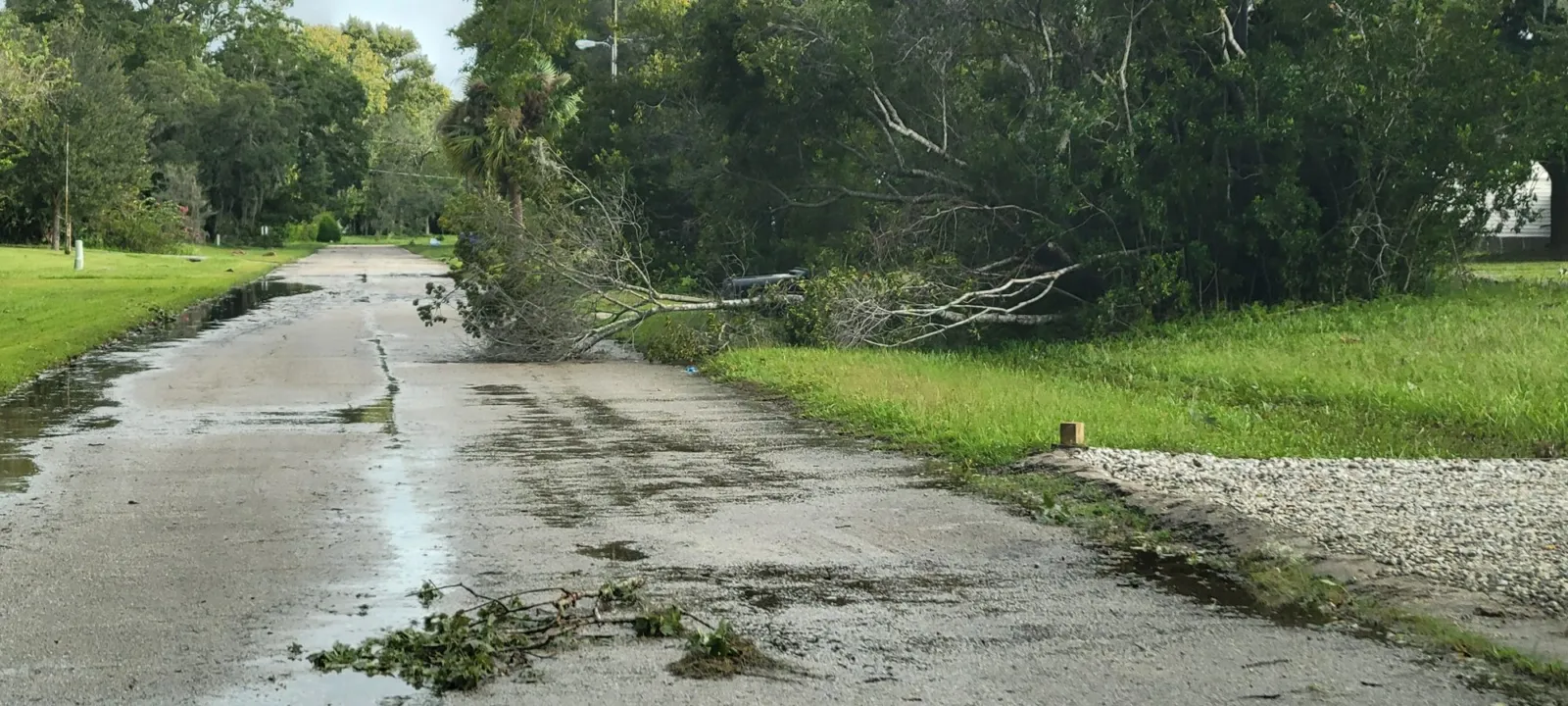
Hurricanes create pet hazards that last long after the wind stops.
After a storm, dogs may encounter:
- Floodwater
- Downed power lines
- Broken glass
- Nails
- Splintered wood
- Contaminated standing water
- Displaced wildlife
- Fire ants
- Mold
- Sewage
- Chemicals
For pet owners:
Do not let dogs roam through storm debris or drink from floodwater.
Floodwater Is Not Safe Water
Floodwater may contain:
- Sewage
- Fuel
- Pesticides
- Household chemicals
- Bacteria
- Sharp debris
Do not let dogs:
- Drink it
- Swim in it
- Walk through it unless unavoidable
Rinse After Contact
If a dog must cross questionable water:
- Rinse paws
- Rinse lower legs
- Dry thoroughly
Prevent licking until cleaned.
Downed Power Lines
Treat every downed line as energized.
Keep pets far away from:
- Wires
- Utility poles
- Flooded areas near electrical equipment
Do not approach to investigate.
Broken Glass and Nails
Storm debris may hide:
- Nails
- Screws
- Metal edges
- Glass
- Roofing material
Use a short leash.
Do not let dogs run freely through cleanup areas.
Check Paws After Every Walk
Inspect for:
- Cuts
- Punctures
- Embedded debris
- Burns
- Swelling
Small puncture wounds can become infected.
Mold and Wet Buildings
Flooded homes can develop mold quickly.
Keep pets out of:
- Wet drywall
- Moldy rooms
- Contaminated carpet
until areas are safely cleaned.
Chemicals and Fuel
Storm cleanup may expose:
- Gasoline
- Oil
- Antifreeze
- Cleaning chemicals
- Pesticides
Do not let dogs lick:
- Puddles
- Containers
- Garage floors
Fire Ants After Flooding
Flooded fire ants can form floating rafts.
Keep pets away from:
- Floating debris
- Ant clusters
- Flooded grass
Snakes After Storms
Flooding can displace:
- Cottonmouths
- Other snakes
Use a flashlight during:
- Night walks
- Yard checks
Keep dogs out of piles of:
- Branches
- Roofing
- Vegetation
- Lumber
Alligators and Floodwater
Flooding can expand access between:
- Canals
- Ponds
- Streets
- Yards
Do not let dogs swim or roam near floodwater.
Wildlife Displacement
Storms can displace:
- Birds
- Raccoons
- Snakes
- Reptiles
- Small mammals
Do not let dogs chase injured or exhausted wildlife.
Dead Animals
Keep pets away from:
- Dead fish
- Roadkill
- Wildlife carcasses
These may carry:
- Bacteria
- Toxins
- Parasites
Mosquitoes After Storms
Standing water can increase mosquito activity.
Keep heartworm prevention current.
Drinking Water
If local authorities issue a boil-water notice, use safe drinking water for pets too.
Do not assume tap water is safe for the dog when it is not safe for people.
Food Safety
Discard pet food that has been:
- Flooded
- Soaked
- Contaminated
- Stored in damaged packaging
Temporary Housing
At shelters, hotels or rentals:
- Keep dog leashed
- Confirm pet rules
- Keep ID attached
- Prevent escapes
Storm stress can make even calm dogs more likely to bolt.
Identification
Keep current:
- Collar ID
- Microchip
- Contact information
Emergency Veterinary Care
After a major storm, some veterinary clinics may be:
- Closed
- Damaged
- Operating limited hours
Identify multiple backup clinics if possible.
Best Post-Hurricane Pet Checklist
- Short leash
- No floodwater drinking
- Avoid debris piles
- Check paws
- Rinse after exposure
- Avoid downed wires
- Watch for snakes/alligators
- Keep heartworm prevention current
- Use safe drinking water
- Keep ID on pet
Related Guides
- Florida Hurricane Preparedness With Pets
- Florida Mosquitoes and Pets
- Fire Ants and Pets
- Cottonmouths and Dogs
- Florida Wildlife Emergency Checklist for Pet Travelers
The storm may be over.
The pet hazards are not.
For several days after a hurricane, assume every puddle and debris pile may contain something you do not want your dog touching.
Sources
- CDC — Safety Guidelines: After a Hurricane or Other Tropical Storm: https://www.cdc.gov/hurricanes/safety/index.html
- Florida Department of Health — Hurricane Safety: https://www.floridahealth.gov/
- Florida Fish and Wildlife Conservation Commission — Wildlife Tips: https://myfwc.com/conservation/you-conserve/wildlife-tips-for-visitors/