Most visitors never meet most of this. Florida is a big state and its wildlife changes a lot from region to region - a cane toad is a South Florida backyard problem, a black bear is a central and north Florida one, and a crocodile only matters in the far south. These guides are here for the encounter you do have, not because one is likely.
Pelicans are the birds lined up on Florida pier railings and marina pilings, waiting for someone to clean a fish. They look tame and they are big, which makes them fascinating to dogs, but a pelican will defend itself with a long, hooked bill, and the places pelicans hang out are full of hooks, line and fish scraps that are bad for dogs too. Keep the dog leashed, keep it out of the flock, and never let it near an injured or tangled bird.
Florida’s two pelicans, and when you will see each
The brown pelican is the one you will see year-round. FWC describes it as widespread along the Florida coast, with birds also showing up inland outside the breeding season. It feeds only on fish and hunts by diving headfirst from as high as 50 feet. Brown pelicans rest in groups on sandbars, beaches, jetties, docks and pilings.
The American white pelican is a winter visitor. FWC calls it one of North America’s largest birds, with a wingspan that can reach nine and a half feet. White pelicans do not dive. They float, dip their heads and often fish cooperatively in small groups, herding fish ahead of them. FWC lists Florida’s Gulf Coast among their wintering grounds, so look for them in the cooler months.
Brown pelicans were taken off Florida’s imperiled species list in 2017, but they remain protected under the federal Migratory Bird Treaty Act and state rules. Neither species is fair game for a dog.
What a pelican can do to a dog, and what a dog can do to a pelican
A healthy pelican usually just lifts off when a dog gets close. The trouble starts when the bird cannot leave: it is cornered on a dock, tangled in fishing line, or injured. Pelicans have large, strong bills with a hook at the tip, heavy bodies and wide wings, and a panicked bird can strike at a dog’s face and eyes. Do not allow nose-to-bill contact.
The other direction matters too. A dog that runs through a resting flock on a sandbar forces every bird to take off, burning energy and leaving the spot where it was feeding or resting. On a busy Florida beach that can happen many times a day. Walk around resting flocks rather than through them.
Fishing piers, marinas and cleaning stations
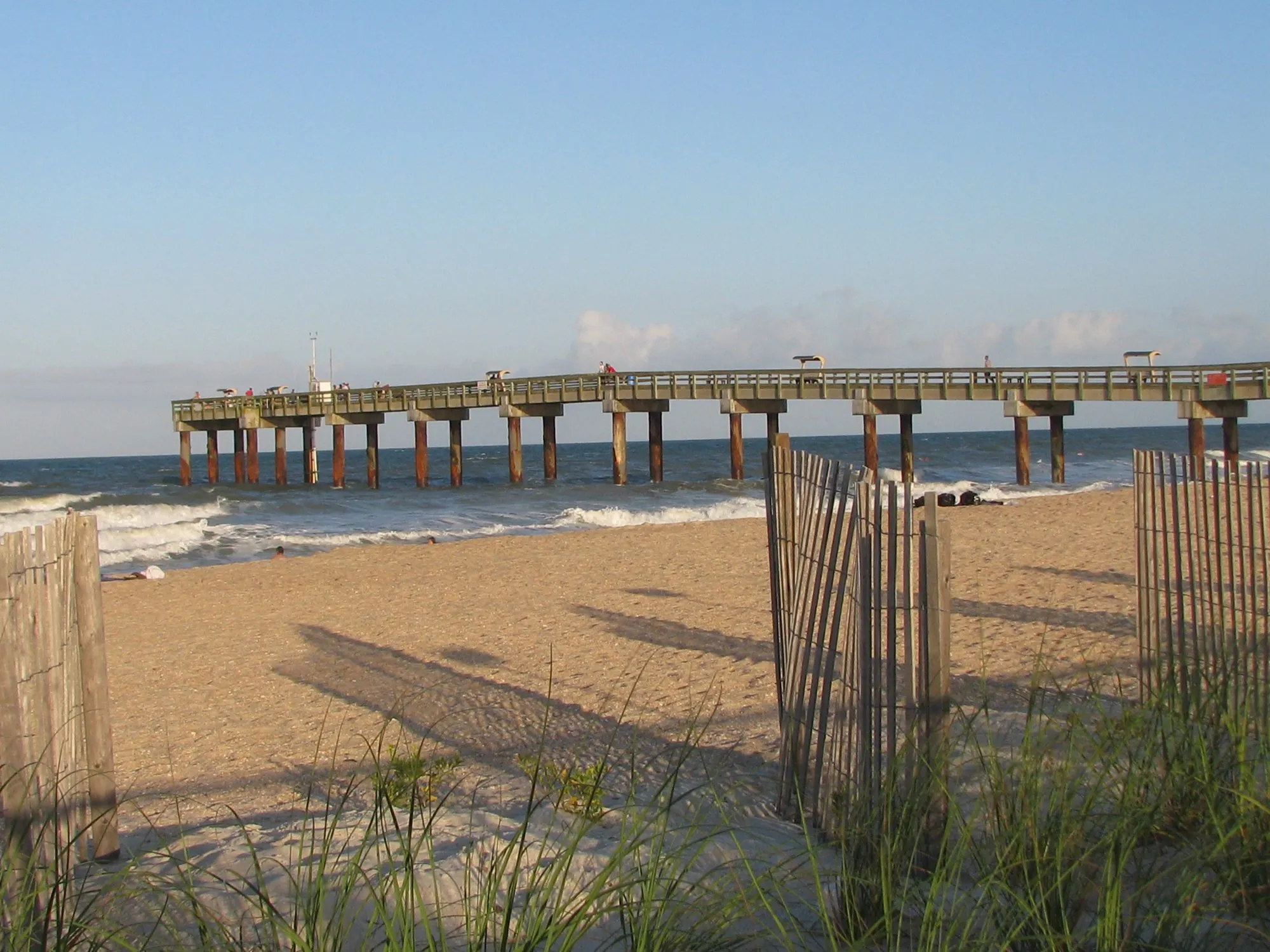
Most dog-and-pelican problems happen where people fish. Pelicans learn that piers and fish-cleaning stations mean easy food, so they crowd in close to people – and close to hooks, fishing line and bait. FWC says feeding pelicans is prohibited by law (Florida Administrative Code 68A-4.001) because feeding draws them into the places where they get hooked and tangled, and it asks anglers to put fish scraps in lidded trash cans rather than in the water.
For a dog, that same pier is a minefield. Discarded fish heads, bait, hooks and loose monofilament are easy to swallow, and a swallowed hook or length of line is a trip to the vet. At a pier or cleaning station:
- Keep the dog on a short leash, away from the cleaning table and the birds waiting beside it.
- Do not let the dog and a pelican compete over fish scraps; that is how bites and swallowed hooks happen.
- Check the planks around you for dropped hooks and bait before you let the dog sniff.
- Keep bait buckets covered and pick up your own line.
Our guide to fishing with your dog in Florida covers pier etiquette in more detail.
If you see a pelican hooked or tangled in line
Move your dog well away first. A tangled pelican will flap, lunge and bite, and a dog barking at it makes the bird panic harder. FWC’s “Hooked a Bird?” guidance explains how anglers can safely unhook and untangle a bird they have caught, but that is a two-hands job, not something to try with a leash in one hand. If the bird has swallowed a hook, is badly tangled or is injured, FWC says to find a seabird rehabilitator or call the FWC Wildlife Alert Hotline at 888-404-3922 (or *FWC from a cell phone) for help with next steps.
Nesting colonies and closed islands
FWC says Florida brown pelicans nest mostly in mangroves, in large colonies on estuarine islands, from spring through summer. Many of these islands are posted, and some are designated Critical Wildlife Areas that are closed to public access during nesting season. If you are boating or paddling with a dog, do not land on or walk the edges of posted islands, and keep the dog quiet and aboard as you pass. See our guide to shorebirds, nesting season and dogs for beach closures.
Dead pelicans on the beach
Dead seabirds wash up on Florida beaches, especially after storms and during red tide. Do not let the dog lick, bite, roll on or carry a carcass. Dead birds and fish can carry bacteria and toxins, and FWC’s red tide guidance warns that pets that eat dead fish may get sick and advises keeping pets away from dead sea life. If you see an unusual number of dead or sick birds, report it to FWC. If your dog ate part of a carcass and starts vomiting, drooling or acting weak or wobbly, call your vet, and for possible toxin exposure ASPCA Animal Poison Control (888-426-4435, a fee may apply) can help your vet.
A pelican-safe routine
- Short leash near the water, and closer still on piers and docks.
- No chasing, on the sand or in the water.
- Stay clear of birds clustered at cleaning stations and pier railings.
- Keep the dog away from any injured or tangled bird, and call the FWC hotline instead.
- Never feed pelicans, and do not toss scraps where a pelican or a dog can get them.
- Walk around resting flocks and stay off posted nesting islands.
- Check the dog’s mouth after a pier visit if you think it picked something up.
For more on sharing the coast with birds, see Florida birdwatching with a dog, Florida birds dogs should never chase and the best pet-friendly places to watch wildlife in Florida.
Wear this page
Pet Friendly Florida shirts, drawn to match what you just read. This is our own store, not an affiliate link.