
Most visitors never meet most of this. Florida is a big state and its wildlife changes a lot from region to region - a cane toad is a South Florida backyard problem, a black bear is a central and north Florida one, and a crocodile only matters in the far south. These guides are here for the encounter you do have, not because one is likely.
Florida beaches are popular with dogs.
Florida waters also contain sharks.
That does not mean every dog entering the ocean is in serious danger.
It does mean FWC gives one very clear shark-safety recommendation:
Do not allow pets in the water because their erratic movements may attract a shark’s attention.
Shark Bites Are Uncommon
FWC says it is extremely unlikely for a person to be bitten by a shark in Florida waters.
Dog-specific bite statistics are much harder to quantify.
The safest approach is not panic.
It is reducing avoidable risk.
FWC Specifically Advises Against Pets in the Water
FWC’s current shark-safety guidance says:
Do not allow pets in the water.
The reason given is that their erratic movements may attract a shark’s attention.
That is unusually direct guidance and worth taking seriously.
When Shark Activity May Be More Likely
FWC recommends extra caution around:
- Darkness
- Twilight
- Murky water
- Fishing activity
- Baitfish
- Feeding activity
- Areas between sandbars
- Steep drop-offs
These are also poor times and places for a dog swim.
Avoid Fishing Areas
Do not let dogs swim around:
- Fishing piers
- Surf anglers
- Baitfish schools
- Fish-cleaning areas
FWC specifically says waters used for fishing can be higher-risk because of bait and feeding activity.
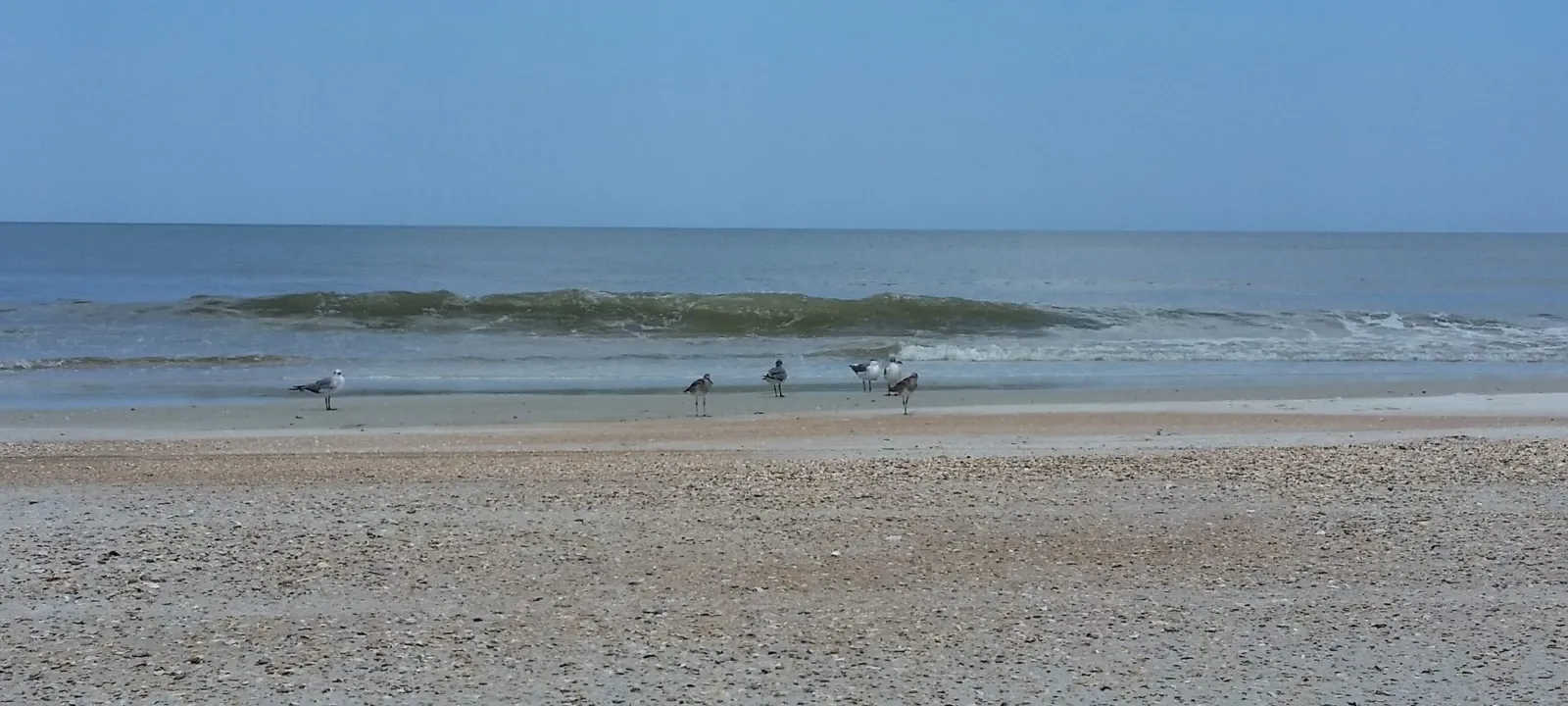
Diving Birds Can Be a Clue
FWC notes that diving seabirds often indicate baitfish activity.
If birds are repeatedly diving and fish are visibly schooling:
Keep the dog out of the water.
Murky Water
Murky water reduces visibility for:
- You
- Your dog
- Marine wildlife
Use extra caution.
Dawn and Dusk
FWC says sharks are more active during darkness and twilight hours.
Avoid dog swimming at:
- Dawn
- Dusk
- Night
If Sharks Are Seen
If sharks are known to be present:
- Keep dog out of water
- Leave the shoreline if needed
- Follow lifeguard instructions
Do not let the dog chase visible wildlife in the shallows.
Dogs Splash Differently Than People
Dogs commonly:
- Paddle rapidly
- Splash continuously
- Change direction abruptly
That is exactly the kind of erratic movement FWC warns may attract attention.
Ocean Beach vs. Back-Bay Dog Beach
Some Florida dog beaches sit on:
- Gulf
- Atlantic
- Inlet
- Back bay
Shark presence can occur in many saltwater environments.
A calm-looking back-bay beach is not automatically wildlife-free.
Small Dogs
Small dogs should receive extra supervision because:
- They are harder to see
- They tire quickly
- They may be harder to retrieve in surf
Large Dogs
A large dog is not immune to marine hazards.
Size does not eliminate risk.
Other Ocean Hazards Are More Common
At Florida beaches, dogs may also face:
- Heat
- Saltwater ingestion
- Jellyfish
- Stingrays
- Fish hooks
- Rough surf
Do not focus so much on sharks that you ignore more common hazards.
If a Dog Is Bitten by a Marine Animal
Get the dog out of the water and seek emergency veterinary care.
For severe bleeding:
- Apply pressure with a clean cloth or towel
- Travel immediately to emergency vet
Best Shark-Safety Checklist for Dogs
- Keep dog out of ocean water when possible
- Avoid dawn/dusk/night
- Avoid fishing areas
- Avoid baitfish activity
- Avoid murky water
- Follow lifeguard warnings
- Do not let dog chase marine wildlife
Related Guides
- Best Pet-Friendly Beaches in Florida
- Dolphins and Dogs in Florida
- Jellyfish and Portuguese Man o’ War and Dogs
- Stingrays and Dogs
- Saltwater Poisoning in Dogs
- Fishing With Your Dog in Florida
Florida shark safety for dogs does not require fear.
It requires respecting the same water conditions that FWC already tells swimmers to take seriously.
Sources
Wear this page
Pet Friendly Florida shirts, drawn to match what you just read. This is our own store, not an affiliate link.


