Most visitors never meet most of this. Florida is a big state and its wildlife changes a lot from region to region - a cane toad is a South Florida backyard problem, a black bear is a central and north Florida one, and a crocodile only matters in the far south. These guides are here for the encounter you do have, not because one is likely.
Wild bottlenose dolphins are protected by federal law, and the rule for you and your dog is the same: stay at least 50 yards away, never feed them, and never let the dog swim toward, chase or bark at them from the boat rail. The bigger risk runs the other way: your dog can easily turn a boat ride into a harassment problem.
Where you will see dolphins in Florida
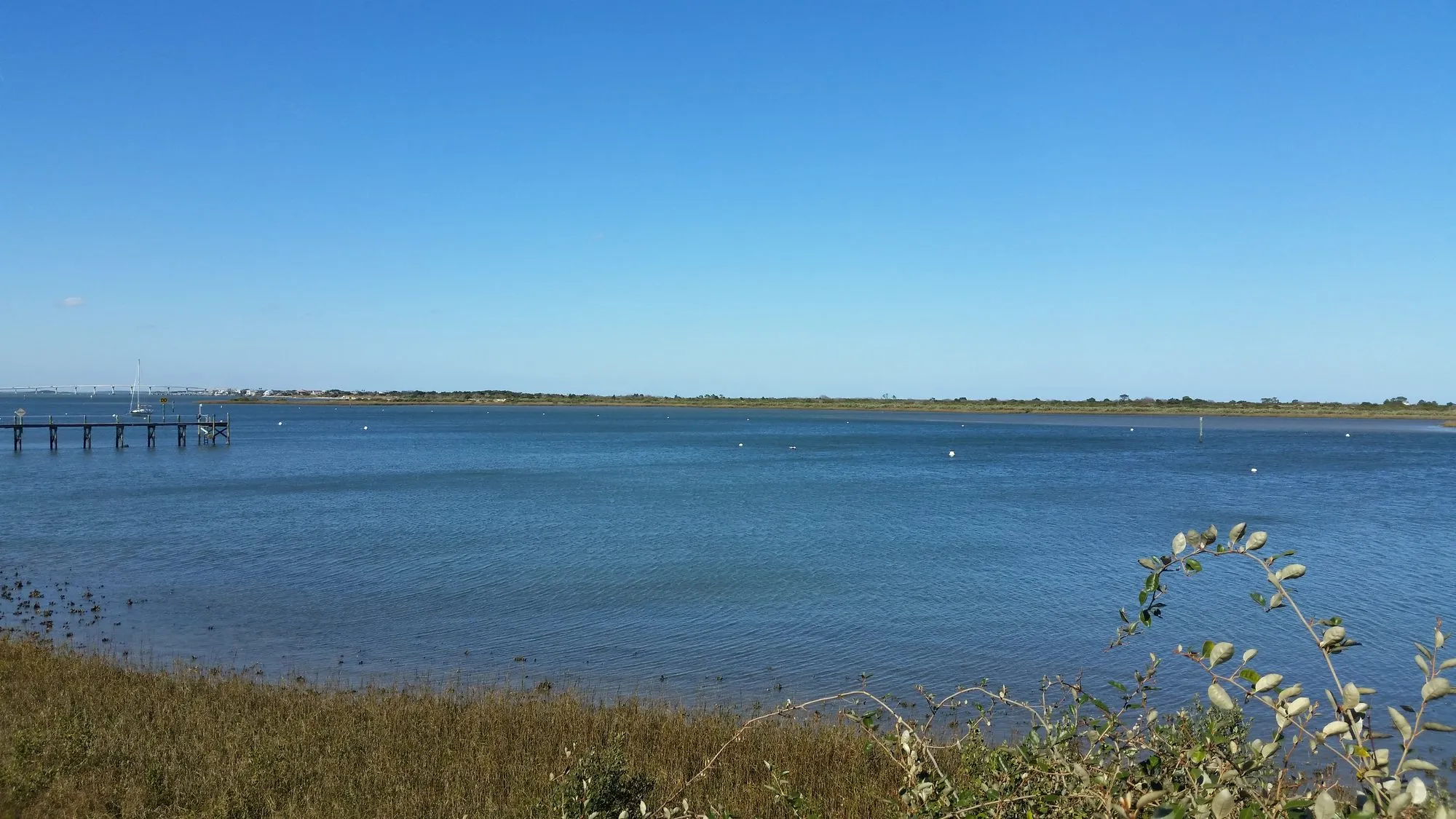
Bottlenose dolphins live along both of Florida’s coasts, inshore and offshore. FWC describes inshore dolphins living in small social groups of around 10, while offshore groups can run from 10 to 100. The inshore animals are the ones most visitors meet: in bays, estuaries, passes, marinas and along the beach just past the break. You may see them from the sand, a pier, a bridge, a waterfront restaurant, a kayak or a paddleboard, and they eat mullet, sheepshead, pinfish, flounder and invertebrates – more than 20 pounds a day, per FWC.
FWC describes dolphins using the lengths of their bodies to encircle and pen a school of fish in shallow water in order to feed. That is one more reason to keep a dog out of the shallows when dolphins are feeding nearby.
What federal law actually says
Every marine mammal in U.S. waters is protected by the Marine Mammal Protection Act. NOAA Fisheries says feeding or harassing wild dolphins violates the act, and violations can be prosecuted civilly or criminally, with fines and up to a year in jail. NOAA also does not support swimming with, touching, chasing or trying to interact with wild dolphins.
“Harassment” is broader than most people assume. NOAA’s definition includes any act of pursuit, torment or annoyance that has the potential to disturb a marine mammal by disrupting behavior such as breathing, nursing, feeding or resting. A dog launched off a paddleboard at a feeding pod, or a boat that follows a group so the dog can bark at them, fits that description uncomfortably well. We would not want to test whether “the dog did it” is a defense.
NOAA’s recommended minimum viewing distance for dolphins is 50 yards, or 150 feet – about half a football field – unless a location sets a stricter rule. That distance covers your boat, your paddleboard and your pet.
Boating with a dog when dolphins show up
Dolphins often come to boats on their own, which is fine. What matters is what you do next. NOAA’s Southeast viewing guidelines say that if a marine mammal approaches your vessel, put the engine in neutral, let the animal pass and move away slowly. They also say:
- Never pursue or follow dolphins, and never alter course to chase them.
- Do not encircle dolphins or trap them between boats, or between a boat and the shore. Always leave them an escape route.
- Do not speed up toward dolphins to create a wake for them to ride.
- Limit viewing to 30 minutes or less, and leave slowly if they show signs of disturbance such as tail-slapping, strong exhales or repeated avoidance.
For the dog: keep it aboard, secured and away from the gunwale. A dog that sees a dorsal fin for the first time may try to go over the side, and a dog in open water near a moving boat is a much bigger emergency than any dolphin sighting. Do not encourage barking or jumping, and do not let anyone toss food. See our guide to boating with dogs in Florida for the rest.
Kayaks and paddleboards
A dolphin surfacing next to a paddleboard can excite even a calm dog. Keep the dog seated or clipped in, stay low, and do not paddle toward the dolphin for a closer look. If they come to you, stop paddling and let them move on.
Why feeding dolphins, even once, is harmful
NOAA explains that fed dolphins lose their natural wariness, learn to associate people with food, and start hanging around boats and fishing piers. That gets them hit by propellers, hooked or tangled in fishing line, and sick from bait and human food. NOAA also notes that dolphins who become habitual beggars can be pushy and aggressive when they do not get a handout, and wild dolphins can bite. FWC adds that fed dolphins may pass those habits to their calves.
For dog owners this lands at the fishing pier and the cleaning table. Dolphins may work around fishing boats, piers and baitfish schools. Keep your dog away from hooks, lines, bait and fish scraps – partly for the dolphins, and mostly because a swallowed hook is a vet emergency of its own. Our guide to fishing with your dog in Florida covers that side.
Dolphins do not mean “no sharks”
Old beach lore says a dolphin sighting means sharks are gone. FWC says otherwise: the presence of dolphins does not indicate the absence of sharks, because both often eat the same food. If dolphins are feeding just offshore, that tells you there is food in the water – the same food sharks are after. It is not a reason to let the dog swim out further. More on that in our sharks and dogs guide.
If a dolphin comes close to shore, or is stranded
If a dolphin comes in close while you are on the beach, keep the dog leashed and out of the water. A dolphin that is stranded on the beach, stuck in very shallow water, tangled in line or clearly injured is a different situation. Keep your dog well back – a stranded animal is stressed, can be sick, and does not need a dog sniffing at it. Do not push it back into the water or attempt a rescue yourself. Call the NOAA Southeast stranding hotline, 1-877-WHALE-HELP (1-877-942-5343), which covers dead, injured, entangled and stranded dolphins and whales in Florida. Note the location and wait for trained responders. To report someone feeding or harassing dolphins, NOAA’s enforcement hotline is 1-800-853-1964.
Dolphin-and-dog checklist for the water
- Keep at least 50 yards between your boat, board or dog and any dolphin.
- Engine in neutral if they approach; let them go on their way.
- Dog stays aboard, secured, and in a life jacket on open water.
- No feeding, no chasing, no swimming toward them – for people or pets.
- Keep the dog away from hooks, bait and fish scraps around piers.
- Keep the dog far back from any stranded marine mammal, and call 1-877-942-5343.
Wild dolphins are one of the best parts of a Florida trip. The easiest way to enjoy them with a dog is to let the dolphins choose the distance.
Related guides
Wear this page
Pet Friendly Florida shirts, drawn to match what you just read. This is our own store, not an affiliate link.