
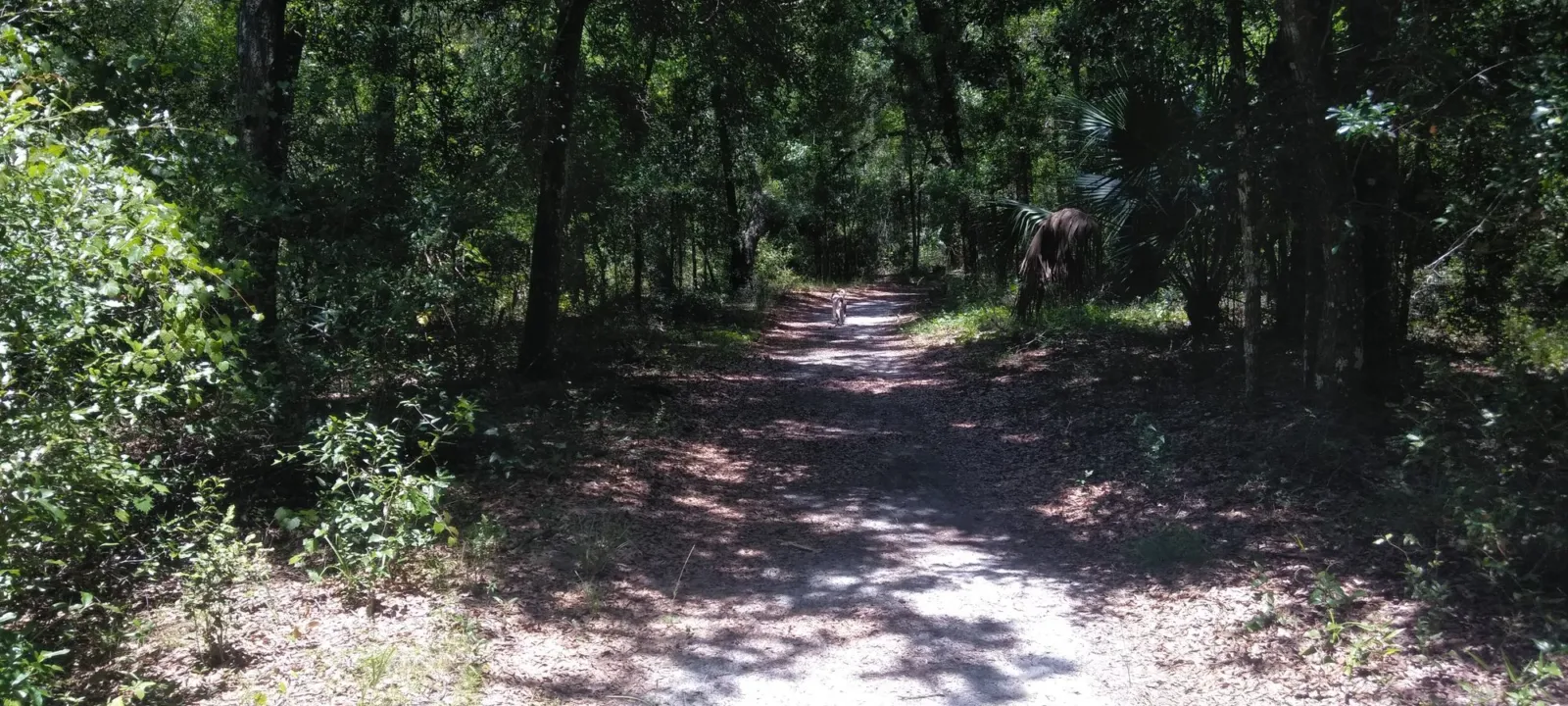
Most visitors never meet most of this. Florida is a big state and its wildlife changes a lot from region to region - a cane toad is a South Florida backyard problem, a black bear is a central and north Florida one, and a crocodile only matters in the far south. These guides are here for the encounter you do have, not because one is likely.
The eastern diamondback rattlesnake is Florida’s largest native venomous snake.
It is powerful, impressive and best admired from a distance.
For dog owners:
Keep dogs on a short leash and never let them investigate a rattlesnake.
Where Eastern Diamondbacks Live
FWC says eastern diamondbacks still occur statewide through much of their historical Florida range, including parts of the Florida Keys.
They are strongly associated with:
- Open pine forests
- Frequently burned habitats
But they can occur in many other environments.
They Can Swim
FWC notes that eastern diamondbacks are good swimmers.
That helps them colonize islands.
Do not assume water creates a barrier.
Habitat Features Dogs Should Avoid
FWC specifically advises caution around:
- Stumps
- Animal burrows
- Fallen trees
Rattlesnakes may use these features for:
- Shelter
- Foraging
Keep dogs close when walking through this habitat.
They Usually Want to Escape
UF/IFAS describes eastern diamondbacks as animals that often try to flee before assuming a defensive posture.
Give the snake an escape route.
Do not corner it.
The Rattle Is a Warning
A rattling snake is telling you it wants space.
Do not:
- Move closer
- Tease it
- Let dog bark at it
- Try for a better photo
Back away.
Do Not Rely on Hearing a Rattle
Not every rattlesnake encounter includes obvious rattling.
Watch the trail instead of expecting an audible warning.
Signs of a Bite in Dogs
Eastern diamondbacks are pit vipers.
University of Florida veterinary guidance says pit-viper bites may cause:
- Local swelling
- Bleeding at fang wounds
- Quiet or lethargic behavior
Treat Suspected Bite as an Emergency
If you saw or strongly suspect a bite:
- Move away from snake
- Keep dog calm
- Limit activity
- Call veterinarian
- Go to emergency care immediately
Do Not Catch the Snake
You do not need to bring the snake to the veterinarian.
Do not risk another bite.
A description or safe-distance photo can help, but treatment should not be delayed for identification.
Do Not Use Folk Remedies
Do not:
- Cut wound
- Suck venom
- Apply tourniquet
- Apply ice
- Apply heat
Antivenom
Antivenom is the primary treatment for significant venomous snakebite in pets.
Your veterinarian may also use:
- Hospitalization
- Pain medication
- Fluid/supportive therapy
- Monitoring
Prompt Care Improves Survival
UF/IFAS guidance says most dogs survive eastern diamondback bites when they receive prompt and adequate treatment, including antivenom when needed.
Trail Safety
When hiking in rattlesnake country:
- Stay on maintained trails
- Keep dog on short leash
- Watch where dog puts nose and paws
- Avoid letting dog enter burrows
- Step around logs carefully
- Do not let dog run into palmetto or brush
Yard Safety
Reduce places snakes and rodents can hide:
- Remove debris
- Move lumber
- Trim heavy vegetation
- Clean spilled bird seed
- Bring pet food indoors
Eastern Diamondbacks Are in Decline
FWC says eastern diamondback populations are declining across their range, including Florida.
Major threats include:
- Habitat loss
- Habitat fragmentation
- Road mortality
- Human persecution
Do not kill a snake that is simply passing through.
If One Is in a Dangerous Location
Keep pets inside and contact an appropriate wildlife professional if removal is necessary.
Related Guides
- Venomous Snakes of Florida: Pet Owner Guide
- Cottonmouths and Dogs
- Pygmy Rattlesnakes and Dogs
- What to Do if Your Dog Is Bitten by a Snake
- Florida Wildlife With Pets: Complete Guide
An eastern diamondback is not looking for a fight with your dog.
Distance prevents the fight from happening.
Sources
- Florida Fish and Wildlife Conservation Commission — Eastern Diamondback Rattlesnake: myfwc.com
- FWC Research — Eastern Diamond-Backed Rattlesnake: myfwc.com
- UF/IFAS — Eastern Diamondback Rattlesnake Factsheet: ask.ifas.ufl.edu
- University of Florida Small Animal Hospital — Venomous Snake Bites in Pets: smallanimal.vethospital.ufl.edu
Wear this page
Pet Friendly Florida shirts, drawn to match what you just read. This is our own store, not an affiliate link.


