
Most visitors never meet most of this. Florida is a big state and its wildlife changes a lot from region to region - a cane toad is a South Florida backyard problem, a black bear is a central and north Florida one, and a crocodile only matters in the far south. These guides are here for the encounter you do have, not because one is likely.
Yes, Florida really has free-flying parrots, neighborhood peacocks and wild monkeys, and none of them are native. They arrived by very different routes and fall under different rules, but the advice for dog owners is the same for all three: keep the dog leashed, do not let it chase them, and do not feed them. The monkeys are the only ones that carry a genuine health risk to people, and they are also the only ones covered by a statewide feeding ban.
Wild parrots: where the flocks are and why dogs notice them
Florida has several introduced parrot and parakeet populations, most descended from escaped or released pet birds. The best established is the monk parakeet, a bright green South American species that FWC lists as nonnative wildlife. FWC says there are established populations throughout the state, with the largest in Miami, West Palm Beach and Tampa.
Monk parakeets are unusual among parrots because they build large communal stick nests rather than using tree cavities. Each pair adds its own chamber to the main structure, so a nest can grow into an apartment block. FWC notes they often build on power poles, which is why you may spot them on utility lines and light towers at parks and ballfields.
For a dog, the flashpoint is a flock feeding on the ground in a lawn, park or under a fruit tree. Parrots are loud, which gets a dog’s attention, and a sudden charge can end with a dog tangled in a leash or bolting into traffic. Keep the leash short near feeding flocks and move on. See Wild Parrots in Florida for more on where to see them.
Peacocks and peafowl in Florida neighborhoods
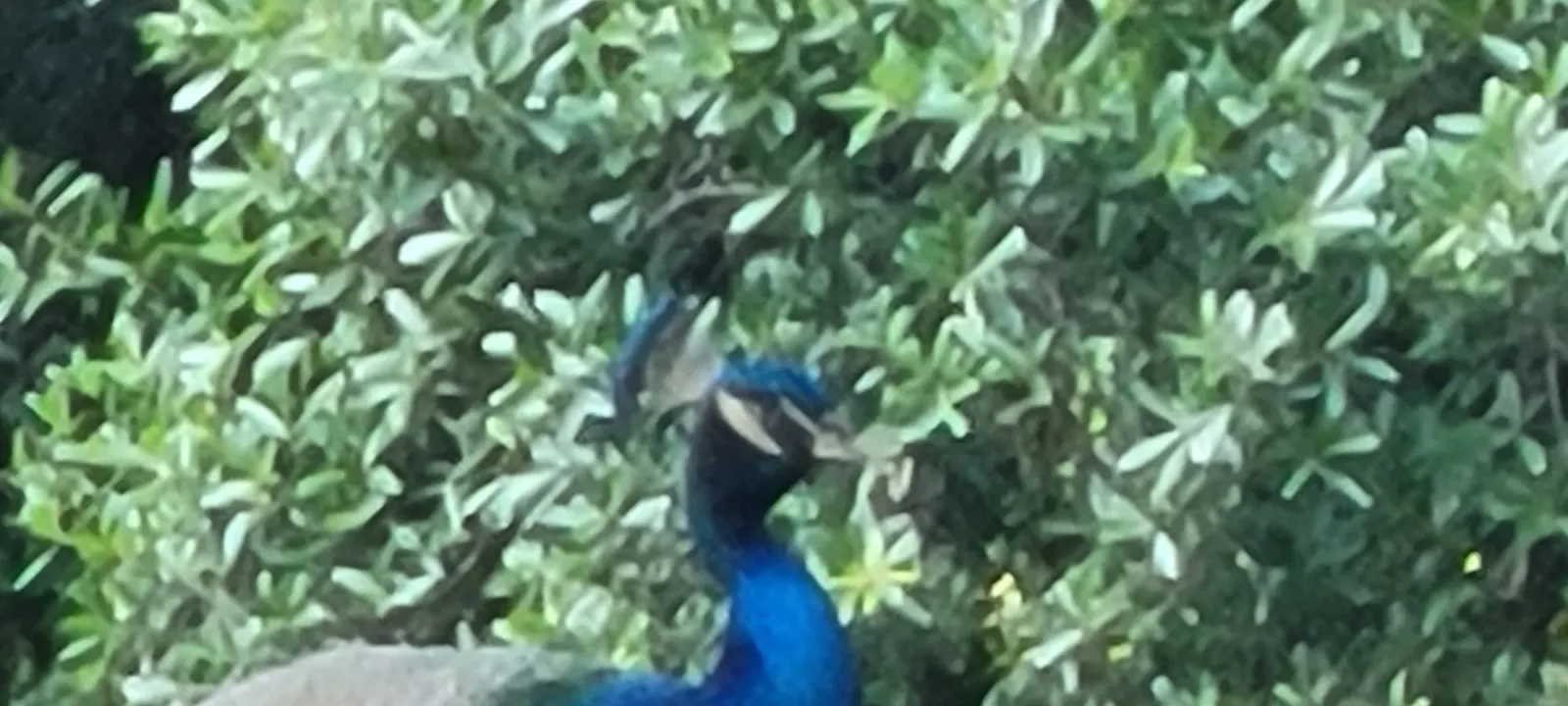
Peafowl have become established in municipalities around Florida after escaping or being released from private properties. FWC groups them with other nonnative domestic fowl such as chickens and guinea fowl. Visitors notice them fast: males display enormous trains, call loudly, and stroll through roads, driveways and yards as though they own them – which, in some neighborhoods, they more or less do.
Do not let a dog corner a peacock. Adult peafowl have strong legs, spurs and beaks, and they will defend themselves, particularly around chicks. Give hens with young a wide berth and keep walking.
Rules on peafowl are mostly local. FWC says regulations on possession and removal of domestic fowl fall to individual counties, cities and towns, and that homeowners’ associations and private landowners do not need FWC permission to remove them from their own property. If peafowl are a problem at a rental, that is a question for the owner or the local animal services office, not something to settle with your dog. Our Peacocks in Florida Neighborhoods guide goes deeper.
Wild monkeys: Silver Springs and Dania Beach
Florida has multiple wild monkey stories, but two populations matter to travelers. UF/IFAS has documented both.
Rhesus macaques at Silver Springs
In the 1930s, a river boat tour operator released about six rhesus macaques on an island in the Silver River, near Ocala, in hopes of drawing tourists. They swam off the island, began breeding and became established in what is now Silver Springs State Park. UF/IFAS reports that a 2018 study also found groups spread along the Ocklawaha River north and south of where the Silver River joins it. These are genuinely free-ranging monkeys, and you may see them from trails and the water. More in Rhesus Macaques at Silver Springs.
Vervet monkeys in South Florida
A small vervet population lives in Dania Beach, just south of Fort Lauderdale. According to UF/IFAS, it traces back to animals that escaped from a primate research facility in the 1940s. See Vervet Monkeys in South Florida and our overview of Wild Monkeys in Florida.
Why monkeys are the one to take seriously
Rhesus macaques are known to carry herpes B virus, which spreads through bodily fluids. UF/IFAS notes that no transmission from Florida’s wild macaques to people has been documented, but herpes B has a high fatality rate when it does infect humans. Do not touch monkeys, their saliva or feces, or anything contaminated by them.
Since 2018, FWC rules have prohibited feeding wild monkeys in Florida, including placing or offering food or garbage in a way that attracts them. Fed monkeys lose their fear, approach people and pets, and can become aggressive around food, which raises the risk of bites and scratches. At a picnic table near the Silver River, that means packing food away rather than leaving it out.
Never let a dog chase or corner a monkey. A macaque can bite, scratch and defend itself forcefully. If monkeys are nearby, shorten the leash, keep the dog quiet and put distance between you. If your dog is bitten or scratched, clean the wound, see a vet the same day and tell them it was a monkey. If a person is bitten or scratched, wash the wound thoroughly and get medical care promptly.
Nonnative does not mean fair game
Some visitors assume that because these animals are not native, anyone may catch, move or harm them. Do not. Rules vary by species, property, city and county, and FWC prohibits releasing nonnative wildlife in Florida – which includes catching a nuisance animal in one place and turning it loose somewhere else. If a bird or monkey appears sick, injured or dangerous, call local animal services or FWC and let them handle it. For the bigger picture on how all this happened, see Why Florida Has So Many Exotic Animals.
What to do on the day
- Keep the dog on a short, non-retractable leash anywhere these animals gather: parks with parrot flocks, peafowl neighborhoods and trails along the Silver and Ocklawaha rivers.
- Do not feed any of them, and keep your dog’s treats and food bags zipped up where monkeys are around.
- Steer well clear of monkey groups and peafowl with chicks, and walk past grounded parrots rather than toward them.
- Do not try to capture an unfamiliar exotic animal, however tame it looks.
- After any bite or scratch from a monkey, a vet visit for the dog and medical care for any person involved are not optional.
All three are real, and all three make for a good story. None of them should become a close-contact attraction for your dog.
Wear this page
Pet Friendly Florida shirts, drawn to match what you just read. This is our own store, not an affiliate link.