Florida sun affects more than people.
Dogs can struggle with:
- Sun exposure
- Hot sand
- Hot pavement
- Salt
- Rough shells
- Beach debris
The right protection depends on the dog.
Which Dogs Need More Sun Protection?
Dogs at higher risk include those with:
- White coats
- Light skin
- Thin fur
- Hairless areas
- Pink noses
- Scarred skin
Common exposed areas include:
- Nose
- Ear tips
- Belly
- Inner thighs
Use Pet-Specific Sunscreen
Do not automatically use human sunscreen on a dog.
Some human products may contain ingredients that are unsafe if licked.
Choose sunscreen specifically labeled for dogs.
Opens Amazon search results. Read the label: skip anything with zinc oxide unless it is made for pets, and ask your vet if unsure.
Avoid Zinc Oxide Unless Product Is Specifically Formulated for Pets
Zinc oxide can be toxic if ingested in significant amounts.
Dogs lick their skin.
That makes human zinc-based sunscreen a poor default choice.
Ask Your Veterinarian
For dogs with:
- Skin disease
- Autoimmune disease
- Previous skin cancer
- Very light pigmentation
ask your veterinarian what product and schedule are appropriate.
Physical Sun Protection
Sun protection does not have to come only from lotion.
Useful tools include:
- UV-protective shirts
- Shade
- Umbrella
- Beach tent
- Shorter exposure
- Early morning outings
Paw Protection
Florida surfaces can become very hot.
Common problem surfaces include:
- Asphalt
- Concrete
- Pavers
- Boardwalks
- Dry sand
Dog Boots
Dog boots provide the strongest physical barrier against hot pavement.
Best For
- City walking
- Hot parking lots
- Rough shell paths
- Long outdoor events
Opens Amazon search results – check the model and the size chart against your dog before ordering.
Paw Wax
Paw wax can provide some protection from:
- Sand
- Rough surfaces
- Salt
It is not a magic shield against dangerously hot pavement.
Opens Amazon search results. A light barrier for sand and rough surfaces – not a substitute for staying off hot pavement.
Test the Surface
If a surface feels too hot to comfortably hold your hand against, it may be too hot for paws.
Better yet, avoid relying on a single test and plan outings during cooler hours.
Beach Sand
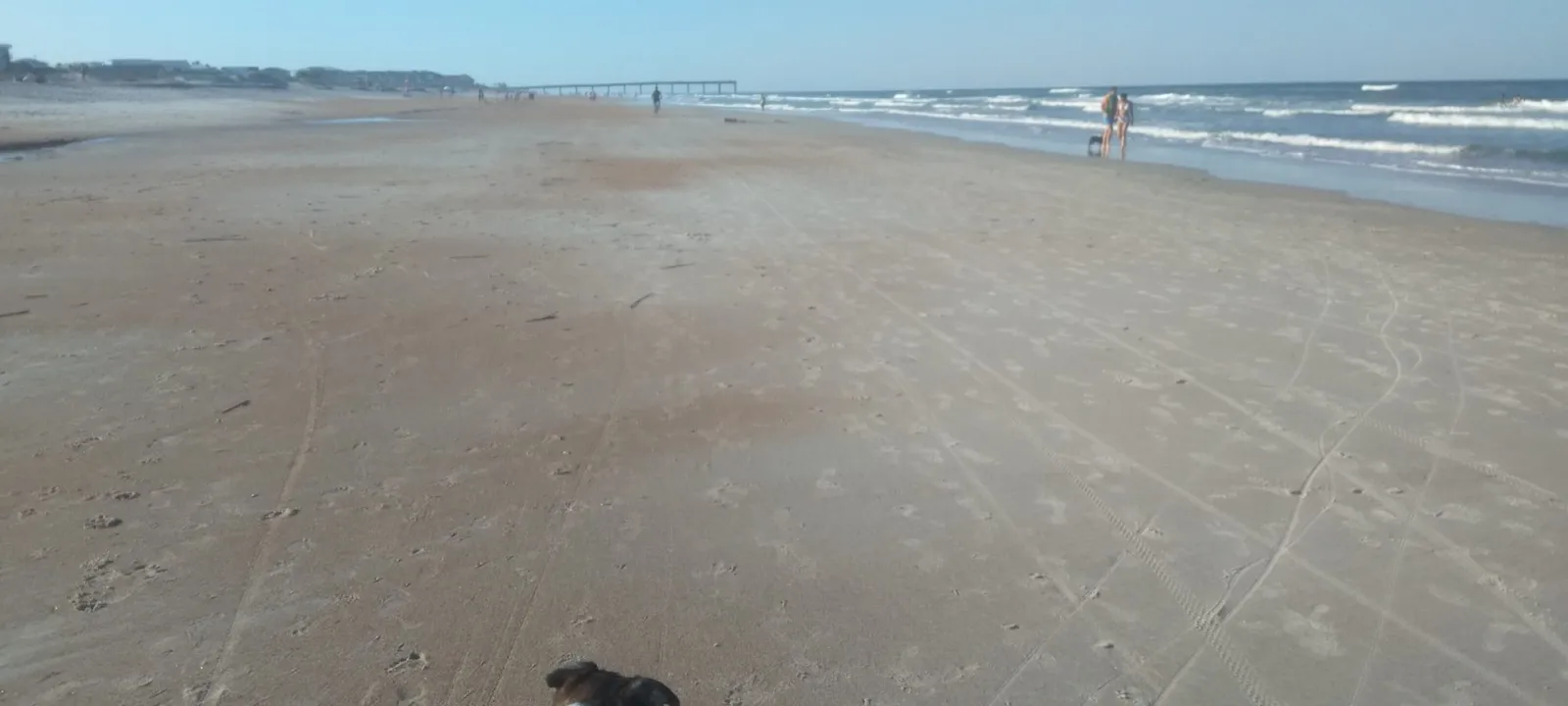
Florida beach sand can become very hot even when the air feels tolerable.
Wet sand near the water is usually cooler than dry upper-beach sand.
Shells
Some Florida beaches have:
- Broken shells
- Sharp fragments
- Coral-like debris
Check paws after long walks.
Saltwater
Salt can dry and irritate paws.
Rinse paws after beach outings.
Road Salt Is Not the Issue Here
Florida paw protection is more often about:
- Heat
- Sand
- Shells
- Saltwater
- Pavement
than winter de-icing chemicals.
Best Protection by Situation
Hot city pavement: Dog boots Short beach walk: Cooler hours + rinse afterward Sensitive paws: Boots or paw wax depending on surface Light-skinned dog: Pet-safe sunscreen + shade Long beach day: Shade + sunscreen + paw checks + fresh water
Sunscreen Application Tips
Follow the product instructions.
Generally:
- Apply before exposure
- Focus on exposed skin
- Prevent licking until dry
- Reapply according to label
Never Use Sun Protection to Extend Unsafe Heat Exposure
Sunscreen does not prevent heatstroke.
Boots do not make 100-degree pavement a good place for a long walk.
Sun and paw gear supplement:
- Cooler hours
- Shade
- Water
- Air conditioning
Florida Beach-Day Kit
Bring:
- Pet-safe sunscreen
- Paw wax or boots if appropriate
- Fresh water
- Portable bowl
- Shade
- Towel
- Waste bags
Related Guides
- Florida Pet Travel: Heat Safety
- Best Pet-Friendly Beaches in Florida
- Best Cooling Mats and Cooling Vests for Florida Heat
- Traveling Florida With a Senior Dog
For Florida travel, the best paw and sun protection strategy is usually simple:
Avoid the worst heat first. Use gear second.
Sources
Wear this page
Pet Friendly Florida shirts, drawn to match what you just read. This is our own store, not an affiliate link.


