
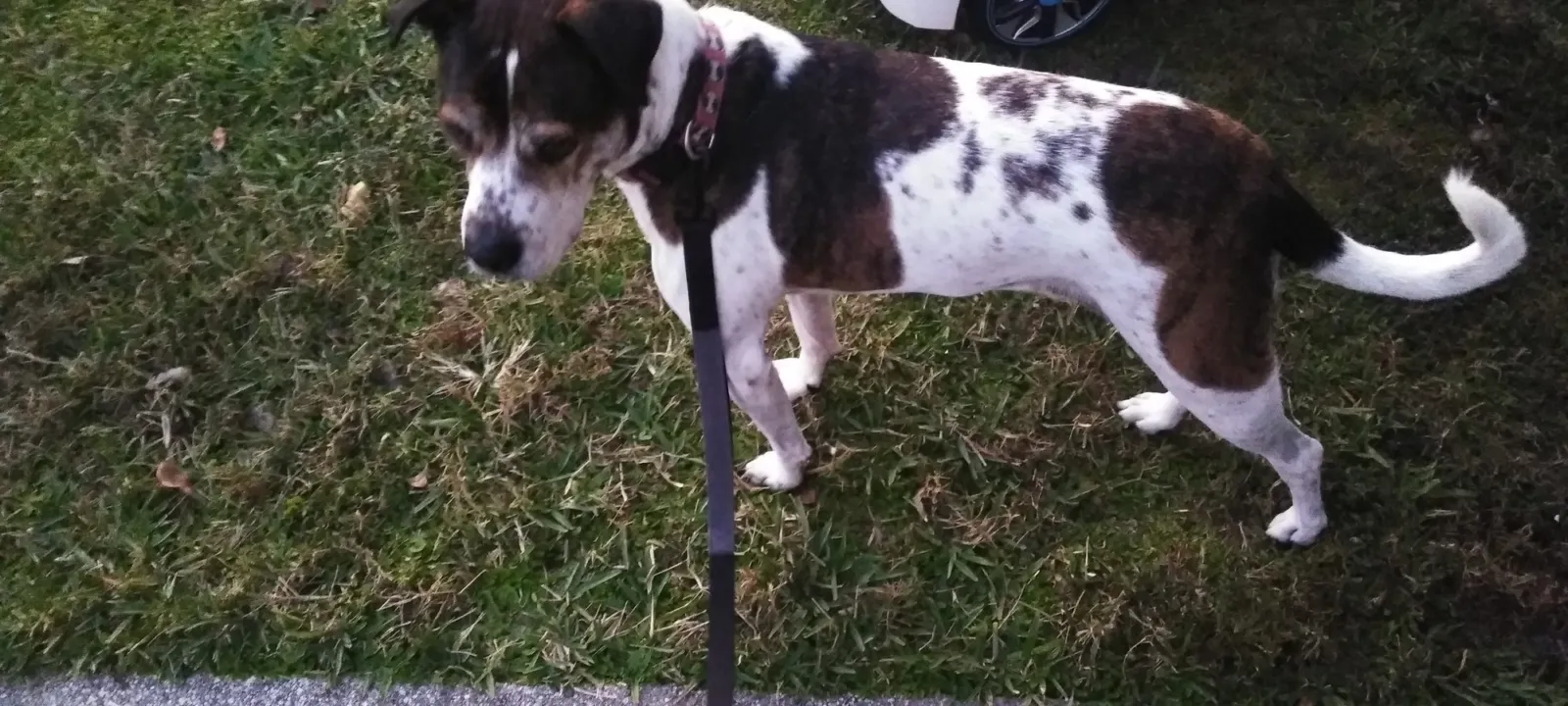
It usually happens at a gas stop. The door opens, something spooks the dog – a truck’s air brakes, a strange dog barking – and it is gone across the lot before anyone can grab the leash. You are 400 miles from home in a place you do not know, and the next hour matters more than everything you do after it.
Work in this order.
1. Stay put, and stop chasing
A frightened dog in an unfamiliar place does one of two things: it hides close by, or it runs in a wide loop and comes back to the last place it felt safe. That place is your car. So the car should stay where it is, with a door open if it is safe to leave one open.
Do not chase. Running at a scared dog pushes it further out, usually toward a road. Get low, turn sideways rather than facing it head on, and talk in the flat, bored voice you use at home. Some people have luck lying down and ignoring the dog entirely. Grabbing for the collar is how a dog that came back leaves again.
2. Put out something that smells like you
Leave a shirt you have worn, the dog’s bed or crate pad, and a bowl of water at the spot where it went missing. Scent brings dogs back hours later, often after dark when the parking lot is quiet. If you have to move on, leave the items and come back.
3. Call the county shelter within the hour
In Florida, a found dog goes to the county or city animal shelter, usually within a few hours of someone picking it up. Call the shelter for the county you are in – not just the one nearest your hotel – and file a lost report with your cell number, a description and the exact spot.
Ask two questions while you have them on the phone:
- How long do you hold a stray? Hold periods are set by county ordinance and are short – often three to five days, and some counties do not count weekends and holidays.
- Which other shelters take animals from this area? Several Florida counties split intake between the county shelter, a humane society and individual city animal control units. The wrong phone call wastes a day.
Our pet help by county pages list who takes found pets in each county we have covered, with the phone numbers and the hold periods where the county publishes them.
4. Update the microchip before you do anything else online
A chip is only as good as the phone number attached to it. If the registration still lists a landline from three moves ago, the shelter will call it and get nowhere. Log in to the chip registry and put your cell number on it, plus the address where you are staying if you can add a temporary contact.
This is worth knowing before you travel: St. Johns County’s own figures say microchipped dogs are returned to their owners more than twice as often as unchipped ones, and for cats the gap is far bigger.
5. Post where locals actually look
Neighborhood apps and local lost-pet groups reach people in the few square miles that matter. Post a clear photo, the exact intersection or mile marker, the time, and a phone number. One good photo beats a paragraph of description – “brown dog” fits half the dogs in the state.
Skip the reward amount. It attracts scam calls, and people who find a dog in Florida almost always just want it back where it belongs.
6. Go back at dawn and dusk
Lost dogs move at first light and last light and lie up in cover through the heat of the day. Walk the same ground at those hours, quietly, with the crate or the other dog if you have one. Florida cover is thick – palmetto, retention ponds, drainage ditches behind every strip mall – and a dog 30 feet away in palmetto is invisible.
7. Visit the shelter in person, every day
This is the step people skip, and it is the one that finds dogs. Phone descriptions fail: the intake photo is bad, the staff member who took your call is off shift, your “tan” is their “brindle”. Some shelters, including PAWS in Okaloosa County, will not confirm over the phone whether your dog is there at all – you have to come and look.
If you have to drive home without the dog
Leave a local contact – your hotel front desk, a friend, anyone in the area – and keep calling the shelter every day through the hold period. Keep the online post active, and ask the shelter to flag your lost report so the animal is not adopted out before you can get back.
Things that make it far less likely
- A collar with a tag that has your cell number, not your home landline. A shelter calls the tag before it scans for a chip.
- A slip lead in the glovebox for the day the harness fails.
- A GPS tracker on the collar for road trips. It turns a two-day search into a twenty-minute one.
- Leashing the dog before the door opens, every single stop.
If your dog turns up hurt, go straight to the county page for where you are – it lists the emergency and after-hours vets, which in some parts of Florida are an hour or more away.