
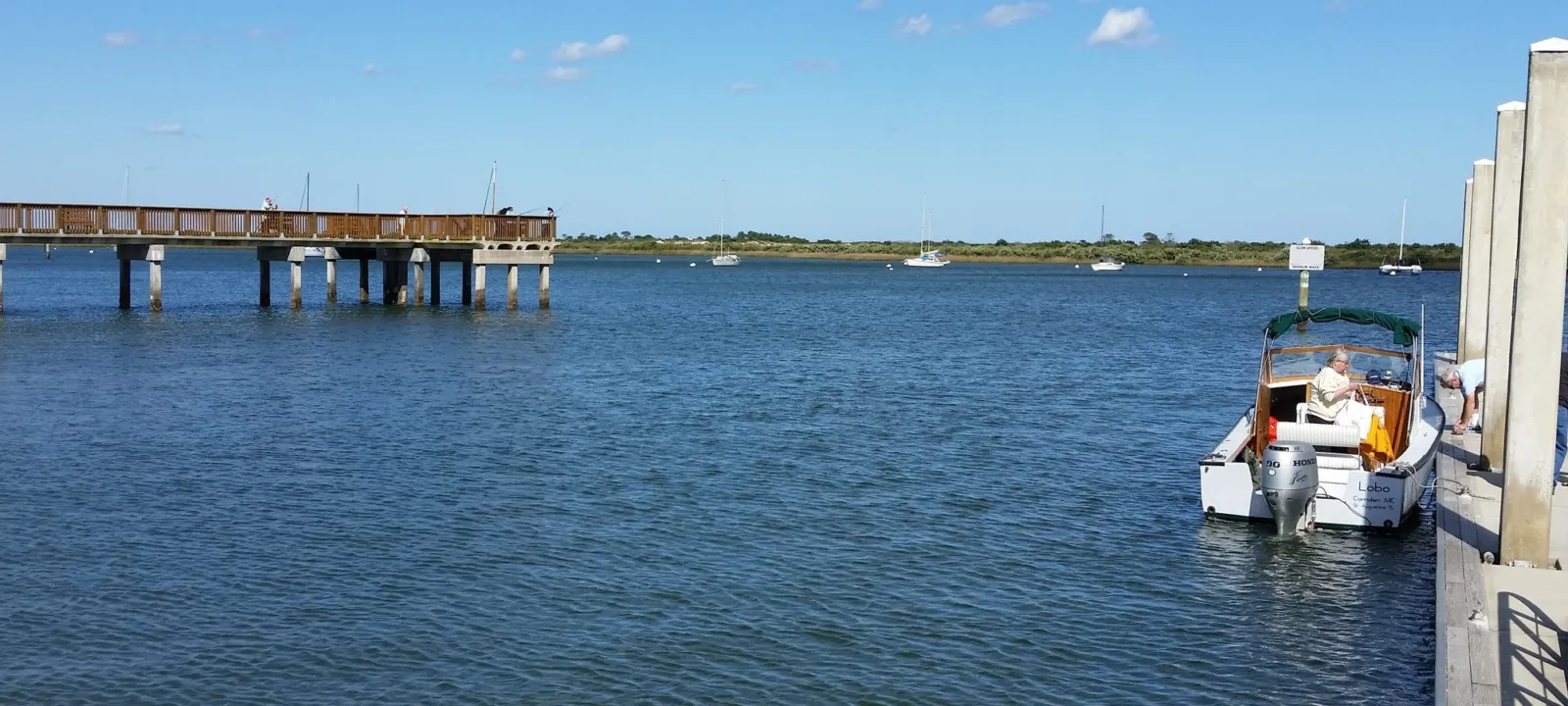
Florida calls itself the Fishing Capital of the World, and plenty of dog owners want to bring their pets along.
That can work very well.
But fishing with a dog creates a unique mix of hazards:
- Hooks
- Fishing line
- Bait
- Fish spines
- Boats
- Piers
- Heat
- Saltwater
- Alligators
- Sharks
- Wildlife
The best rule is:
Your dog should be part of the fishing trip, not part of the tackle.
Start With Legal Access
Before bringing a dog, check two different things:
- Is fishing legal at the location?
- Are ordinary pets allowed there?
Those are separate rules.
A fishing pier may allow anglers but prohibit dogs.
A dog-friendly beach may allow dogs but restrict fishing in crowded swimming zones.
Florida Fishing Licenses
Florida fishing license requirements vary by:
- Resident vs. visitor
- Saltwater vs. freshwater
- Age
- Location
- Pier
- Charter
- Vessel license
FWC maintains current licensing guidance.
Visitors may not need a separate saltwater license when fishing from:
- A properly licensed charter boat
- A vessel with a valid recreational saltwater vessel license
- A pier holding a valid saltwater pier license
Always check your specific situation.
Hooks Are the Biggest Everyday Dog Hazard
Dogs investigate:
- Baited hooks
- Lures
- Fish
- Tackle boxes
A swallowed fish hook can become a veterinary emergency.
Keep hooks:
- Inside closed tackle boxes
- Off the ground
- Away from bait tables
- Out of the dog’s reach
Never Leave a Baited Rod Unattended Around a Dog
A dog can:
- Eat the bait
- Swallow the hook
- Pull over the rod
- Become tangled in line
If you are not actively fishing the rod, secure it.
Fishing Line
Loose line is dangerous.
Dogs can become tangled around:
- Legs
- Neck
- Mouth
Discard monofilament and braid immediately in a proper container.
Do not leave cut line on:
- Beach
- Pier
- Boat deck
- Campsite
Bait
Do not let dogs eat:
- Raw bait
- Cut bait
- Dead baitfish
- Shrimp shells
- Unknown fish scraps
Bait may contain:
- Hooks
- Bones
- Spoilage
- Salt
- Parasites
Fish Spines
FWC warns anglers to be careful of fish spines and barbs.
That applies to dogs too.
Species such as catfish can cause painful puncture injuries.
Keep dogs away from freshly caught fish.
Use Pliers and a Dehooking Tool
FWC recommends carrying:
- Line clippers
- Pliers
- Dehooking tools
These also help keep your hands and your dog away from flailing hooked fish.
Freshwater Fishing and Alligators
Freshwater fishing creates a major Florida-specific dog hazard.
FWC advises keeping pets:
- Away from water edges
- Out of open freshwater and brackish water
because of alligators.
Do not let the dog swim while you fish a lake, pond, canal or river.
Cottonmouths
Wetland and shoreline environments can also hold cottonmouths.
Keep the dog:
- On a short leash
- Out of brush
- Away from water edges
Saltwater Fishing and Sharks
FWC’s shark-safety guidance specifically advises against allowing pets in the water because their erratic movement can attract attention.
Do not let the dog swim around:
- Fishing piers
- Baitfish schools
- Active surf fishing
- Fish-cleaning stations
Heat
Fishing often involves long periods outdoors.
Florida heat can be dangerous even when the angler feels comfortable.
Bring:
- Fresh water
- Portable bowl
- Shade
- Cooling gear
- Towel
Take air-conditioning breaks.
Boat Fishing With a Dog
For boat trips:
- Use a properly fitted dog life jacket
- Keep deck clear of loose hooks
- Store lures securely
- Keep dog away from fish box
- Provide shade
- Bring more water than expected
Pier Fishing With a Dog
Piers create extra hazards:
- Hooks on deck
- Other anglers
- Fish flopping
- Narrow walkways
- Rail gaps
- Crowds
Confirm that dogs are legally allowed before going.
See our dedicated Pier Fishing With a Dog in Florida guide.
Surf Fishing With a Dog
Surf fishing can work well when:
- Dogs are legally allowed on that beach
- Fishing is allowed
- The beach is not crowded
But dog and casting lane must be separated.
See our Surf Fishing With a Dog in Florida guide.
Keep the Dog Behind the Casting Area
Never cast over or around the dog.
Position the dog:
- Behind you
- To the side
- Outside rod-swing zone
A lure in a dog’s face is an emergency you can prevent.
First-Aid Kit
FWC recommends a first-aid kit as standard fishing gear.
For dog trips, add:
- Gauze
- Vet wrap
- Saline
- Tweezers
- Emergency vet number
- Dog medication if needed
If Your Dog Swallows a Hook
Do not yank on fishing line.
Do not induce vomiting unless a veterinarian specifically instructs you.
Prevent the dog from chewing or pulling the line and contact an emergency veterinarian immediately.
Our dedicated Fish Hooks and Dogs: Emergency Guide covers this in detail.
If Fishing Line Wraps Around a Limb
Remove tension immediately.
Check for:
- Swelling
- Cut skin
- Loss of circulation
Seek veterinary care if line has cut deeply or circulation was restricted.
Fishing License and Rules Apps
FWC’s Fish Rules tools can help anglers check current regulations.
Fishing regulations change.
Do not rely on an old blog post for:
- Seasons
- Size limits
- Bag limits
- Gear rules
Best Setup for Fishing With a Dog
Bring:
- Short leash
- Harness
- Dog life jacket if boating
- Fresh water
- Bowl
- Shade
- Cooling mat
- Closed tackle box
- Pliers
- Dehooking tool
- Line-cutting tool
- Dog first-aid kit
Related Guides
- Surf Fishing With a Dog in Florida
- Pier Fishing With a Dog in Florida
- Fishing From a Boat With Your Dog
- Fish Hooks and Dogs: Emergency Guide
- Fishing Line and Pets
- Fish Spines, Catfish and Dogs
- Best Fishing Gear for People Traveling With Dogs
Fishing with a dog in Florida can be fantastic.
The safest version looks boring:
Dog controlled. Tackle contained. Water and shade ready. Wildlife given space.
Sources
Wear this page
Pet Friendly Florida shirts, drawn to match what you just read. This is our own store, not an affiliate link.


