
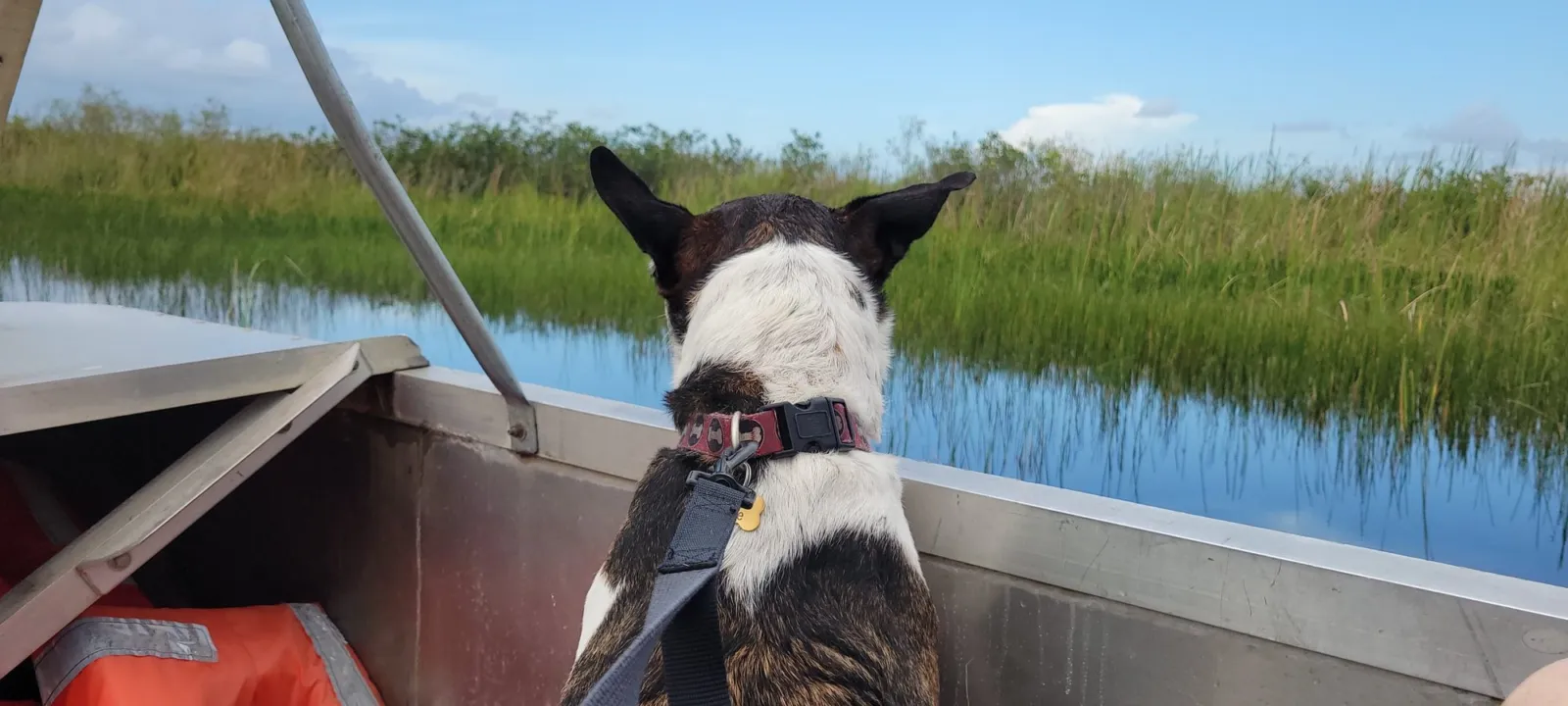
Florida has thousands of miles of coastline, rivers, bays and inland waterways.
So if your dog already loves the water, taking it boating can seem like an obvious part of the trip.
It can be.
But boating introduces risks that don’t exist on an ordinary dog walk:
- Falling overboard
- Heat
- Slippery decks
- Saltwater
- Wildlife
- Harmful algae
- Boat traffic
- Difficulty getting the dog back aboard
The goal isn’t merely getting your dog onto the boat.
It’s getting the dog safely back off it.
Start With a Dog Life Jacket
Even dogs that swim well should have a properly fitted canine flotation device when boating.
Swimming in a backyard pool is not the same as unexpectedly falling from a moving boat into:
- Current
- Waves
- Deep water
- Boat wakes
Look for a life jacket with:
- Proper fit
- Secure buckles
- Good flotation
- Bright visibility
- A strong handle on the back
That handle can be extremely useful when lifting a dog from the water back onto a boat.
Practice With the Life Jacket First
Don’t put it on for the first time at the marina.
Let the dog wear it at home.
Then practice near calm water.
Make sure the dog can:
- Walk normally
- Sit
- Lie down
- Swim comfortably
A poorly fitted jacket can restrict movement or shift in the water.
Teach Boat Entry and Exit
A dog needs a consistent way to board.
That might be:
- Ramp
- Swim ladder designed for dogs
- Platform
- Lift by harness
Practice before you’re miles from shore.
Large dogs can be particularly difficult to lift over a gunwale once they’re wet and tired.
Don’t discover that problem after the dog jumps overboard.
Keep the Dog Secure While Underway
A dog should not be wandering around the boat while you’re:
- Docking
- Accelerating
- Navigating heavy traffic
- Handling lines
Use an appropriate restraint or designated safe area when necessary.
Do not tether the dog in a way that could trap or strangle it if the animal falls overboard.
The exact solution depends on your boat.
The objective is control without creating another hazard.
Check the Deck Temperature
Boat decks can become extremely hot.
Before letting your dog stand on:
- Fiberglass
- Metal
- Dark decking
- Dock surfaces
check the temperature.
Your dog can’t tell you that the deck is burning its paws until it already hurts.
Provide:
- Shade
- A cooling mat
- Non-slip mat
- Towel
- Protected resting area
Shade Is Essential
Many Florida boats have very little shade.
That’s fine for humans who can move under a T-top or put on a hat.
A dog lying on the deck has fewer options.
Make sure your dog has a genuine shaded area throughout the trip.
If you can’t provide one, don’t plan an all-day outing in summer.
Bring Far More Fresh Water Than You Expect to Need
Do not let the dog rely on:
- Ocean water
- River water
- Lake water
Bring fresh drinking water.
Keep a bowl easily accessible.
Offer water regularly rather than waiting until the dog is desperately thirsty.
Saltwater Isn’t Drinking Water
Dogs may swallow saltwater while swimming or intentionally drink it when thirsty.
Prevent that as much as possible.
Provide frequent fresh-water breaks and limit excessive ocean-water ingestion.
If your dog becomes ill after consuming a large amount of saltwater, contact a veterinarian.
Watch Freshwater Too
Natural-looking freshwater isn’t automatically safe.
The Florida Fish and Wildlife Conservation Commission warns that some blue-green algae blooms can produce toxins capable of killing pets that drink or otherwise contact contaminated water.
If you see:
- Green surface scum
- Unusual discoloration
- Posted algae warnings
- Dead fish
keep the dog out.
Do not let it drink the water.
Alligators Are a Florida Reality
If you’re boating on inland freshwater, your dog should not be wandering casually along the shoreline.
Florida State Parks specifically warn pet owners to keep animals away from shallow freshwater areas because pets can be viewed as prey by alligators.
That applies beyond parks too.
Be especially careful:
- At dawn
- At dusk
- Near marsh edges
- Near canals
- Around boat ramps
Keep dogs leashed when going ashore.
Manatees and Wildlife
Florida waterways are shared with wildlife.
Do not allow your dog to:
- Chase birds
- Harass manatees
- Jump toward dolphins
- Enter nesting areas
The same rule applies on islands and sandbars.
Your dog’s entertainment isn’t more important than wildlife protection.
Don’t Let Dogs Jump Overboard Whenever They Want
Some dogs think every sandbar is an invitation.
That’s a problem in:
- Heavy current
- Boat channels
- Areas with fishing hooks
- Wildlife habitat
- Deep water
- Unknown bottom conditions
Create a command and routine for entering the water.
The dog should swim when you decide conditions are safe.
Watch for Fishing Gear
Hooks and dogs are a terrible combination.
Keep:
- Hooks
- Lures
- Bait
- Fishing line
- Knives
secured.
Never leave bait sitting where the dog can grab it.
Discarded fishing line is also a major hazard at docks, beaches and islands.
Check the area before letting the dog explore.
Bring a Dog First-Aid Kit
Useful boating items include:
- Gauze
- Bandaging material
- Saline
- Tweezers
- Scissors
- Towels
- Veterinarian information
- Any required medication
Marine environments add cuts, hooks and slippery surfaces to the normal pet-travel risks.
Plan Bathroom Breaks
Dogs do not magically stop needing to go because you’re on a boat.
For longer outings, know:
- Where you’ll stop
- Whether dogs are allowed ashore
- Whether there is grass
- Whether the island is protected habitat
A short trip may be easy.
An eight-hour day requires an actual plan.
Don’t Assume Every Island Allows Dogs
Some Florida islands are:
- State parks
- National parks
- Wildlife refuges
- Nesting areas
Pet rules may be substantially stricter than on the boat itself.
Check the destination before arriving.
Florida State Park Boat Ramps and Pets
Florida State Parks generally prohibit pets from designated swimming areas and boat ramps, even where dogs are allowed elsewhere in the park.
That can affect how and where you launch.
Check the individual park’s rules before arriving with a dog.
Good Florida Boating Areas With Dogs
The best boating destination depends heavily on:
- Your boat
- Dog’s swimming ability
- Weather
- Experience
But several types of Florida water work particularly well.
Intracoastal Waterway
The Intracoastal gives boaters protected-water options along much of Florida’s Atlantic coast.
It can be easier for a first dog-boating trip than immediately heading offshore.
St. Johns River
North Florida’s St. Johns River offers extensive boating.
But this is also alligator habitat.
Keep dogs controlled around shorelines and shallow water.
Matanzas River
Around St. Augustine, the Matanzas River and Intracoastal system provide boating close to historic St. Augustine, Anastasia Island and coastal scenery.
Tampa Bay
The Tampa Bay region offers everything from sheltered boating to Gulf access.
Plan carefully around:
- Channels
- Weather
- Wildlife
- Heat
Florida Keys
The Keys are almost made for boating.
But the combination of:
- Strong sun
- Saltwater
- Limited shade
- Long days
means heat management becomes especially important.
Best First Boat Trip With a Dog
Don’t start with an eight-hour offshore trip.
Try:
- Calm water
- One or two hours
- Easy dock
- Short distance from shore
- Good weather
Watch how your dog responds.
Some dogs love boats immediately.
Others hate:
- Engine noise
- Deck movement
- Spray
- Vibration
A dog that dislikes boating does not need to become a boating dog.
Seasickness
Dogs can experience motion sickness.
Signs may include:
- Drooling
- Restlessness
- Vomiting
- Whining
- Lethargy
If your dog regularly gets carsick, ask your veterinarian about boating before a long trip.
Don’t improvise medication.
Sun Exposure
Dogs can get sunburned, particularly animals with:
- Thin coats
- White coats
- Pink skin
- Hairless areas
Ask your veterinarian whether pet-safe sun protection is appropriate.
Never assume human sunscreen is safe for your dog.
Rinse the Dog After Saltwater
At the end of the day, rinse off:
- Salt
- Sand
- Mud
- Algae
- Debris
Check:
- Paws
- Ears
- Skin folds
- Belly
Dry ears appropriately after swimming, particularly if your dog is prone to ear problems.
Your Dog’s Boat Bag
Pack:
- Life jacket
- Leash
- Harness
- Fresh water
- Bowl
- Waste bags
- Towels
- Cooling mat
- Shade
- Food/treats
- First-aid kit
- Medication
- ID information
Keep the bag somewhere accessible.
Not buried beneath fishing equipment.
Before You Leave the Dock
Check:
- Weather
- Marine forecast
- Life jacket fit
- Water supply
- Shade
- Fuel
- Pet identification
- Destination pet rules
- Return time
Florida weather can change quickly.
An afternoon thunderstorm is not where you want to discover the dog is terrified of the boat.
The Most Important Boating Rule
The dog does not have to come.
If conditions include:
- Extreme heat
- Rough water
- Long offshore travel
- Severe storms
- No shade
leaving the dog safely ashore may be the genuinely pet-friendly choice.
More Florida Pet Adventures
Continue with:
- Best Pet-Friendly Beaches in Florida
- Best Pet-Friendly RV Parks and Campgrounds in Florida
- Florida Pet Travel: Heat Safety
- Florida Hurricane Preparedness With Pets
- Florida Road Trip Packing List for Dogs
A dog that loves boating can have an incredible time in Florida.
Put on the life jacket.
Bring fresh water.
Watch the heat.
And remember that Florida water belongs to more than just us.