
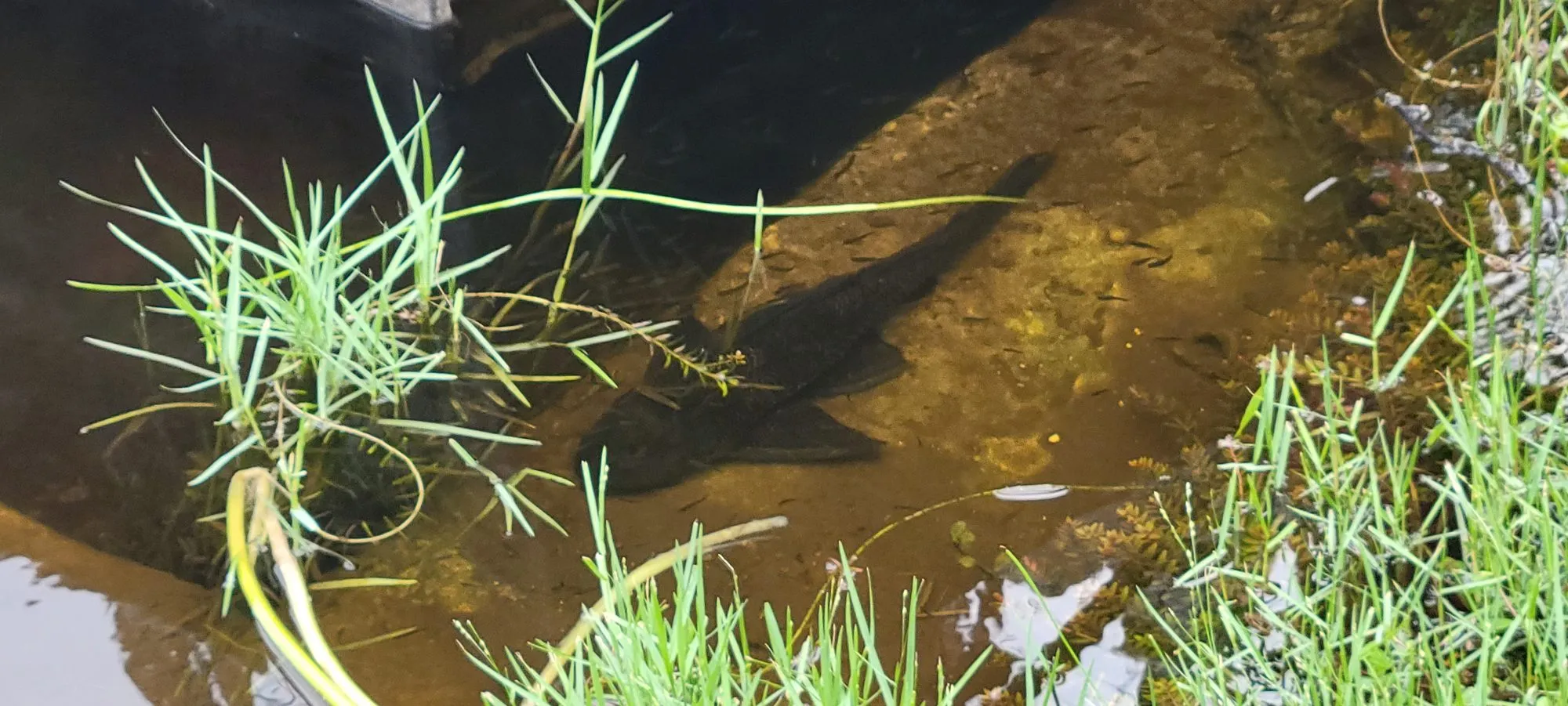
A freshly caught fish can be more dangerous to a dog than it looks.
Florida anglers routinely handle species with:
- Sharp dorsal spines
- Pectoral spines
- Teeth
- Barbs
- Hooks still attached
Catfish deserve special attention because their spines can cause painful puncture wounds.
Why Dogs Get Hurt
Dogs may try to:
- Grab a flopping fish
- Bite a discarded carcass
- Investigate bait
- Paw at a fish on deck
That puts the mouth, tongue, paws and face at risk.
Catfish Spines
Florida catfish can have sharp spines capable of penetrating skin.
Punctures may cause:
- Immediate pain
- Swelling
- Tissue injury
- Infection risk
Keep dogs completely away from landed catfish.
The Three Florida Fish to Know
Most fish spines are just sharp. These three are venomous, and all three turn up where Florida anglers fish with dogs:
- Hardhead catfish. The saltwater catfish of piers, bridges, surf and lagoons, found all around Florida’s coast. FWC describes its pectoral and dorsal spines as sharp, serrated and covered in mucus, with a sheath of venom that causes severe local inflammation. You will know it by the bony plate on its head and the whiskers – four under the chin.
- Gafftopsail catfish. Its bigger cousin, with long trailing filaments on the dorsal and pectoral spines and two chin whiskers. FWC is blunt: the spines are venomous and cause painful wounds.
- Lionfish. The invasive striped fish now found off both Florida coasts, first reported off Dania Beach in 1985 and since spread into the Gulf. It carries 18 venomous spines: 13 along the front of the dorsal fin, one on each pelvic fin and three on the anal fin. FWC encourages people to remove them, so they end up on docks, boat decks and cleaning tables – exactly where a dog noses around.
Stingrays are the other venomous animal a dog meets in Florida shallows; they have their own page, stingrays and dogs.
Why a Catfish Spine Needs a Vet
Because the catfish spines are serrated, they tear on the way out and can leave pieces behind in the wound. Add venom and bacteria from the water, and a puncture that looks like a pinhole can swell badly over the next day. A dog that grabbed a catfish by the mouth may have spines in the lips, gums or tongue that you cannot see.
Pet Help lists emergency vets for the counties it covers so far; elsewhere on the coast, call the nearest 24-hour animal hospital before you pack up the rods.
Watch for pawing at the mouth, drooling, refusing food or water, sudden limping, or a paw that swells. Any of those after contact with a catfish or lionfish is a reason to go in the same day – and do not try to pull a spine out of a mouth yourself, because a dog in pain will bite.
Handling Your Catch With a Dog Aboard
- Unhook catfish in the water when you are not keeping them. A dehooker lets you release one without it ever touching the deck.
- Never leave a catfish on the pier or bank. A discarded hardhead is a trap for the next dog that walks by, and the spines stay sharp long after the fish is dead.
- Clean lionfish away from the dog, and bag the trimmed spines and fins before they go in the trash.
Do Not Let the Dog “Help”
Even a calm dog can suddenly lunge when a fish starts flopping.
Before landing a fish:
- Move dog behind you
- Secure leash or deck position
- Use net or fish gripper
- Use pliers
- Keep fish away from dog
Fish on the Beach
Surf-fishing dogs should not be allowed to grab fish lying in the sand.
The fish may still have:
- Hook in mouth
- Leader attached
- Sharp spines
Fish on a Boat
Keep landed fish in:
- Fish box
- Cooler
- Livewell
rather than loose on deck.
Fish-Cleaning Stations
These areas can be dangerous because they may contain:
- Spines
- Bones
- Hooks
- Scales
- Fish heads
- Spoiled scraps
Keep dogs away.
Puncture Wounds
If your dog is punctured:
- Move dog away
- Control bleeding with gentle pressure
- Contact veterinarian
Deep punctures can trap bacteria below the skin.
Mouth Injuries
Seek veterinary care promptly for punctures involving:
- Tongue
- Gums
- Roof of mouth
- Throat
Eye Injuries
Treat a spine injury near the eye as an emergency.
Do not attempt to remove deeply embedded material yourself.
Do Not Ignore Small Holes
A tiny puncture can still involve:
- Deep tissue
- Retained foreign material
- Infection
Prevention
- Keep dog behind casting area
- Use closed fish storage
- Use pliers/dehooker
- Clean deck after landing fish
- Keep dog away from cleaning tables
Related Guides
- Fish Hooks and Dogs: Emergency Guide
- Bait and Dogs: What Is Toxic?
- Fishing Line and Pets
- Fishing With Your Dog in Florida
- Pufferfish Poisoning and Dogs
The safest dog around a freshly landed fish is one that never gets close enough to touch it.
Sources
Wear this page
Pet Friendly Florida shirts, drawn to match what you just read. This is our own store, not an affiliate link.